
Why Surrogacy Is Out of Reach for Most Families — and What One Nonprofit Is Doing About It
Written by Melissa Schenkman, MPH, MSJ
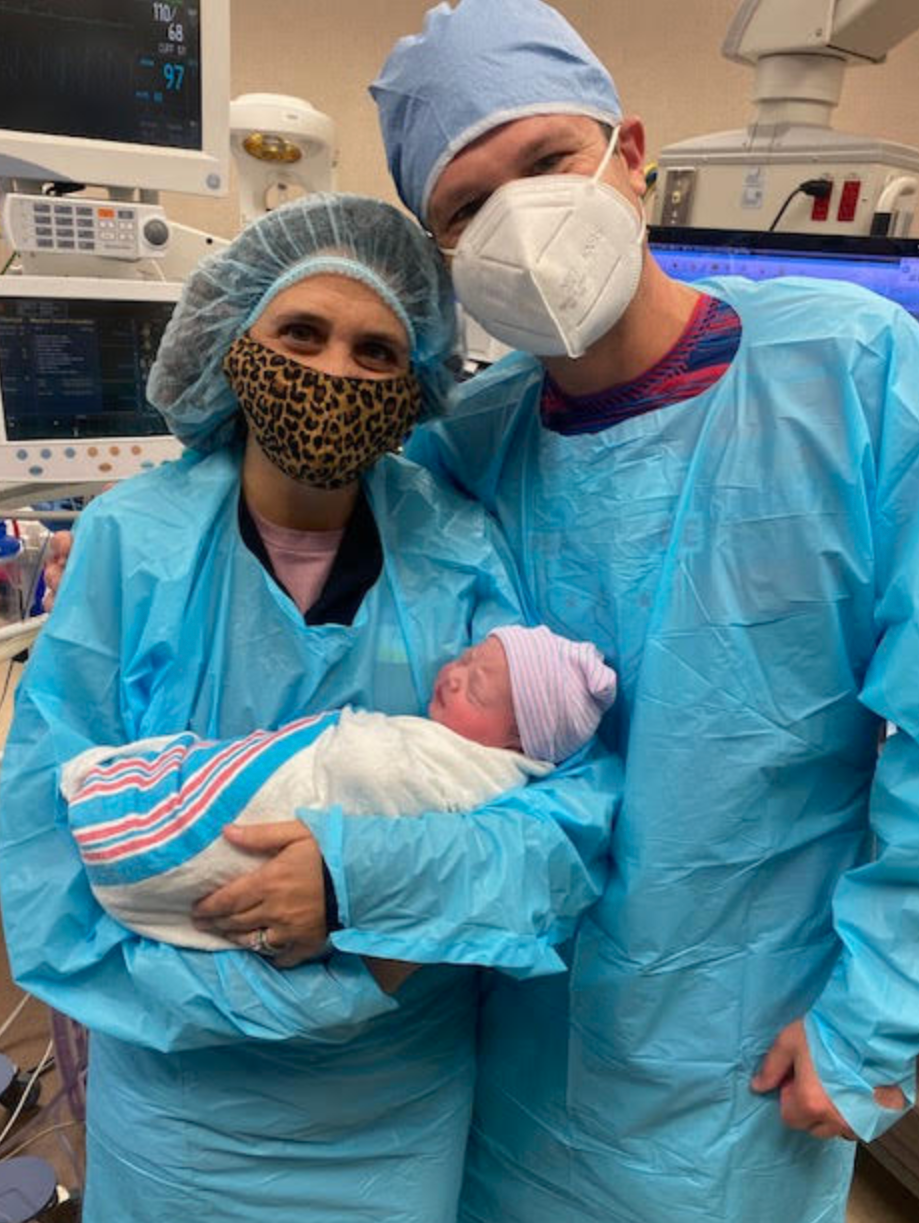
Zach French is the executive director of The Surrogacy Foundation, a nonprofit working to make surrogacy accessible by dismantling the financial, educational, and social barriers that keep so many people from building the families they want. His path to this work wasn't linear — he's been an entrepreneur, a tech sales professional, an in-house attorney at a big tech company, and an executive at the largest independent surrogacy escrow company in the country. But it was his own surrogacy journey with his wife Alexandra (pictured above with their daughter), following her breast cancer diagnosis, that brought everything into focus. We sat down with Zach to talk about what surrogacy actually involves, what's broken in the system, and what The Surrogacy Foundation is doing to fix it.
You've had quite a winding career — entrepreneurship, tech sales, law. How did you end up running a surrogacy nonprofit?
Zach French: One of the mantras I've always lived by is to try to leave the world a little better off than you found it. I did that on a small scale no matter what I was doing. But here at the Surrogacy Foundation, I've been able to lean into it full time and use every single one of those past skills to help build this into something that can genuinely impact access to family building for every individual. That's the goal. And honestly, every role I had before — the attorney brain, the sales brain, the tech brain — they all show up every single day in this work.
Before you and Alexandra went through surrogacy yourselves, what did you know about it?
I always joke that I had seen Baby Mama with Tina Fey, and that was about it. When surrogacy came up as the only path forward after Alexandra's breast cancer journey, I had one friend — really more of an acquaintance — who had gone through it after a traumatic birth. We reached out to that one person, and then we were down the rabbit hole. That was our entire foundation of knowledge going in.
Walk us through what the surrogacy process actually involves.
I like to think of it as a winding path where the destination is: you want to have a child. There are no less than six parties involved in every single surrogacy journey — intended parents, the gestational carrier, the agency or matchmaking service, possibly a consultant, the fertility clinic, the attorneys, and the insurance companies. And that's the bare minimum. Here's how it all unfolds.
Creating the embryo
It all starts with fertility. Can you make children on your own, and what's getting in the way of that — disease, who you love, something else? But regardless of how you get there, you have to create an embryo at some point. That might mean an egg retrieval and sperm from a husband and wife, or a same-sex male couple finding an egg donor and using their own sperm. Multiple paths, but that's always step one.
Matching with a surrogate
Most people choose to work with an agency to help match them with a surrogate. Right now, the average matching time is nine to twelve months. So you've already been through the emotional and physical toll of creating embryos, and then you're told to wait another year just to meet somebody. That's the reality — there are simply far more people who need surrogacy than there are surrogates available.
Once you match, it's a bit like dating. Both parties see profiles, agree to meet, get on a Zoom. Our first conversation with our surrogate was entirely about Netflix and college football. You find the commonalities first, then build deeper trust over multiple meetings — including in person. We met our surrogate during COVID, outside at a restaurant. After that, you both go back to the agency and say you're a match.
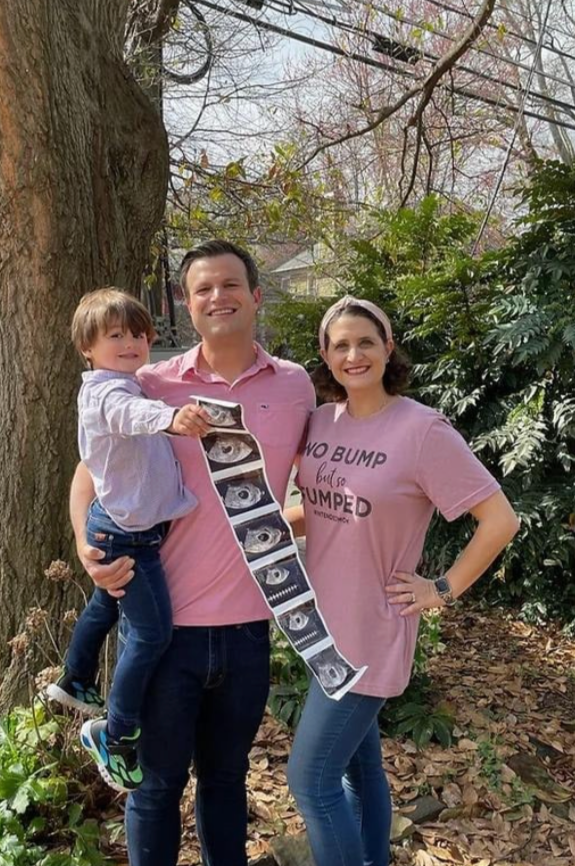
Zach, Alexandra, and their son after matching with their surrogate and a successful embryo transfer with what would be their daughter.
Screening and legal
Saying you're a match triggers a whole round of screening — psychological evaluations, medical clearances. And then you get into the legal piece. The contracts cover some of the most difficult conversations you'll ever have, including decisions around termination and the levels of risk to the mother and baby. Those conversations are hard, but they have to happen. They get memorialized in the contract, and once you've got a legal clearance letter, the clinic can prep the surrogate for the embryo transfer.
The transfer and pregnancy
After the transfer, within a couple of weeks you find out if there's a heartbeat — what's called heartbeat confirmation. Once you have that, everybody is officially pregnant. Then you go through the pregnancy, which just like any pregnancy has its ups and downs. But the one thing that stays constant through all of it is the relationship. If you've built real trust with your surrogate and her family, you have a much better chance of things going smoothly. You can't control the physical complications, but you can control that relationship and reduce the stress by being clear about expectations from the beginning.
Escrow: The financial infrastructure
Throughout all of this, your money is held in an escrow account. These journeys cost between $150,000 and $350,000 depending on a number of factors, and there are anywhere from 50 to 150 transactions per journey. Nobody wants to play banker on top of all the emotional weight, so escrow companies handle that — making payments on schedule, verifying documentation, flagging disputes for the attorneys to resolve. It's the underlying infrastructure of the whole journey.
After the birth
Hopefully, at the end of the pregnancy, you have a healthy baby. You typically keep the escrow account open for about six more months to allow time for medical bills to come in and to make sure the surrogate doesn't have any lingering health issues that get left unaddressed. And then a new journey starts — with your child, and often with the surrogate and her family, who become a permanent part of your life. We still see ours two or three times a year even though they live in another state. They come to our fundraisers, they've stayed at our house. It's family — maybe even more special in some ways.
What are some of the bigger challenges and misconceptions people encounter when they start researching surrogacy?
The most common starting point I see is people with a spreadsheet of hundreds of organizations they've spoken to, often getting conflicting information. That's no fault of anyone — everyone's giving what they believe is the best guidance. But the data in this field is thin, best practices aren't standardized, and it's incredibly hard for intended parents to know who to trust.
I think about the husband or wife in bed at 1 a.m., phone in hand, anxiety through the roof, trying to figure out how they're going to afford this and what they actually have to do. They're in a fragile state, and they deserve to be able to get reliable information quickly, without judgment, without having to schedule an in-person meeting just to learn the basics.
The other major misconception is that surrogacy is only for the rich and famous. The price tag does make it inaccessible for most people — fair enough. But there are plenty of people out there saving for five to ten years, knowing it's the only way they can have their genetic child. Those people exist. And the stories we tell publicly don't reflect that.

The Surrogacy Foundation Soiree, the organization’s annual fundraising event to support individuals pursuing surrogacy.
What does the current landscape look like in terms of need? How many people are actually affected by this?
One in six people struggle with infertility worldwide. That's over a billion people. And that number is growing — partially because people are waiting longer to start families, which is a completely reasonable life choice, but fertility rates do drop significantly around 35. By the way, women at 35 are still classified as "geriatric" in the medical world. That term is outdated, offensive, and doesn't reflect the reality that plenty of people are having children well past that age.
The point is that when you add up later family-building, infertility, same-sex couples, and medical situations like Alexandra's, you've got a massive and growing population that may need surrogacy. The data from SART — the reporting organization that fertility clinics are supposed to submit to — showed over 16,000 surrogacy cases in 2023, and that's only the ones they could capture. The number has roughly quadrupled over the last several years. And yet less than 1% of NIH funding goes toward fertility research. Let that sink in.
And here's something else worth saying: fertility is not just a women's health issue. About 50% of the time, fertility challenges are related to the male partner. But look at who's in this industry. Not many men. That has to change. How many people does it take to make a baby? This is a societal problem, and it needs to be treated like one.
What is The Surrogacy Foundation's mission, and how are you approaching it?
If I had to sum it up in one sentence: we want to make surrogacy accessible by taking it mainstream. There are three barriers we're trying to overcome — financial, educational, and the stigma attached to it.
On the financial side, we run a $100,000 grant program every year. That grant covers the base costs of a surrogacy journey — the agency, the attorneys, the escrow, the surrogate's compensation, the clinic fees, the mental health professionals. We also work to get services donated by partners: we've had agencies donate their fees, which can be $35,000 to $60,000. We've had an attorney donate her services every single year. Mental health professionals donate their time. That combination can put a family in a position they never thought possible.
Our first two grants were for Georgia residents — that was intentional. We wanted to learn the process before we scaled it. This past October, we launched our first national grant, open to any U.S. citizen or permanent resident. And thanks to a partnership with Hatch Fertility, we were also able to launch what we call the Hatch Grant, which covers nearly every cost of a surrogacy journey except the embryo transfer and clinic fees. That opens the door to a wider group of people than our $100,000 grant alone can reach.
The selection process is not simple. We look at medical records to confirm there's a genuine contraindication to carrying a pregnancy. We look at embryo quality because we need the journey to have a real chance at success. And we look at financials — not to find the person with the least money, but to find people who've been fiscally responsible and just need the push over the finish line. Our $100,000 doesn't cover everything, so we have to find families who can carry the rest.
On the educational side, we're building a chatbot in partnership with some of the most experienced professionals in this field — ASRM, SEEDS, and others who've been doing this for twenty years. The idea is to give people a non-judgmental, well-informed, HIPAA-compliant tool where they can get reliable answers at 1 a.m. without having to immediately pick up the phone or walk into an agency office. We're also partnering with a team at Northwestern, and we're on track to be published, which still surprises me honestly. The first version of the chatbot will focus on connecting people with nonprofits and resources for financial support. It's the precursor to a much bigger educational platform.
And then there's stigma, which is honestly the hardest battle. The headlines right now are doing real damage — stories about billionaires having dozens of children via surrogacy, or escrow companies stealing millions from families. Those headlines aren't fabricated, but they represent a tiny fraction of what's actually happening in this industry. The overwhelming majority of surrogacy journeys are between ethical people trying to do a beautiful thing. The surrogate is not being coerced. She's screened carefully to make sure she's making this decision out of both altruism and a fair exchange for the sacrifice she's making. That story almost never gets told. Over the next 12 months, we're going to be working with organizations across the industry to change that — to build positive stories, tell people about the magic of what this process actually is, and help surrogacy find its way into mainstream conversation the same way IVF did.

What would you want someone to know if they're just starting to consider surrogacy and feel totally lost?
You are not alone. I hear that breath of fresh air every time someone calls me for the first time — just the relief of talking to somebody who actually knows what they're going through. If you feel lost, if you don't know where to start, reach out to me directly. My email is zach@thesurrogacyfoundation.org. I will respond, and I will make sure you get connected with the right people and the right information to keep moving forward.
There is always a human on the other end of this. That's the most important thing I can tell anyone.
Want to hear more from Zach? Check out the YMyHealth Podcast on our YouTube channel or on your favorite streaming platform!
Learn more about The Surrogacy Foundation and their grant program and educational resources for those pursuing surrogacy to build their families here.