
Finally Seen and Heard: A Therapist on Getting Diagnosed as a Neurodivergent Woman
Written by Julie Woon, MSJ

Bailey Pilant is a licensed mental health counselor, Certified ADHD Clinical Services Provider, and a late-diagnosed Autism and ADHD (AuDHD) woman. She sat down with YMyHealth podcast Co-Host, Julie Woon, to share her long and winding path to receiving her diagnoses, explain why so many women are being missed, and what it actually means to practice neurodivergent-affirming therapy now as the Founder of The Wave Counseling.
You describe your first real breakthrough in therapy as a moment with a whiteboard and stick figures. How did it unfold?
Bailey Pilant: I had been in and out of therapy since I was 9 years old, but it wasn’t until college — when I finally came face-to-face with an eating disorder I’d been hiding — that everything cracked open. I called my therapist, and told her I’d been lying. I said I wasn’t ready before, but I was ready now.
Once I let her in, she pulled out this giant whiteboard and drew me and my whole family system. She mapped out how everything was interconnected — the trauma, the eating disorder, all of it. I remember looking at that visual and just feeling so...validated. For the first time, someone was seeing me. Not labeling me with all these negative messages I’d collected throughout my life. I’ll always remember those stick figures and that map.
Walk us through your path to your ADHD and then autism diagnoses. It wasn’t a straight line
No, definitely not. I’d spent years being treated for anxiety and depression, and nothing was working. I kept feeling like there was something wrong with me that I couldn’t identify. Then, late one night, a best friend sent me a research article about ADHD in women. I read it and thought, oh my God — this is my life. I printed it out, highlighted it, and brought it to my doctor.
I was 17. I said: ‘I don’t think I’m anxious. I think I have ADHD.’ My doctor said, “Let’s try medication.” I still remember the brain fog lifting. The racing thoughts quieted. I thought, ‘is this what it feels like to think clearly?’ It was incredible!
But then life happened. I started college, I was working full time, and stimulant medication required a monthly in-person pickup. With ADHD comes executive dysfunction, and I just... stopped going. I wrote it off. There was also so much stigma, and nobody really educated me on how much the medication could have helped me during that period. Looking back, the signs were everywhere — I changed my major eight times in my first year of college! Eight!
Years later I moved to New York, tried corporate America, realized it wasn’t for me, and eventually found my way to grad school for mental health counseling. After my first semester, I went back on medication and the response was the same: life-changing. Why did I ever stop this?
The autism piece came later. That same friend who sent me the ADHD article called me one day and said, “Hey, my therapist thinks I might have ADHD — can you listen to this podcast and tell me what you think?” The podcast was called Inside the ADHD or Autistic Brain, and hosted by two psychologists in Australia. I listened, and I called her back and said: ‘I think I might be autistic. She said, 'I think you might be too.’
Even with my ADHD diagnosis, I still felt like an outsider among other ADHD women. There was always a piece I couldn’t name. When I started understanding autism in women, the pieces finally fit. I received my official autism diagnosis at 30, though I’d been exploring it since 28.
For people who are newer to this — what actually is neurodivergence?
Neurodivergence is an umbrella term for brains that process differently from what’s considered the norm — what we call neurotypical. It’s not a deficit. It’s a different neurological profile.
The umbrella includes:
• ADHD
• Autism
• Dyslexia
• OCD
• Dyscalculia (like dyslexia, but with numbers — lesser known but very real)
There’s also the term neurodiversity, which was coined to acknowledge that variation in how human brains work is a natural part of being human — not a flaw to be corrected.
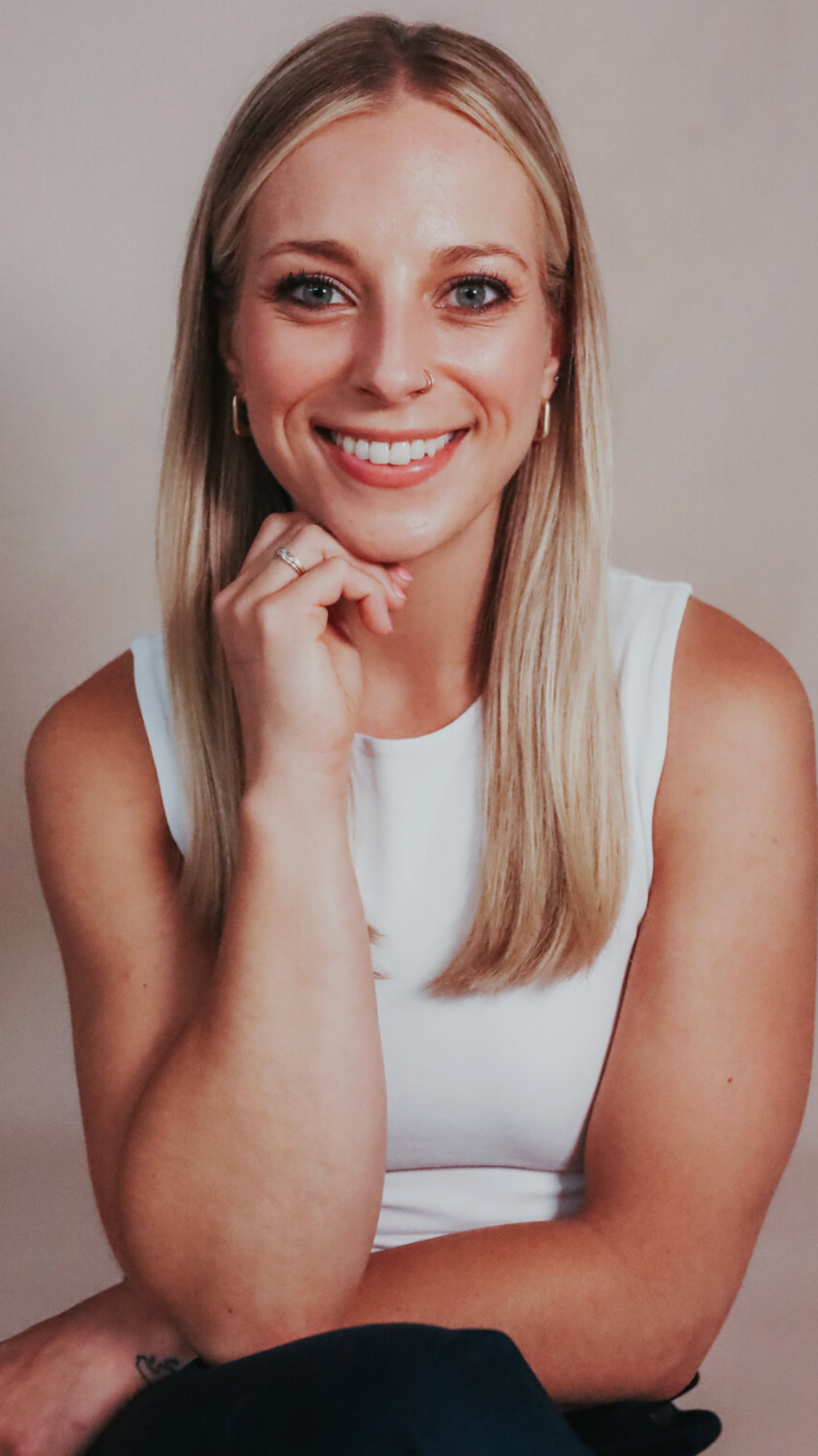
Bailey Pilant is a Licensed Mental Health Counselor and Founder of The Wave Counseling.
She is a Certified ADHD Clinical Services Provider who specializes in neurodivergent-affirming therapy, ADHD, autism, anxiety, PTSD, Trauma. She also has a particular focus on women’s mental health recognizing the unique challenges faced at various stages of life and tailoring her therapy to those as part of her holistic approach.
Why are so many women only getting these diagnoses as adults?
I get so excited about this question because it matters so much. There are a few layers here.
The research was built on little boys.
The majority of early research on ADHD and autism focused on boys because they exhibited the most prominent, visible behaviors in childhood. Girls were socialized differently from the start — told to sit down, be quiet, be helpful. Boys run around and the response is ‘Boys will be boys’; while girls are told ' Let's play house or let’s do a puzzle.’ We were steered toward quieter activities and learned very early what we needed to do to be accepted. So, we developed strategies to mask our symptoms, and those strategies made us invisible to the diagnostic system.
Before 2013, adult diagnosis was not really allowed. At that time, the DSM required a childhood diagnosis. If you hadn’t been caught as a kid, you didn’t have it — full stop.
Post-2013, we acknowledged that people don’t just grow out of these conditions. We’d missed entire generations, especially women, because we were looking through a very narrow lens.
ADHD and autism were thought to be mutually exclusive.
So, before 2013, you could only have one or the other. Now we know they frequently co-occur, and when they do, they can mask each other beautifully. Autism says: we have a routine, I’ve got this. ADHD says: I’m burned out, I can’t do the routine anymore. Autism says: but I need the routine. The person looks functional from the outside. Internally, they’re at war with themselves.
Hormones play a bigger role than most people realize.
Estrogen is a neural pathway primer — it enhances the brain’s ability to produce and use dopamine. As girls age, estrogen declines. So ADHD that seemed manageable in childhood becomes much more pronounced over time. For boys, the opposite happens: as they age, estrogen increases and ADHD symptoms appear to ease. That’s part of why researchers once thought it was just a childhood disorder — they were watching boys, and boys seemed to outgrow it.
What are some subtle signs of neurodivergence that often get missed, especially in women?
This isn’t an exhaustive list, but these are some of the things I look for:
Being described as a dreamer or really imaginative as a kid — someone who frequently went into their own little world. That’s a sign of inattentiveness.
Chronic racing thoughts that aren’t necessarily anxious thoughts — just a constant stream of ideas, reminders, fleeting things you can’t quite hold onto.
Difficulty sustaining attention — though ADHD is really a dysregulation of attention, not a deficit. The name is misleading.
Chronic exhaustion after socializing.
A lifelong sense of being told you’re too much, not enough, or overly dramatic.
Difficulty with transitions and unexpected change.
Emotional dysregulation that gets mislabeled as hypersensitivity, a personality disorder, or bipolar disorder.
A history of being diagnosed with anxiety or depression first — especially when the anxiety is driven by forgetting things, feeling overwhelmed, and not being able to start tasks. The depression often comes from shame at the inability to follow through.
I also look at the quality and duration of emotional dysregulation. If someone describes a sudden, intense wave of dysregulation that feels almost out-of-body, and then they snap out of it an hour or two later feeling confused about what just happened — that’s a clue. We might be mislabeling the neurodivergence.
What’s the emotional toll of going years — or decades — without understanding why you’re different?
Chronic shame and self-blame. An identity built around being the problem. A deep, persistent sense that you need to fix yourself because you are what’s wrong.
A lot of the reframe I do with clients is this: it’s not that there’s something wrong with you — it’s that everyone missed what was going on for you. That shift sounds small, but it’s enormous. Because the loneliness of feeling like no one understands you, and deciding you must be the problem, makes it almost impossible to accept yourself.

What does neurodivergent-affirming therapy actually look like in practice?
In my mind it’s a holistic approach built around the unique needs of the individual. The core of it is deconstruction: We look at the systems that haven’t worked for you and figure out how they’ve kept you in this perpetual state of shame. Because you’re not the problem.
There’s also always trauma in the room. Being chronically misunderstood for the majority of your life is traumatic. Not understanding social cues, missing jokes, wanting to believe all people are good and getting hurt over and over — all of that is traumatizing. I always acknowledge it and address it.
I practice fully via telehealth, which I actually love for neurodivergent clients because they get to set up their own therapy space. My two rules are that you have to be in a safe, private space, and I have to be able to see you. That’s it. Beyond that, I invite clients to bring:
• Fidgets
• Stuffed animals or comfort objects
• Weighted blankets
• Water, tea, snacks
• Whatever they need — if folding laundry helps them focus, fold the laundry.
I’m also EMDR-trained (structured training in Eye Movement Desensitization and Reprocessing therapy), and I take a less traditional approach there too. We experiment with eye movements, sound, or tapping — whatever is most supportive. Some clients need earplugs to block excess stimulation during a session. The goal is always for them to be able to fully unmask and feel safe.
How has your own experience shaped your therapeutic style?
I always say I’m fueled by anger. My style has been heavily shaped by things other therapists and medical professionals have done — to my clients or to me. There’s a psychiatrist I still think about who kept trying to reframe my experience into something that wasn’t my experience. I kept saying ‘No,’ and she kept saying, well, that’s what it sounds like to me.
In a way, my whole practice is a response to that. It’s an F-you to every professional who failed their patients — and it’s a commitment to do better. All of those people who have been failed, including me, I’ve turned around and said: I’m going to do better.
What should someone look for when trying to find a neurodivergent-affirming therapist?
Start with resources like ndtherapists.com or chadd.org. Social media is also genuinely useful here — there are some really incredible neurodivergent-affirming therapists creating content online.
But the most important thing is to use your consultation. Most therapists offer a free 15-minute call. Use that time to interview them back. Ask how they actually view neurodivergence. Ask what their understanding of ADHD or autism looks like in practice. And watch for this red flag:
If a therapist tells you they work with ADHD or autism, but when you bring it up they say “We need to treat the anxiety first” or “the depression first” — that’s a red flag.
99.9% of the time, it’s the inverse. We need to work with the ADHD and the autism in order to relieve the anxiety and depression. Because what’s driving the anxiety and depression is the unacknowledged neurodivergence and the unresolved trauma that comes with it.
What role does community play in mental health for neurodivergent people?
Community is everything. I know social media gets a bad rap, and everything in moderation — but what I’ve seen since around 2020, when people really started talking openly about being ADHD and autistic online, has been genuinely healing.
The community shifts the story from I am the problem to the system is failing me — and look at all the people it’s also failed. It gives you people who understand your experience without needing you to explain it from scratch. And a lot of healing happens in relationships. Community helps with advocacy, with self-understanding, with building self-acceptance and compassion — while also letting you give that acceptance and compassion to others who are like you.
How do you take care of your own mental health as a therapist?
Mental health and physical health go hand in hand for me. Over the last couple of years I’ve really gotten into Pilates — I also have hypermobile Ehlers-Danlos syndrome, which co-occurs frequently with neurodivergence, so Pilates has become a real love for taking care of my body and my joints.
I also prioritize my own therapy, fitness, and my special interests. Travel is a big one for me. I love learning about why people are the way they are, how communities and systems develop. Nine times out of ten, I’m deep in research about a place and figuring out how I’m going to get there.
And I know my limits — around my caseload, my schedule, how much I’m taking on. Rest is non-negotiable. My own community matters too.

What do you want someone to hear who has always felt different but can’t explain why?
I feel that with you — because I felt it for a large portion of my life.
What I’ve learned through my own self-exploration is that the more I am true to myself, the more I lean into what makes me different, the more I find people who accept me, and I find the people who are like me. Our experiences are all unique, but there’s enough shared experience that you can say, I’ve been through something like this — and have someone truly understand.
If you could change one thing about how society understands neurodivergence, what would it be?
I want people to stop being scared of the word diversity. Neurodiversity — and diversity in general — is so critically important to helping the world operate better. Throughout history, there are so many prominent figures we can now identify as likely neurodivergent. The impact they had on society, on technology, on human progress.
We are extremely creative. We are really great problem solvers. We think outside the box, we adapt, we simplify systems, and we recognize patterns. There are so many strengths in being neurodivergent. And if we could shift toward truly neuro-inclusive systems — in education, in the workplace — the world would look very different.
Why do we need to go to an office from 9 to 5 every day? If the work is getting done, the work is getting done. I will die on that hill.
If we just took a more neuro-inclusive stance on all of these systems — wow. What a world we could live in!
How can people connect with you and your practice?
You can connect with me by visiting my practice and scheduling a consultation at thewavecounseling.com. You can also find me on Instagram and TikTok @bailey.audhdtherapist.
Want to hear more from Bailey? Check out the YMyHealth Podcast on our YouTube channel or on your favorite streaming platform!