
From Caregiver to Crusader: Antonio Dionizio on Colorectal Cancer, Family, and the Power of Showing Up
Written by Julie Woon, MSJ
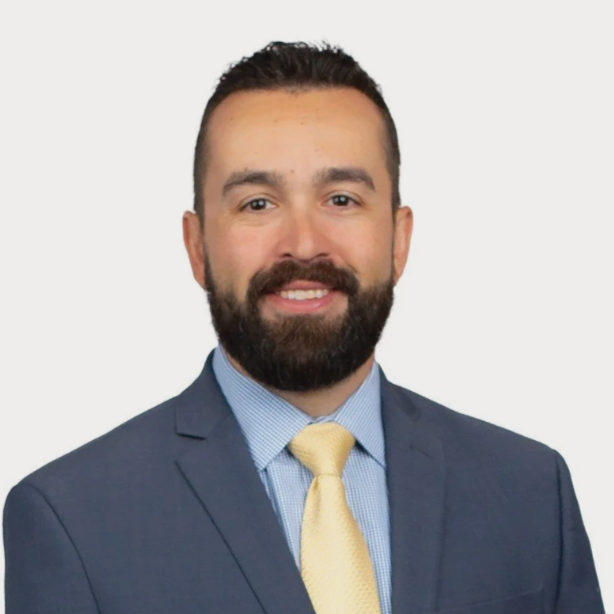
Caregiving for someone living with colorectal cancer is so much more than being there for day-to-day tasks. It’s about being an emotional anchor for the person going through treatment while finding your own footing to support them in their cancer journey and beyond. In this article, Champions for Colorectal Cancer Co-Founder and Vice President, Antonio Dionizio, joins YMyHealth Podcast co-host, Julie Woon at Fight CRC's Call to talk about the emotional journey of caregiving, the importance of early screening, and why he has spent the last five years turning his experience into community action to save lives.
Take us back to 2003. What was it like the day your father was diagnosed with stage 3 colorectal cancer?
Antonio: It was a whirlwind. My dad hadn't been feeling well for a while — doctors had attributed his pain to Lyme disease. Then one doctor finally suggested an MRI, and the word 'cancer' hit us completely out of nowhere. I was in my early twenties, fresh out of college, starting my first job. My dad was 63 and had just bought a house in Florida with my mom — retirement was right around the corner. Just hearing that word sent every plan sideways. There were so many emotions: fear, confusion, and, honestly, not knowing where to begin.
Your father immigrated from Portugal and worked in construction his entire life. How did his diagnosis change your image of him?
He came here in the 1970s with nothing. He had been in the army in Portugal, then served as a police officer, and then came to America and eventually moved into construction. Every morning, he was up at 5 am, coming home covered in dirt, then going straight out to feed the chickens, tend the garden, chop wood. He was short in stature but absolutely unstoppable. Seeing that man start to become frail during treatment — it shook me. It forced me to ask for the first time: ‘Am I going to lose my father?’ That image of him changing before my eyes is something I still carry.
What was the hardest part of those years for you personally?
The not knowing. Back then, there wasn't the flood of online resources we have today. You couldn't just Google 'stage 3 colorectal cancer' and find hundreds of articles and support groups. I was also the youngest in the family. My older sister stepped up as the primary caregiver, handling the doctor appointments and translating what was being said to my father since his English was limited. I leaned on her more than I probably should have. Looking back, I wish I had been more present. That's a guilt I still carry, and honestly, I think it's part of why I throw myself so completely into this advocacy work today.
Did you feel prepared for the caregiving role at all?
Not really. The only frame of reference I had was watching friends' parents go through breast cancer or lung cancer — and back then, when you heard 'cancer,' you just assumed the worst. There was a stigma that a diagnosis meant the end.
We didn't know how to talk about it, and in my Portuguese family, especially among the men. Showing emotion was seen as a weakness. So, a lot of what we were going through stayed private. No social media announcements. Barely even phone calls to relatives back in Portugal. You just put your head down and dealt with it.
What do people most misunderstand about what it means to be a caregiver?
People picture a caregiver as someone driving a patient to appointments or helping them bathe — the very physical, hands-on tasks. But caregiving is so much broader than that. Many patients today are still working, still driving themselves, still running marathons through treatment. What they need most is someone in their corner: emotionally, mentally, and as an advocate. Showing up to an event like Fight CRC’s Call-on Congress because sharing their story matters — that's caregiving too. It's being a consistent support system, not just during the acute moments.

Were there moments where you simply didn't know what to say?
Many moments. You want to tell people it's going to be okay, that they're strong, that they'll get through it. But sometimes the person doesn't need that. Sometimes they need permission to be scared, to sit in the uncertainty. Sometimes they just need you to listen and not say a word. I've learned that unless you're the one inside that body going through it, you really can't assume what someone wants to hear. The safest thing is almost always to ask — and then actually listen to the answer.
How did you balance staying strong for your father while processing your own fears?
Honestly? I stayed busy and tried not to think about it. I was young. I was going out with friends, taking trips. Now that I'm older, I can see I was keeping myself at arm's length from the reality of it. Part of that was intentional on my family's part — as the youngest and the only boy, they wanted to shelter me. So, I stayed in my lane. But I do wish I'd been there more. That's some of the residual guilt that came with later becoming deeply involved in this advocacy space. I look back and think: I could have done that differently.
What would you tell caregivers about the difference between grand gestures and consistent presence?
The grand gesture fades. Look at GoFundMe campaigns — the surge of donations at the start is incredible, but if someone's cancer journey stretches from months into years, how many people are still checking in? How many are still showing up? I have a friend whose wife had breast cancer, and I realized I'd been in our group chat the whole time without once asking how she was doing. So I messaged him out of the blue: 'How is she doing?' It sounds small, but it means everything. Consistency is the gift that actually sustains people.
What do you wish well-meaning friends and family would stop doing?
Two things:
First, the reflex to immediately offer dinner. It's a loving impulse, but when it comes from every direction at once, it gets overwhelming. Sometimes just showing up empty-handed and sitting with someone is worth more than any casserole.
Second, and this one's subtle: Comparing cancer journeys. I can't tell you how often someone says, 'My uncle had colorectal cancer, so I know what you're going through.' You really don't. I've known people with stage 3 who are gone, and people with stage 3 who are still here 20 years later. Every journey is different. Resist the urge to draw parallels.
Your father's diagnosis changed how you approach your own health. Can you walk us through that?
I became what I jokingly call a colonoscopy enthusiast at 30. Because colorectal cancer ran in my family, my doctor agreed to screen me early. They found and removed polyps at that first appointment. I went every three years after that — until my doctor suggested stretching it to five years. But something didn't sit right with me.
So, at the three-year mark, I called and nudged him, hinting that I'd been having some symptoms. He got me in. They found more polyps that hadn't shown up in the previous 12 years. Had I waited the full five years, who knows what those might have become? Trust your gut. Advocate for your own body, because you're the only one in it 24 hours a day.
What gap did you see in the colorectal cancer space that led you to co-found Champions for Colorectal Cancer?
It started as a conversation with my former manager, Eric, during COVID. We were both golfers, and he wanted to start a charity golf outing. His mom had stage 4 colorectal cancer; his dad had stage 3. I had my dad's history. We started researching the Connecticut landscape and realized there was very little focused on educating younger generations about this disease. That became our mission — not just fundraising, but awareness. Because if you catch colorectal cancer early, it is largely preventable. And yet it has just surpassed all other cancers as the number one cancer killer in people under 50. We were projecting that by 2030, we're already there in 2026.
Why is destigmatizing the conversation specifically important to the work you do?
Because the disease lives in a part of the body people are trained to be embarrassed about. Nobody wants to talk about their bathroom habits. But your stool is one of the clearest signals your body sends you.
I share a chart online that illustrates what healthy and unhealthy stool looks like. When I first posted it, friends told me it was gross. Now those same friends message me asking to share it with someone they love. That shift matters! If people won't talk about their bodies, they won't get screened. And if they don't get screened, early-stage cancer becomes late-stage cancer.
What has this whole journey — your father's illness, founding Champions for Colorectal Cancer, your advocacy work — taught you about fear, grief, and resilience?
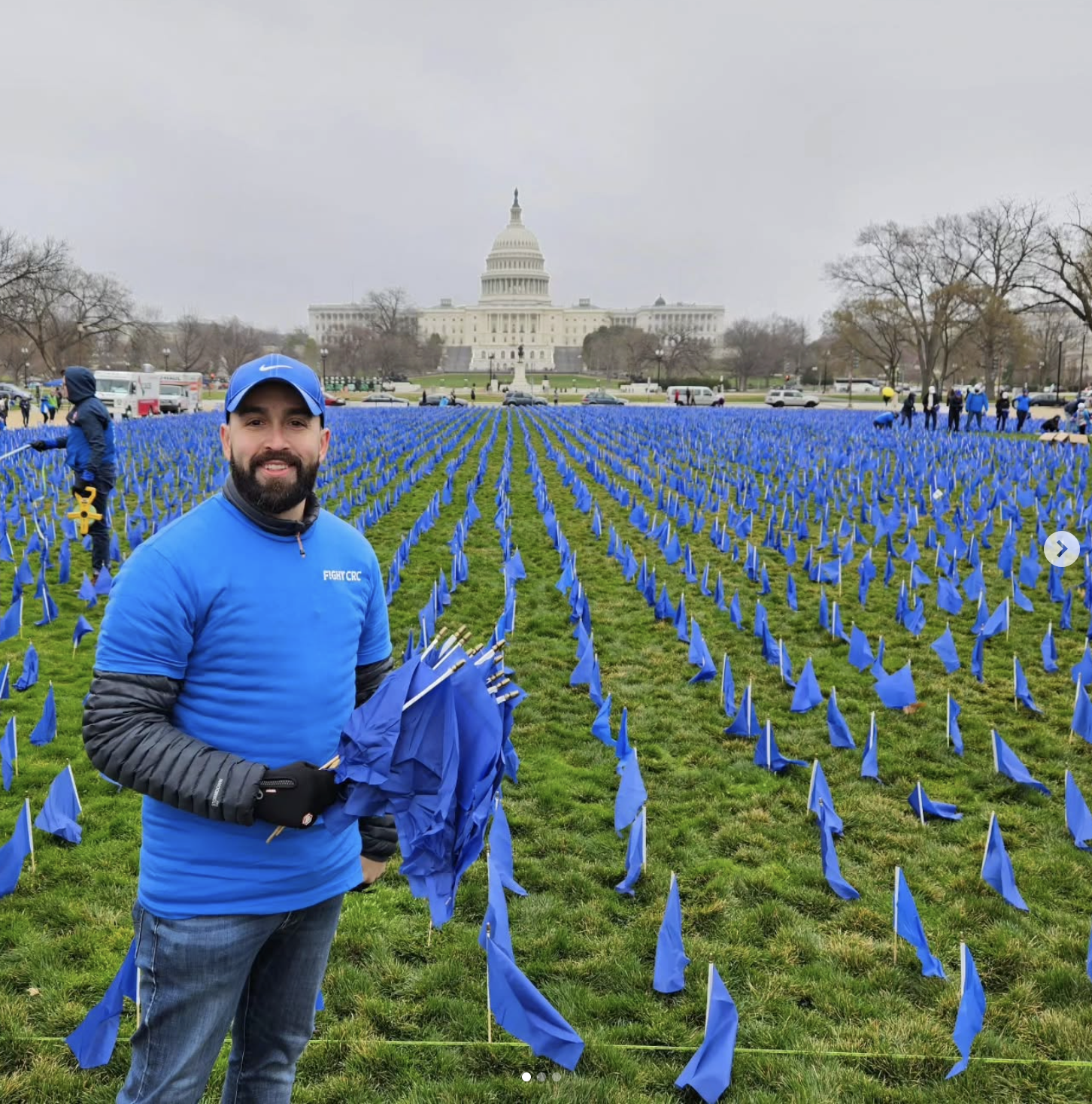
It's taught me that it's okay to be scared. The pressure to stay strong and hold everything together — for caregivers especially — is enormous. But being scared doesn't mean you're failing. Cry if you need to. Talk to a therapist. Find someone at a rally on the National Mall who gets it. Build your community, even if it's online, even if you never meet in person. I've watched people who were quiet DM followers eventually show up in Washington for the first time to speak to legislators. We all start somewhere. The important thing is that you don't try to do this alone.
Your father has been in remission since 2005. What does survivorship look like in your family today?
He's living his best life. He's 85, almost 86, living in Florida. My sister takes my parents on Disney cruises when she can. His grandchildren — seven of them now — are growing up. My kids are 10 and 4, so they get to know a grandfather who, at the time of his diagnosis, might not have been around to meet them. Survivorship is exactly that: it's living. Traveling, writing a book, whatever fills your days with meaning. Life is short. We're here for such a small window of time. Make the most of it.
What gives you hope when you look at the colorectal cancer community right now?
The conversation is changing. Celebrities are sharing their colonoscopy experiences. People like Chadwick Boseman and James Van Der Beek — who actually grew up in Connecticut — have brought this disease into public view in ways nothing else could. Fight CRC has grown enormously since I first encountered a volunteer wearing one of their masks at a cooking class in Southington.
Legislators are starting to listen. We've gotten the recommended screening age lowered to 45, and we're pushing for it to go lower still. The work isn't done — not until young people stop dying from a preventable disease. But the momentum is real, and I feel it every time I come to DC.
How can people connect with you and Champions for Colorectal Cancer?
You can learn more about us and message us on our website as well as on social media @ChampionsforCRC on Instagram, LinkedIn, and Facebook.
Want to hear more from Antonio? Check out the YMyHealth Podcast on our YouTube channel or on your favorite streaming platform!