
Fighting Colorectal Cancer from Capitol Hill to Communities Across America
A conversation with Molly Roberts, VP of Advocacy at Fight CRC
Written by Melissa Schenkman, MPH, MSJ
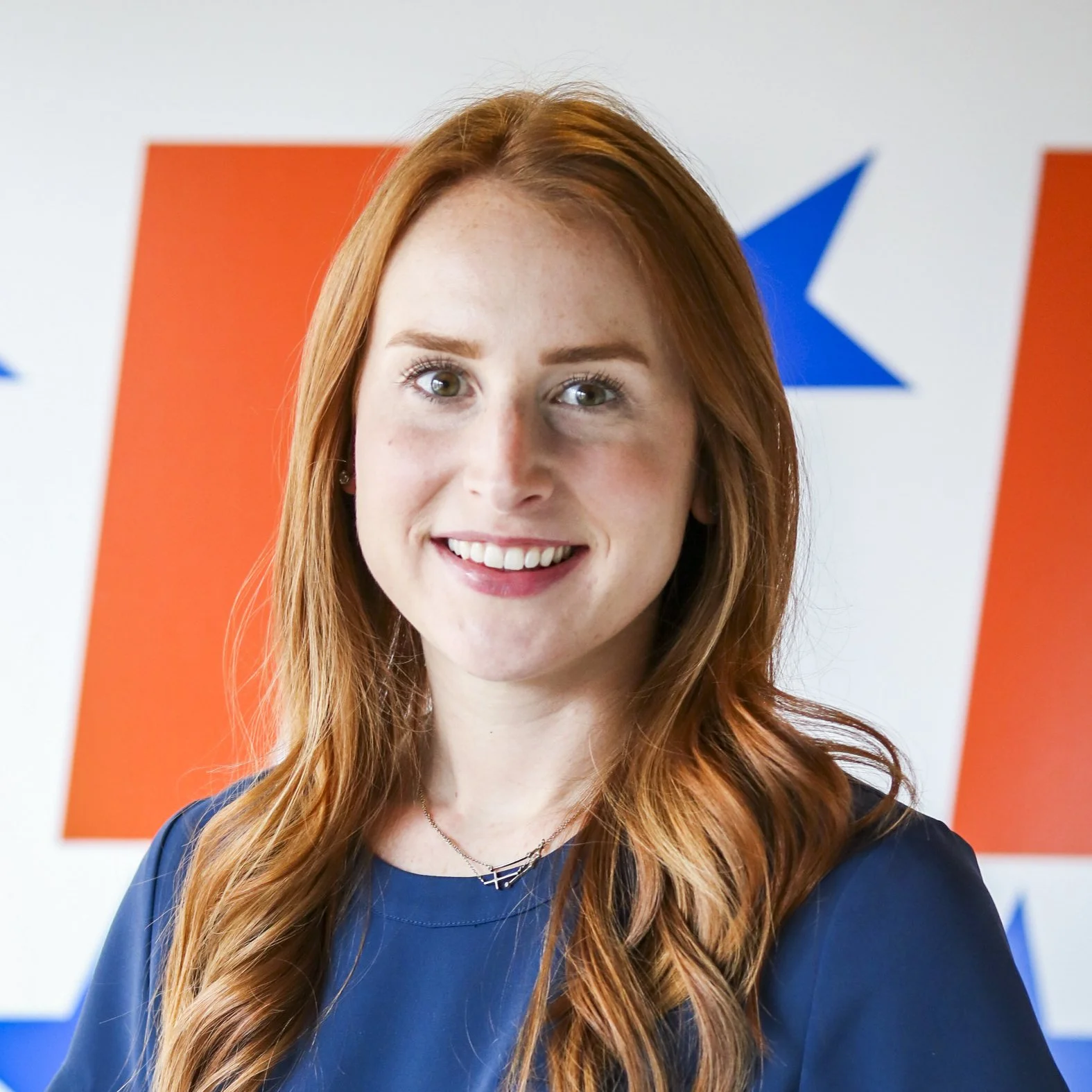
Molly Roberts
Colorectal cancer is no longer a disease that primarily affects older adults. It is now the number one cause of cancer-related death in men and women under 50 in the United States — a grim milestone that was not expected to arrive until 2030. In this conversation with YMyHealth podcast host Melissa Schenkman, Molly Roberts, Vice President of Advocacy at Fight CRC, discusses these trends, the power of patient advocacy, and what Fight CRC is doing to turn awareness into action.
What drew you to healthcare advocacy?
My career started on Capitol Hill, where I handled the healthcare portfolio for a member of Congress from New Jersey. Through that work I got to meet patients from all kinds of disease communities, and I really fell in love with that work. My boss at the time was actually a lead sponsor of the Medicare Loophole Bill — legislation that removed out-of-pocket costs for patients who had a polyp removed during a screening colonoscopy.
That bill gave me early exposure to Fight CRC, and they eventually became one of my first consulting clients when I left the Hill. A few years later they asked me to join the organization full time, and the rest is history. I've now been with Fight CRC for about seven years full time, and nearly a decade if you count the consulting work.
Is there a personal experience that led you into healthcare advocacy work?
Yes, very much so. When I first started consulting for Fight CRC they hired an advocacy staffer named Julianne — a stage four colorectal cancer survivor who was about the same age as me, late 20s at the time. I'll never forget meeting her for coffee just off Capitol Hill. I was so blown away by her that I actually called my mom on the way home and said, 'Fight CRC is going to fire me — they don't need me anymore because this woman is incredible.' She taught me so much about advocacy, about colorectal cancer, and about what it means to be a patient.
Unfortunately, she passed away just before I took the full-time role. She was the first person my own age I had ever lost, and it really never leaves you. I see this job as a privilege — a chance to continue the work she would have done, and to do it for her and for everyone else who can't.
Colorectal cancer is now the leading cause of cancer death in adults under 50 — years ahead of the 2030 projection. How is the advocacy community responding?
The response and thought process has been twofold.
1) It's been a hard year — a challenging political environment, and a lot of loss within our community, including very public figures like James Van Der Beek. But at the same time, this new data is confirming what our physicians and patients have been seeing for years. GIs have been watching the number of young patients in their practices grow for a long time. The data just lagged behind the lived experience.
2) Now that it's confirmed and making headlines, it's actually energizing our community. It's creating urgency. We can go to the Hill and say: we cannot ignore this anymore. The trends are going in the wrong direction, and that is unacceptable.
Why is more research investment critical right now?
We have clues about why colorectal cancer rates are rising in younger people, but we do not have clear answers. We need to understand the 'why' so we can develop better interventions — both to prevent the disease and to treat those who are diagnosed.
We also need to recognize that the needs of younger patients can look very different from those of older patients. We're talking about fertility preservation, accommodations for people at the height of their careers, childcare during treatment. As a country, we are simply not investing nearly enough in colorectal cancer research to get where we need to go.
Tell us about Fight CRC's 2026 Call-on Congress event — especially this year's milestone.
We're really excited — this is our 20th anniversary! The event runs March 1st through 3rd in Washington, D.C., with Advocacy Day on the Hill on Tuesday, March 3rd. It kicks with a Mix and Mingle and a Resource Expo where advocates can connect with each other and explore opportunities to get involved. Monday is training day, and this year we're doing something a little different: we're dedicating roughly half of Monday to planning what happens after you go home.
In the past the event could feel like a culmination — all this energy in March and then a drop-off. But advocacy is not a one-shot deal. Consistent, year-round engagement is what actually moves the needle. So we're helping people map out what the next several months look like and how to bring in advocates who couldn't make it to D.C.
And because it's our 20th year, we'll have a walk-through exhibit of the last two decades of Fight CRC and Call on Congress — the wins, the policy changes, the community. A lot has happened, and it's worth pausing to reflect on that.
What would you say to someone who wants to advocate but can't travel to D.C.?
There are so many ways to get involved that take just a few minutes.
Fight CRC has an action alert system — you put in your address, and it connects you directly to your member of Congress's office with a pre-drafted email you can also personalize. We have a phone script if you'd rather call. We have office hours, webinars, and our Community of Champions platform, which is essentially our own social network for advocates. It includes an Advocate Academy with self-paced training, and regional networks so you can connect with people in your own state and nearby states.
You don't have to have a personal connection to colorectal cancer to make your voice heard. If you've seen these headlines and you're concerned about what's happening with the health of your generation, that is a completely valid reason to reach out to your elected official and say: I want to make sure we're making sound investments here.
New and Ongoing Fight CRC Initiatives
What is the Colorectal Cancer Care Initiative?
We talk a lot about wanting high-quality colorectal cancer care, but if we don't have specific, measurable goals, how do we know we're achieving it?
Through the Care Initiative, we analyzed over 47 million insurance claims from across the country, reviewed the clinical literature, and listened to real patient experiences — and we identified a series of concrete goals in both screening and treatment. About 40 organizations have already signed on, committing to these goals. We're also working directly with health systems to ask whether they're tracking these metrics and how they can improve. It's not meant to be a stick to beat anyone with — it's a tool for self-assessment and improvement.
What is Chat CRC, and why does it matter for patients?
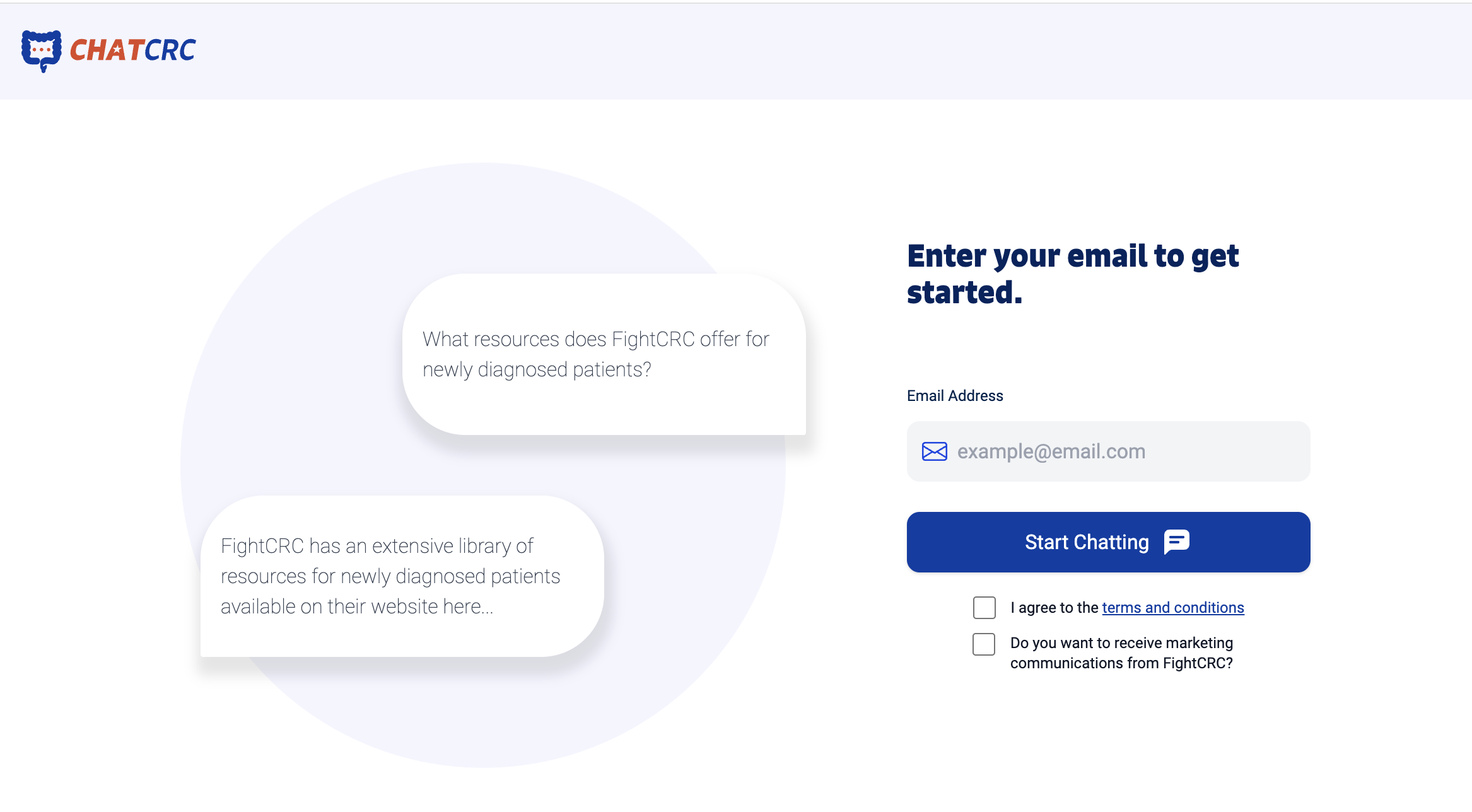
Chat CRC is our AI-powered chatbot built specifically for the colorectal cancer community. What sets it apart is that it only draws from vetted, peer-reviewed sources and national guidelines — not the open internet. You can ask questions about screening, treatment options, side effects, whatever you need.
This year we added an exciting new feature: you can upload the results of your biomarker testing. Those reports can be dense and confusing for patients. Chat CRC will help you understand what the results mean and generate questions you might want to bring to your care team. We really see it as an empowerment tool.
What is the Catalyst program, and what has it accomplished at the state level?
Catalyst was our foray into state-level advocacy. Fight CRC is a small but mighty organization — we don't have offices in all 50 states — but we have amazing advocates everywhere. Through Catalyst we provide grant funding and technical assistance to coalitions working to expand access to colorectal cancer screening at the state level.
To date we've funded coalitions in over 20 states and helped pass legislation in eight states. One thing we've learned is that the states learn a lot from each other — you don't have to reinvent the wheel. We're also expanding our partnership with Komodo Health, a company with access to nationwide claims data. We'll be building state-specific profiles to help public health officials understand what's happening with screening rates in their state and where the gaps are.
What is the Early-Onset Colorectal Cancer Global Think Tank, and what comes next?
The global think tank convened in Barcelona last June — an international gathering of researchers, clinicians, and patient advocates. What was really heartening was the commitment of the people in the room. We asked everyone to sign a two-year pledge to continue the work, and everyone did. We divided attendees into working groups focused on different topic areas, and those groups are still actively meeting.
A number of them just came together again at GASCO in January in San Francisco. What struck me was the quality of the people — different countries, different backgrounds, different egos in the room — and yet everyone was so committed.
It really reinforces what we want to bring to policymakers: there is a talented, ready, and willing global research community that can address this problem. We just need to fund them.
What is the At-Home Flag Kit, and how can people participate?
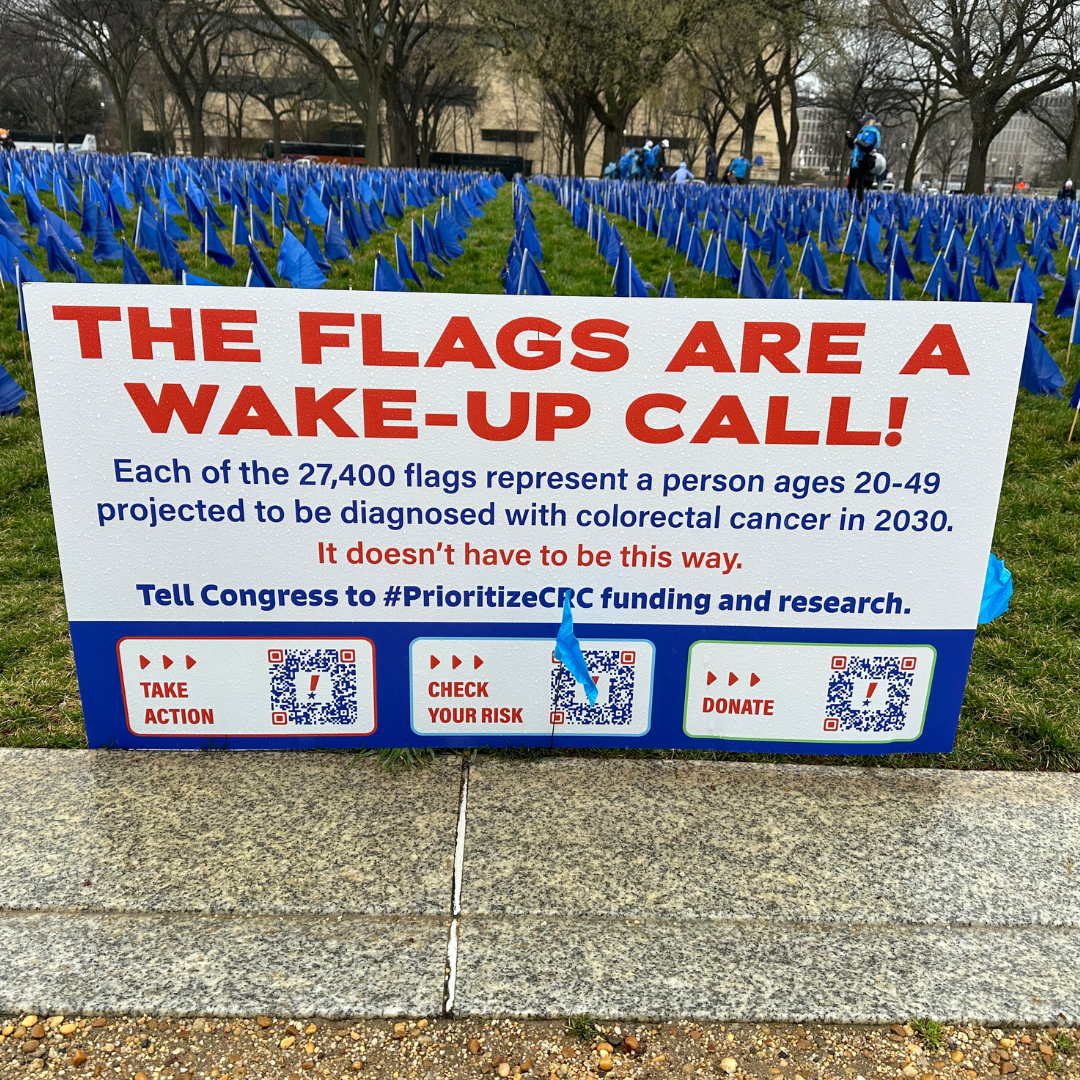
Every year at Call-on Congress we plant thousands of blue flags on the National Mall in Washington — one for every person who will be diagnosed with colorectal cancer. It is a powerful visual. You can actually see them from planes flying in and out of D.C. This year, for the first time, we're offering an at-home version: a miniature flag kit that you can place in your front yard, with signage explaining what it represents. The idea is to bring that awareness into neighborhoods all across the country.
When someone walks by and sees those flags, it starts a conversation. We've heard so many stories of strangers stopping to share that they've had a loved one pass from colorectal cancer, or that they had no idea this disease was affecting so many young people. Those conversations matter.
How to Get Involved
Fight CRC's Call on Congress takes place March 1–3, 2026 in Washington, D.C., with Advocacy Day on Tuesday, March 3rd. To learn more or to take action from home:
• Sign up as an advocate and receive action alerts at fightcolorectalcancer.org
• Join Community of Champions for regional networking and self-paced advocacy training
• Try Chat CRC for evidence-based answers to your colorectal cancer questions
• Order an At-Home Flag Kit to raise awareness in your neighborhood
Want to hear more from Molly and Fight CRC? Check out the YMyHealth Podcast on our YouTube channel or on your favorite streaming platform!