
Diagnosed at 26: How a Naval Aviator Turned a Devastating Cancer Diagnosis Into a Life's Mission
Written by Julie Woon, MSJ
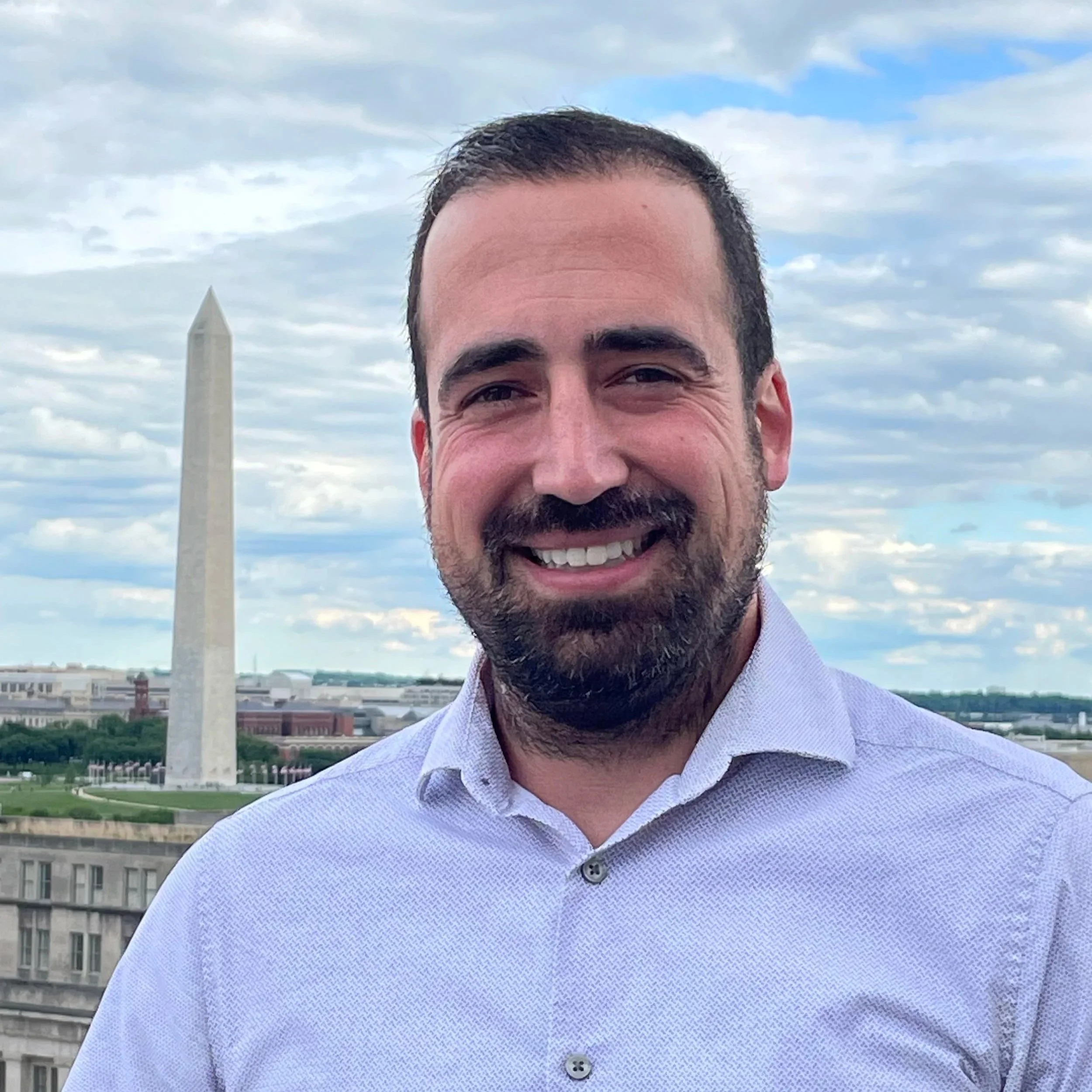
Ben White was a naval aviator in the US Navy with a clear sense of purpose — until he woke up from an emergency surgery at 26 that revealed both a stage 3 colon cancer diagnosis and an ostomy he hadn't anticipated. In this conversation with YMyHealth co-host Julie Woon, Ben, now Director of Federal Policy at Fight CRC, opens up about losing his military career, rebuilding his identity, and why anger can be the most honest fuel for advocacy.
You were diagnosed with colon cancer at 26. What advice do you have for young people who suspect something is wrong but keep getting told they're too young?
Ben: It is really, really hard to get a diagnosis when you're young. I was conditioned to believe what my doctors were telling me and not to push back. Getting my actual diagnosis took a lot of returning, and honestly, a little bit of luck — specifically one doctor who advocated for me and said, ‘No, something is not right, go back.’ My flight doc at the time told me that if the ER turned me away again, to go to a different hospital, and he'd handle the insurance paperwork. That was the difference for me.
I also came from a family with a medical background — both my parents are nurses and my sister is a nurse practitioner — and they kept telling me this wasn't normal. I recognize not everyone has those voices in their corner. So my biggest advice is: Don't take no for an answer. If something feels wrong in your body, pursue it. Get a second opinion. Go somewhere else. It's easier to say 'advocate for yourself’ than to actually do it, but your health is worth that fight.
What were your first symptoms, and why was it hard to recognize them as red flags?
There wasn't a single dramatic moment for me. My symptoms built slowly over a long period of time. I never had blood in my stool — one of the most commonly cited warning signs. What I had was a narrowing of stools, which, looking back, I can see was progressing for a long time. Though it did so gradually that I almost didn't notice. Then came significant abdominal pain and cramping, waking up in the middle of the night to use the bathroom — which is not normal — and gradual weight loss.
But I was an active-duty naval aviator in a high-stress, high-demand job, and there were always easy explanations. I'd just come back from Navy survival school, where I'd essentially gone a week without eating. Of course, my body was readjusting. It wasn't until everything escalated at once that I couldn't explain it away anymore.
How did the diagnosis actually happen, and what was the moment of impact like?
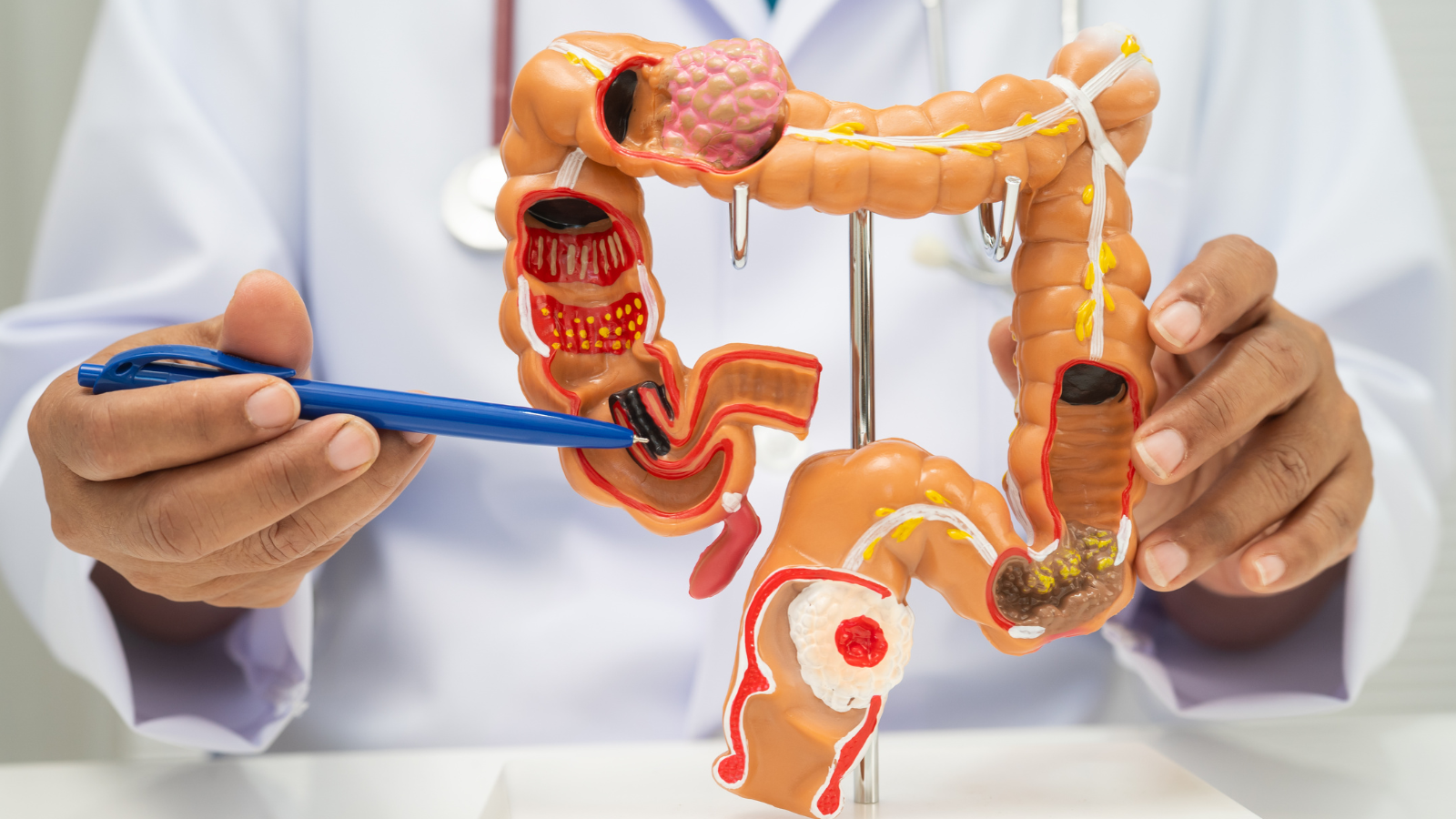
I wasn't diagnosed until I had emergency surgery. My tumor had fully obstructed my colon. I'd spent about a week as an inpatient on intravenous (IV) nutrition while doctors tried to figure out what was happening. We knew something was seriously wrong, but not exactly what. I woke up from what was supposed to be an exploratory surgery with an ostomy and a cancer diagnosis. So there was enormous shock layered on top of an already frightening situation. A cancer diagnosis in your twenties is always devastating, but the nature of how mine happened made it especially hard to process.
*An ostomy is a surgically created opening in the abdomen that reroutes the way urine or stool exits the body when the normal route is not possible due to cancer, another disease, or a malfunction in the digestive or urinary tract.
You were medically separated from the Navy following your diagnosis. How did losing that career reshape your sense of identity?
It was heartbreaking. The military had been my entire identity. I had missed weddings, birthdays, and holidays with my family to pursue this path. Being told I would never fly again — that it was just done — took a long time to process. I'd spent years of my twenties building toward something that disappeared almost overnight. It still hits me sometimes. I look back and think about what those years were and what they became. I've found my footing since then, and I genuinely love the work I do now, but that loss doesn't go away. It took real time and real effort to forge a new identity.
You were living in Jacksonville, far from your support network in California. How did you cope emotionally and physically in those early months?
My family stepped up in a way I'll never forget. I was living with three other aviators on odd schedules — there was no care infrastructure around me. But my family took turns flying out to be with me. My mom came for a stretch, then my dad. My sister had planned to go to Europe during a job transition and instead spent a month with me in Florida. Eventually, the Navy arranged a move to get me back to Northern California, where I actually had people. My sister and I loaded up the car between rounds of chemo — my dog included — and drove across the country.
Once I was home, two of my closest childhood friends had recently moved back to my hometown. They were working on a passion project, a company called PEAR — Positive Engagement and Response — that made conversation cards centered on positivity, mindfulness, and gratitude. They brought me into the fold, and having something to work on that was entirely about thoughtfulness and connection was genuinely healing.
How meaningful was that support system — beyond just the logistics of rides and appointments?
I honestly can't put it into words. There are the practical things — I couldn't drive myself to and from chemo, for example. But the deeper impact was that people around me kept reminding me that my life wasn't just my career. I had committed so much to the US Navy that I'd started to equate my identity entirely with it. When that was gone, the people who loved me helped me see there was still so much more. Looking down the barrel of a cancer diagnosis is terrifying. There's real anxiety and real mental health weight that comes with it, compounded in my case by knowing my career was also over. Having a support network is not a nice-to-have. It is everything.
What motivates you to keep advocating for colorectal cancer awareness — especially for young people?
Honestly? I'm angry. This disease took a lot from me, and I don't want other people to have to go through what I went through. It is so frustrating to hear the same stories over and over — people misdiagnosed, dismissed, caught in late stages because no one thought to look sooner. Molly, who founded the Colon Club more than 20 years ago, was told she was the only young person with this disease. I was told eight years ago that I was an anomaly. We are not anomalies! This is real, it is rising, and people need to know about it! I'm not waking up Hulk-level furious every single day, but that anger is a constant driving force. I'll never stop being angry that I had to lose what I lost.
As a scientist and policy person, how do you hold the tension between the data — which doesn't yet fully support lowering screening ages further — and the urgency you feel?
It's a fair tension. The data doesn't yet fully support another lowering of the recommended screening age, and I respect that. But there is so much more we could be doing right now for people who fall under the current threshold. Better symptom awareness, faster diagnostic pathways, removing barriers to testing for younger patients — these things don't require waiting for the data to catch up.
And frankly, I believe that data will eventually support lowering the age again. What's unacceptable is that while we wait, people in our cohort are dying. We have not had enough research funding, not enough urgency. That's exactly why I'm pursuing my PhD. I'm not willing to sit around for another decade hoping someone else solves it.
What does survivorship look like for you now, seven years out?
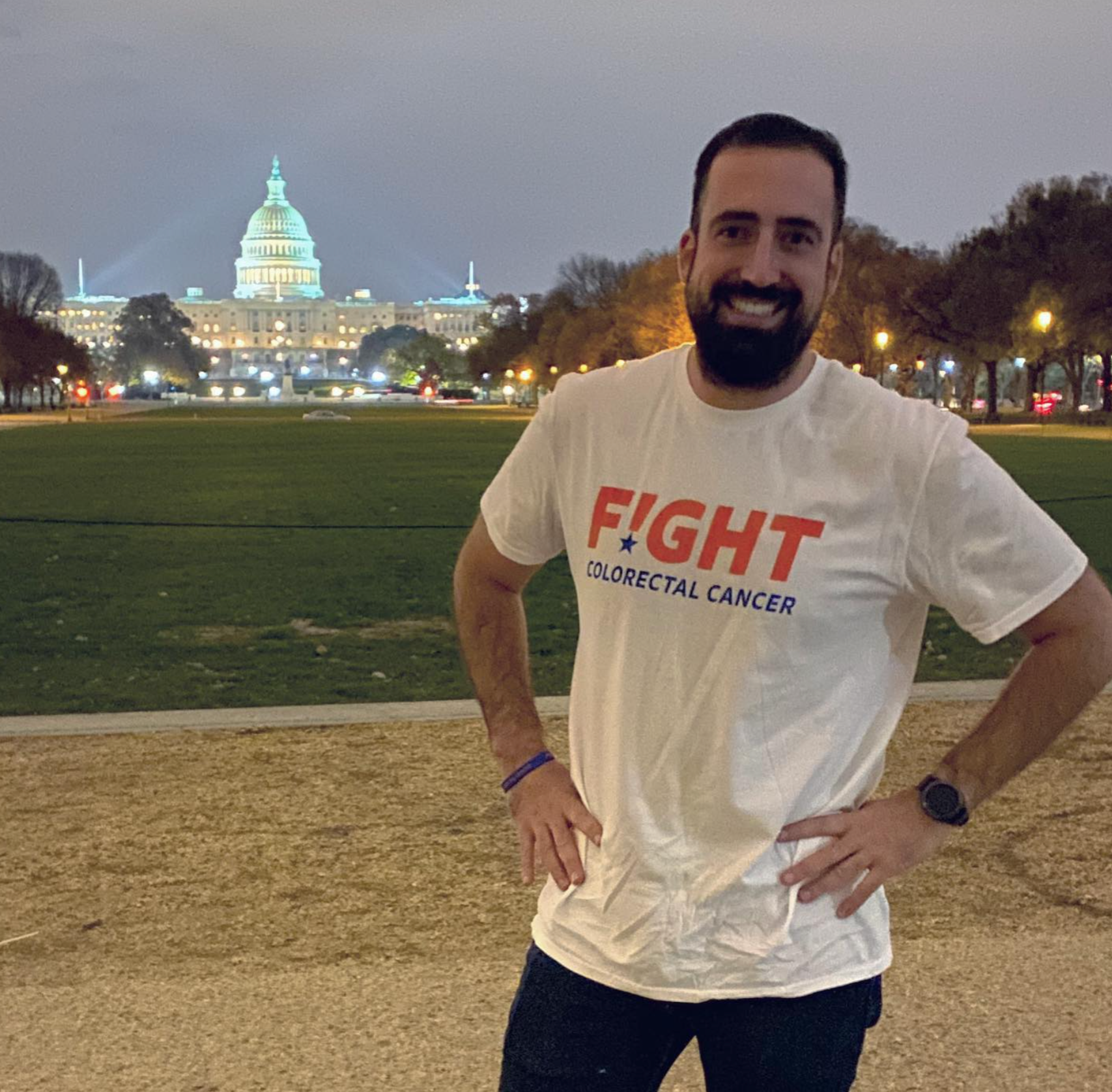
It's been a lot of reinvention. I left Jacksonville abruptly, left the Navy, and had to figure out what a career even looked like for me — cockpit skills don't translate cleanly to civilian jobs. I knew my undergrad in political science and communications pointed somewhere. Coming to DC for Fight CRC’s Call-on Congress in 2019 was a turning point. I spent a week here, visited friends, and decided this was where I wanted to start over. I got a job with Cancer Support Community, then went back for a master's in public policy, and now I'm working on a PhD. It took a while for my life to feel established again, but it does now. The work feels like mine in a way that's hard to fully explain.
What would you want someone who was just diagnosed — especially if they're young — to hear from you?
First: I'm sorry. It genuinely sucks, and you're allowed to feel that. Then: find your people. Find peer support. When I was diagnosed, I was told I was an anomaly — just like so many of us are — and I knew that wasn't true. That's how I found the Colon Club. I got on social media and started connecting with other young survivors. Some of those people I've never met in person, but we were going through parallel diagnoses at the same time, and being able to share that experience — even across the country or internationally — made a real difference. It kept me out of the spiral of feeling like I was the only one facing something no one else could understand.
You're not alone. There are people who've been through this, who are through treatment, who can offer real insight about clinical trials, about what to expect. Connect with the community. That might be the most important thing I can say.
After nine years of personal experience and professional advocacy, is there anything about this disease that still surprises you?
What surprises me — or maybe frustrates me is a better word — is how little has fundamentally changed. When I was diagnosed, we were asking the same questions we're still asking. I would have assumed that nearly a decade later, we'd have more answers. We have a few. We know that early-onset colorectal cancer is biologically the same disease as later-onset colorectal cancer. But the research funding hasn't been there, the sense of urgency hasn't matched the reality of what's happening, and cases keep rising. That's why I'm still in school. I got tired of waiting for someone else to do something about it.
Want to hear more from Ben? Check out the YMyHealth Podcast on our YouTube channel or on your favorite streaming platform!