
Written by Julie Woon, MSJ
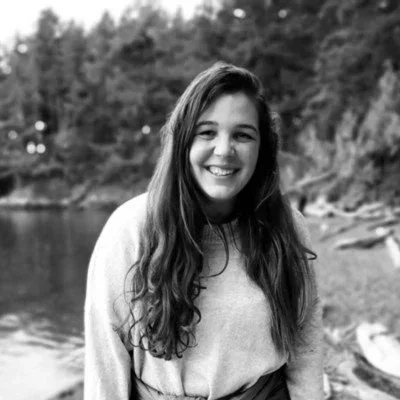
Meg Louk manages Project Odyssey at the Wounded Warrior Project, where she helps veterans and active-duty service members build resilience through adventure-based experiences in the outdoors. In this candid conversation, she talks about her work, her own journey as a new mom, and why getting outside might be one of the most powerful mental health tools we have.
How did your path lead you to getting involved in working with Wounded Warrior Project and leading the Project Odyssey team?
Meg Louk: I've been with Project Odyssey — with Wounded Warrior Project — for almost nine years. Before that, I worked for the Department of Defense (DOD) for the Army and the Air Force. So, my whole life has been working with the military and veterans. Even before that, I was a military brat. My dad was in the Navy, so I lived all over. It's kind of the only life I know.
Part of how I got into this specific program is that I worked for an Army program called Warrior Adventure Quest, which focused on resiliency and psychological flexibility. My undergrad degree was in rec therapy, and I just loved being outside. I loved doing activities. But as much as I loved being a raft guide or a climbing guide, financially it's not the most lucrative future. So I asked myself, how do I pair mental health with being outside and doing the things I love? That's when I found the Wounded Warrior Project. The job took me to Chicago, and the rest is history.
You're also a new mom. How has that season of life shaped how you think about mental health and resilience?
It has changed everything completely for me. My little guy will be one in ten days, so it's been the longest, shortest year I've ever experienced. I'm genuinely grateful for this job, and for everything Wounded Warrior Project has taught me about mental health, because without that education I don't think I would have survived this first year of being a mom. Knowing there are skills to be proactive about your mental health really shaped what this year looked like for me.
Project Odyssey takes a unique approach to mental health support with nature therapy. How do you define “adventure-based learning,” which is a core part of the program?
I actually like to think of it more as experiential learning, because that's really learning by doing — having the experience and then relating it back. I call it ‘chairlift therapy.’ You're going up the chairlift, and you know you have to come down the mountain, and sometimes you fall, and it's hard, but you have to get back up. That's a very physical experience. So when we come back down and have a chance to talk about it, it becomes: ‘How else are we falling down in our lives — emotionally, with friends, family, work — and how do we build ourselves back up?’ It's about relating what happens outside to what's going on inside.
What is it about being outside that helps people open up or heal?
Being outside and in nature immediately lifts something. Being in a traditional talk-therapy room can feel very stuffy sometimes. Outside, you get that reconnection — a breath of fresh air, the sun, maybe clouds or rain — and it reconnects you to your body and your nervous system in a way that lets you reset.
Walk us through what a typical Project Odyssey experience looks like.
It's a lengthy experience. People get excited because they picture five days of whitewater rafting or rock climbing, but that's not all it is — we're a twelve-week program. We start with a week-long adventure-based workshop, and then we do 12 weeks of follow-up, which is one of the first things we tell people. You don't just get to come and have the experience; we're checking in weekly and following up on the acceptance and commitment therapy tools we teach.
Participants are screened before they come, and they know in advance they'll be talking about hard things and sharing in a group setting. We're very group-focused, and one of the big pieces is what we call a ‘full value contract’ — everyone agrees on what the week is going to look like, and they have autonomy in shaping that. We call the arc of the week ‘the adventure wave,’ or the three T's: trust, transform, transition. Activities range from whitewater rafting to hydrotherapy to meditation and sound baths, because different things challenge different people. Then we bring it all back to how they can use these skills at home when life gets hard again.
What are some of the biggest challenges you see in the people coming through the program facing?
Nobody knows exactly what they're signing up for, which takes away the chance to research it and mentally prepare — and that loss of control is one of the hardest parts for a lot of people. Even for me, I need to plan three, four, six months in advance, so I understand why not knowing tomorrow's plan creates stress. And beyond that, we're pulling people out of their comfort zones. Someone might be totally at ease skiing down a mountain but really uncomfortable sitting still and painting for an hour.
Why does traditional talk therapy sometimes fall short for these individuals?
For a lot of people — not just military — it can be overwhelming to sit one-on-one with someone and work through trauma. Coming into a group setting instead, you know everyone there has experienced something, even if you don't know exactly what. That lifts the veil right away and creates a sense of comfort that's harder to find in traditional one-on-one therapy.
What shifts do you see in participants from the beginning of the program to the end?
Honestly, that's the most beautiful thing I get to talk about, and it's hard to explain — you really have to see it. Watching a group of strangers build a sense of community, trust, and vulnerability with each other over the course of a week is magical. By the end, they have this support group they can lean on.
We open the program with an opening session, and we close with what we call a closing ceremony, where everyone shares what they've seen grow in themselves and in someone else they were paired with that week. Standing around a fire hearing people say what they want to take with them, and what they want to let go of, is shocking in the best way — because sometimes you don't think people are really listening, and then you hear these remarkable answers.
Is there a story or moment that has really stuck with you?
Not too long ago, we ran a Project Odyssey in Alaska with active-duty soldiers, working alongside chaplains who helped support the group. One participant really did not want to be there — they'd basically been sent by their command. At the closing ceremony, after spending the whole week with the group, this person shared that if they hadn't been there that week, they'd had a plan to end their life. Being surrounded by this group, and realizing people cared and that they weren't alone, changed everything for them. The whole group got up right then and surrounded them with love and support. It's one of the most remarkable things I've witnessed.
Why is it so important to reach people while they're still in service, rather than after a crisis?
Mental health needs have really grown over the last several decades, and we're trying to reach people before things reach a crisis point. This approach actually grew directly out of a crisis. Around 2019–2020, the military community in Alaska was facing a suicide epidemic — close to 20 suicides in a short span. That's when the Wounded Warrior Project started working in Alaska specifically, taking a wraparound approach to get ahead of the problem.
That became Project Odyssey — giving people in their late teens and twenties the tools to recognize when things are getting hard, and how to ask for help before they hit crisis. If we give people those tools now, they can fall back on them later in life. I think about that with my own experience as a new mom — six weeks postpartum, I had to ask for help, and I could only do that because I already had the skills.
What would you say to someone who's hesitant to reach out, even when they know something is wrong?
There are so many avenues for help — a friend, a family member, a suicide hotline, a therapist, the programs we run at Wounded Warrior Project if you're a veteran, and plenty of other resources if you're not. One thing I've really taken on, both through this work and through new motherhood, is learning to say, ‘yes’ to help. Our generation is good at setting boundaries, which is healthy, but I think we're also in our heads about not wanting to bother anybody. When someone offers to come over, the instinct is often to say, ‘No’ — and I'm trying to get better at saying, ‘You know what, I'd love that.’
How can people normalize getting support before things feel overwhelming?
I think just making mental health normal — which our generation, and Gen Z and Gen Alpha, are doing really well. It's amazing to see teenagers and twenty-somethings actively seeking out therapy. But therapy isn't the only path. Getting involved in your community, being around people who support you — that can start the process too. Maybe it's group therapy, or maybe it's just finding something you're genuinely passionate about and diving into that.
What can civilians learn from the military’s proactive approach to mental health?
The military took on the suicide problem head-on, and the overall suicide rate is still high — I'll be out and see a semicolon tattoo and just know something happened in that person's life, to them or someone they know. I live in Tacoma, Washington, now, and I've started seeing that same head-on approach in the civilian world.
As a new mom, I joined the Tacoma Moms Support Group, and it's just women talking honestly about hard days. We also have a strong LGBTQ+ community here, and I've watched those support groups grow too. Getting involved, stepping outside your bubble, saying ‘yes’ — that's the first step.
For someone who isn't a veteran, how could they bring experience-based healing into everyday life?
Absolutely, we should all be doing this, and it doesn't have to be massive. Maybe it's setting aside 20 intentional minutes during your workday to go outside, put your phone away, skip the headphones, and just be present in your surroundings. Notice the sounds, notice what it feels like in your body. It doesn't matter if you're in a busy city hearing the hustle and bustle, or somewhere remote — give yourself that space to reset. It doesn't have to be big. Small bites work. You can restart your day at any point — a rough morning doesn't have to define the rest of the day.
Journaling helps too. There's real power in putting pen to paper. If you can't stand to look at what you wrote or read it back, that's fine — rip the page out and throw it away. There's something physical about getting it out of your system and starting fresh.

How does nature impact the nervous system?
Nature is powerful — you can feel it in the air, in the mountains, in the trees, whatever that looks like for you. It's calming for your nervous system just to be in it. People say ‘go touch grass’ as a joke, but really, go touch grass. Go outside. It's amazing what a moment of sun and fresh air can do. You can even see it in babies — when a baby is upset, taking them outside for five minutes shifts something in their body. It's a human experience, and it changes how we feel.
What are the biggest barriers you see when it comes to people seeking help — stigma, time, fear?
All of those, plus I'd add financial. Getting help can be expensive, which is why resources like the Wounded Warrior Project matter for veterans and active-duty members, and why it's worth searching out community resources if you're not. Fear is a big one too — especially the fear of being judged, particularly around individual talk therapy. But therapists are professionals; they're not judging you, they're there to help you. I think the stigma around reaching out for mental health has improved a lot, even if it's not gone. If we keep moving the needle two or three percent a year, we'll get there.
What would you say to someone who thinks they're not struggling "enough" to need support?
I love this question, because I see it a lot with our nineteen-year-olds in the active-duty programs who say, ‘I'm fine.’ And I'll ask them: ‘Okay, what about your friend who isn't fine? If you don't have the skills to help them, how will you show up when they need you?’ I call it the "cool guy theory" — I'll tell someone, half-jokingly, ‘I need you at this program because everyone thinks you're cool, and if you come, you'll inspire someone else to come too.’ It's a ripple effect. We all need help at some point — maybe not today, but eventually.
What do you say to someone who keeps deprioritizing their mental health?
The longer we put it off, the worse it tends to get. I try to acknowledge that everything else in life is busy and time is limited, but if we can carve out 30 minutes or an hour every other week or every month, that's a real start. A lot of people want to jump straight into a big commitment, and if they haven't built the habit yet, that's a huge lift. We use SMART goals in Project Odyssey — specific, measurable, attainable, relevant, timely. If someone says, ‘I'm going to walk outside three times a week,’ and they haven't done that before, I'll scale it back: ‘Can we do 15 minutes once a week or every other week? Give yourself a win. Most people who don't hit a goal within six weeks give up on it entirely, so the goal is to set something you can actually succeed at.
Any small starting points you'd suggest to someone getting going?
Get a calendar — your phone, the fridge, whatever works. My mom still carries a paper one around, and it's shocking how well that works for her. Mark off the days you commit to something, even something small. Find whatever version of being outside works for you, and go do that. And say, ‘yes’ — to help, to invitations, to the small opportunities that come your way. It's easy to say, ‘no.’ Try saying, ‘You know what? Today I'm going to go try this and see what happens.’
What does healing look like for you right now?
It's hard, honestly. Saying ‘yes’ to opportunities and staying connected to people is something I have to be really mindful about right now — it's easy for me to isolate, and I know that's not a healthy place to be. So, I make a point to reach out to a friend or family member every other week, just to check in and talk about what I need to talk about.
What gives you hope for the future of mental health — for veterans, for civilians, or both?
I think stigma is genuinely disappearing, and mental health is becoming something people are excited about rather than afraid of. I'm excited about where outdoor-based programming is headed — we're part of the Association for Experiential Education, working toward accreditation so other organizations can build programs like this too. I'm excited to keep seeing people get outside, talk about mental health, and support each other.
What does the application process for Project Odyssey actually look like?
A lot of people call in after seeing pictures of the program and thinking, ‘I'd love to do something like that.’ We run a screening process to make sure it's the right fit and the right time. We don't say, ‘no’ — we say ‘not right now’ if it's not the right fit, and we work to find something that matches your timing and your well-being. Programs run all over — Alaska, Washington, Oregon, Utah, almost every state — so sometimes it's in your backyard and sometimes it's not; we find the right place at the right time. Once you're in, you commit to the follow-up: answering our calls, responding to emails, and staying engaged with the group.
How often do these programs run?
We run one or two, sometimes more, almost every week of the year — over 250 Project Odysseys annually, and we're still growing. Most programs run four or five days depending on the setting, and we're working on rolling out one- and three-day versions to reach even more people.
Anything else you want people to know?
Reach out for help before things get hard. If something is lingering in the back of your mind enough that you keep thinking about it, that's enough reason to start talking about it with somebody. Don't wait for the crisis point — reach out when the thoughts start to come.
If someone wants to get involved with Project Odyssey or Wounded Warrior Project, what should they do?
Go to our website, woundedwarriorproject.org — we have so many resources there. If you use the chat box or call us, you'll reach a real person right away who genuinely wants to talk with you about how we can support you and your family. We serve all post-9/11 veterans and anyone actively serving, including reservists and the National Guard.
Want to hear more from Meg? Check out the YMyHealth Podcast on our YouTube channel or on your favorite streaming platform!
This conversation touches on suicide and mental health crises. If you are struggling, the 988 Suicide & Crisis Lifeline (call or text 988) is available 24/7, and veterans can press 1 after dialing 988 to reach the Veterans Crisis Line.