
"Get the Colonoscopy": One Woman's Stage 4 Colon Cancer Journey and the Fight to Be Heard
Written by Julie Woon, MSJ
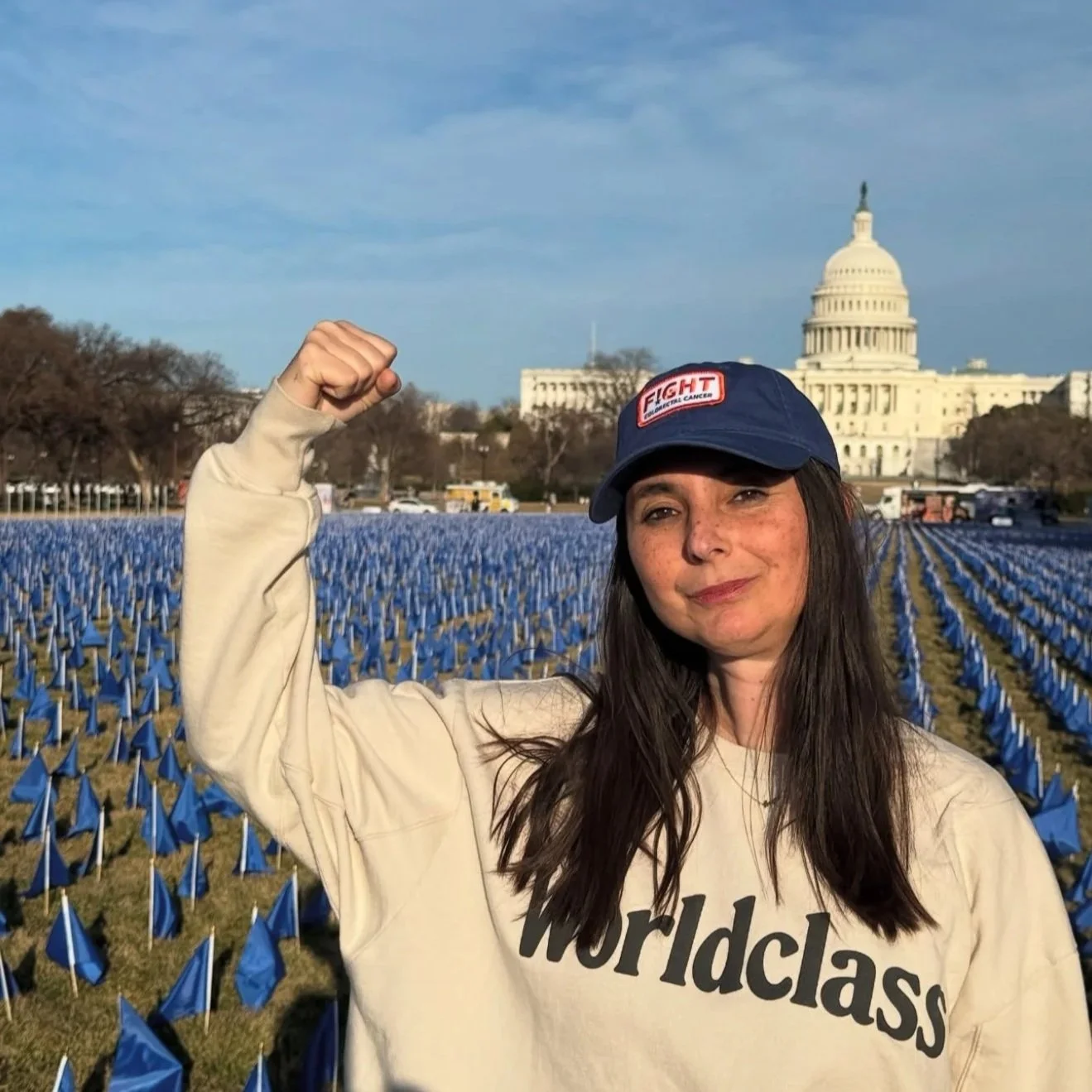
Elizabeth Wachsberg was 38 years old when she was diagnosed with stage IV colon cancer — a disease she never saw coming, despite a decade of gut issues and multiple doctors who missed it. A Los Angeles-based TV industry professional turned patient advocate, Elizabeth now uses TikTok and events like Fight CRC's Call-on Congress to make sure others don't have to walk the road she did. In this candid conversation, she shares what life was like before her diagnosis, what it took to finally get answers, and what survivorship really looks like.
Take us back before your diagnosis. What was life like?
Elizabeth Wachsberg: I was struggling with a lot of stomach issues — I kind of have my whole life. I always joked that as a child, I was a milk of magnesia and Desitin child. As I got older, it just kept getting worse. I saw four GIs over about ten years before I was finally diagnosed. I'd gotten so used to eating something, getting an upset stomach, and going to the bathroom. That was just the routine every day. I had an IBS diagnosis, a bacterial overgrowth diagnosis, and I knew dairy was questionable. Colon cancer never crossed my mind. No one ever brought it up.
What were the first symptoms that finally sent you to a doctor?
The main thing that started me seeking care was having trouble finishing going to the bathroom. I would sit down, go, and then have to wait another few minutes because I didn't feel like I was done. It would eventually come out, but it always took a little extra time. At the time, I figured it was hemorrhoids or just something people deal with. Paying attention to how you poop is not something you're really thinking about in your thirties.
All the abdominal symptoms I just chalked up to IBS. I knew it was sort of an umbrella diagnosis and that there was further testing that could be done, but I hadn't thought much beyond that.
You went through four gastroenterologists (‘GI doctors’) before getting diagnosed.What happened?
The first doctor actually suggested a colonoscopy, but he was leaving the network the following week. When I tried to schedule it, my insurance made me find a new doctor. I went to someone else in the same office, and he looked at my previous doctor's notes and said — and I will never forget this — "This is what I think is wrong with you, and I'm never wrong."
He wanted me to take an antibiotic every night for six months to a year because he believed the good bacteria in my lower gut was traveling to my upper gut while I slept. I was not interested in that, so I found someone else.
The third doctor, a woman in Santa Monica, actually said she didn't think I had Crohn's or colitis, but that a colonoscopy was the only way to rule it out. When I called my insurance to schedule it, they could tell me the doctor fee, the facility fee, the propofol fee — but they couldn't tell me what the colonoscopy itself would cost.
It depends on the total cost because 10% of a $1000 and 10% of $10,000 are very different amounts of money! They just kept saying they couldn't tell me until it was billed. By then, I had gone an entire year without any stomach symptoms, so the doctor suggested we wait until they came back.
What happened when your symptoms returned?
I was at work. I remember it was a Friday night, March 1, 2019. I felt like I'd pulled a muscle in my side. I Googled my symptoms — and my sister later joked that I'm the only person who Googled symptoms and it didn't say I had cancer. Over the next couple of weeks, I slowly got more and more symptoms; shooting pains that got increasingly severe.
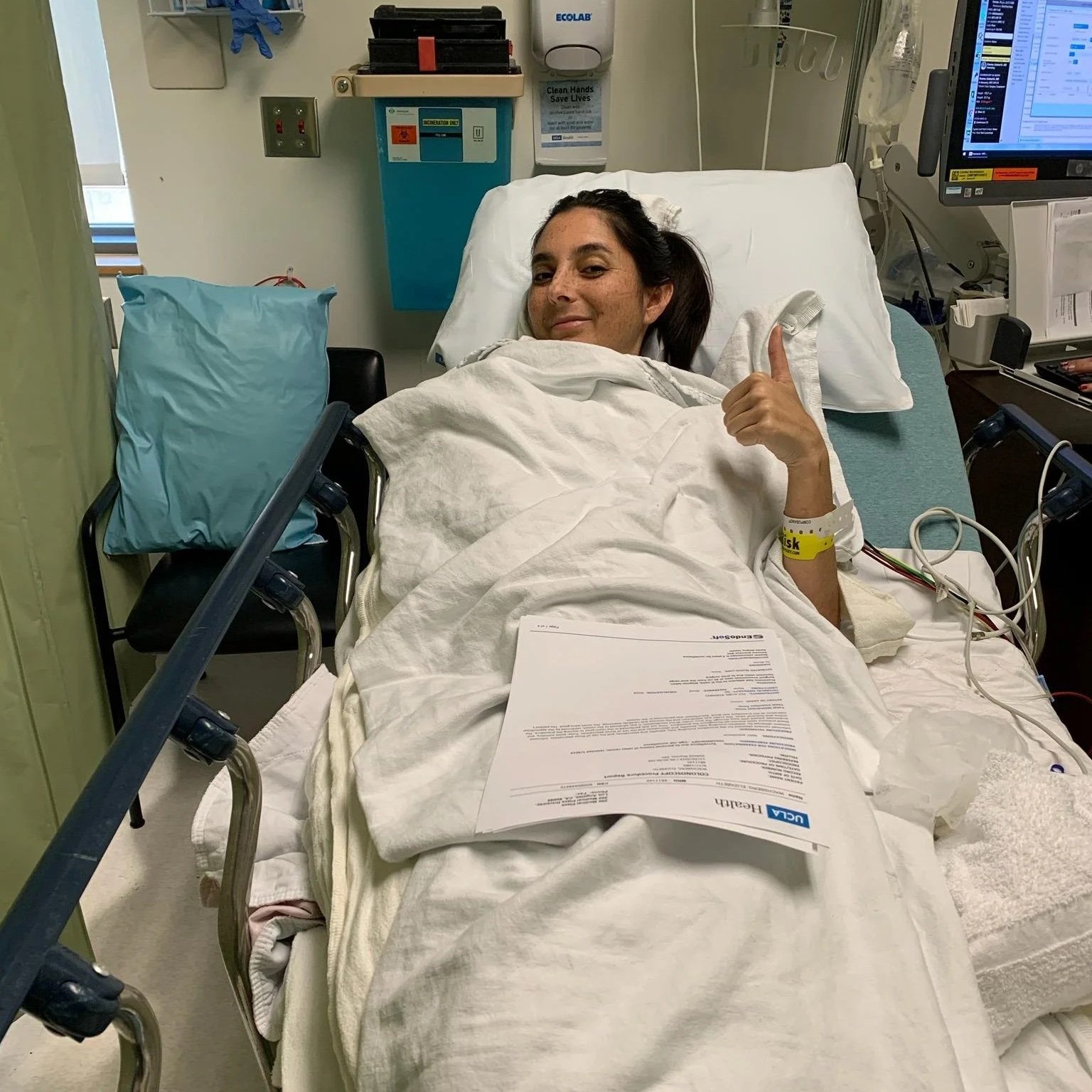
On March 12th, I finally took the day off. My new GI doctor looked at blood work I'd had done in January — blood work that nobody had followed up on. I had very low B12 and very low albumin. He ran more tests. The next day, I woke up in the most pain I'd ever been in. I drove 45 minutes to work and couldn't stand up straight. They sent me home. On the way, my doctor called and said my inflammation levels were so high I needed a colonoscopy that Friday.
He initially had me on fiber. When the results came back, he said to switch to Miralax. The day I switched to Miralax was the first time I ever had blood in my stool — the day before I was diagnosed.
I went in for a CT scan, and I'll never forget: they started the scan, stopped it, and the technician came in and said, "When was the last time you ate?" I said last night, because I was having a colonoscopy the next day. He said, "Do they know you're here?" And then he just went, "Okay," and went back to finish. I had so much blocked behind my tumor. They're not allowed to say anything, of course.
That evening, my doctor called, and my dad had him on speakerphone. He said, "I'm so sorry, but you have a tumor in your colon and spots on your liver. You have to go to the hospital."
What was going through your mind in that moment?
Honestly, the first thing that came into my head was: ‘This is so fucking stupid’. It just felt like it was happening to somebody else. Everything felt like it was moving. I kept trying to call my sister, and she wasn't answering. My dad went to call my stepmom in the other room, and I just remember sitting there thinking — ‘What do I pack?’
The thing that hit me hardest wasn't even what was happening to me. My mom passed away from non-Hodgkin's lymphoma — she was diagnosed ten days after I was born and died when I was four months old. My dad, holding the phone, just whispered, "It's happening all over again." This happened to him almost more than it happened to me. I just couldn't believe he was going through it again.
When we got in the car to drive to the hospital, my dad walked to the passenger side. So I just thought, I guess I'm driving. I don't remember if we said anything. I just remember taking a kind of look at my life and thinking: okay, I've done a lot of really cool things. I've seen a lot of really cool things. I tried to take stock of everything I'd already done. And I think because I'd lost my mom at 32, everything past 32 has always felt like extra.
What do you wish someone had told you in those first few days?
That you can survive Stage 4 colon cancer. For the first four days in the hospital, not a single person said anything like that to me. Every step of the way felt like: you're dying, you're dying, you're dying.
The night nurse told me about the time they thought she had breast cancer — but don't worry, she was fine. I didn't know how that helped. A nurse taking my chart for the colonoscopy looked at me and said, '“But you're so young and pretty." The anesthesiologist said, "I'm going to take my doctor cap off because this is a little weird for me — you're not that much older than I am." And if you Googled young people and colon cancer at that time, the first article that came up was titled, ‘Why Are So Many Young People Dying of Colon Cancer?’'
Then my liver surgeon walked in alone, sat down, showed me where my tumors were, and said: "Let's cure this thing." I said, ‘You can do that?’ And he said, "We can try." That was four days into my hospital stay. No one had said anything remotely like that. So
I think knowing that it is possible to survive Stage 4 colon cancer — especially if it has traveled to an organ that is operable — is something people really need to hear.
Do you think the cultural messaging around “you're too young for colon cancer" played a role in your delayed diagnosis?
Absolutely. My GI doctor told me later that when the scan results came back, he told them they'd made a mistake — that they'd mixed my scans up with someone else's, because it wasn't possible for a 38-year-old. Seven years ago, it just wasn't on anyone's radar.
What's changed now, I think, is social media. People like Bailey — who had over a hundred thousand followers on TikTok and passed away at 25 after her Stage 4 colon cancer diagnosis — have helped bring visibility to this. Chadwick Boseman. James Vanderbeek. People are starting to understand why self-advocacy matters, and they know: ‘I should ask for a colonoscopy if I have blood in my stool.’
I have people reach out to me on TikTok all the time. One woman, around 25, knew something was wrong, asked for a colonoscopy, and her doctor refused. She asked him to put the refusal in her chart — and then he did the colonoscopy. He removed three precancerous polyps and told her she'd saved her life.
What are the symptoms people absolutely should not ignore?
Blood in your stool — this is the number one sign. People go to the bathroom and flush without looking. I look every time now — at what's there, what color it is, what shape it is. Hemorrhoids are common, so seeing blood doesn't automatically mean cancer. But it means pay attention.
Trouble finishing going to the bathroom — that feeling of incomplete evacuation.
Changes in bowel habits — alternating diarrhea and constipation, or anything that's different from your norm.
Abdominal pain that's persistent or worsening.
And it's worth noting: The number one symptom of colon cancer is having no symptoms. Which is exactly why screening matters so much.
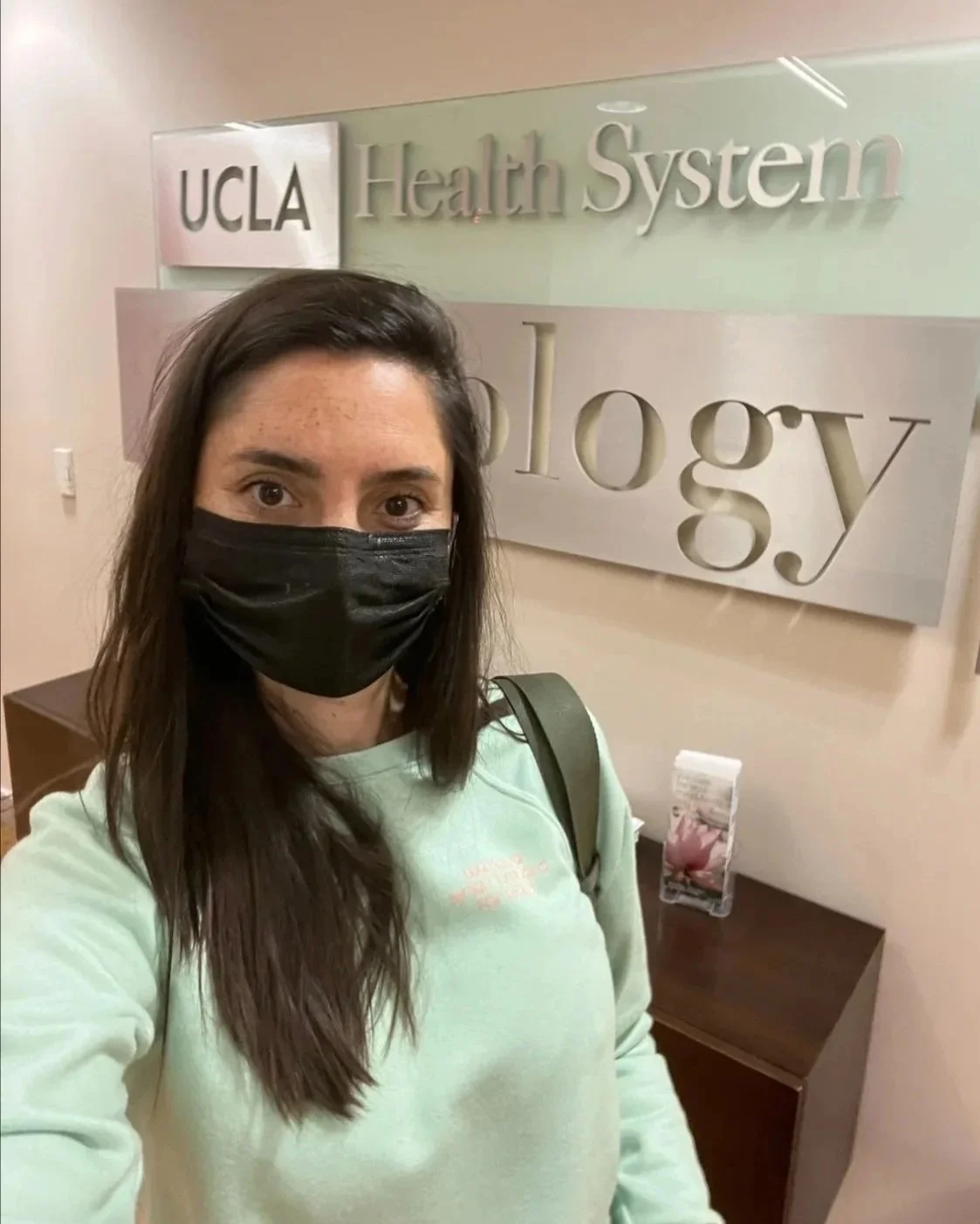
Elizabeth in one of her hundreds of videos on TikTok that she has created to bring awareness to colorectal cancer and preventive screenings.
What's the biggest misconception about colonoscopies you'd like to address?
That they're scary or gross or a big deal. I've had about six in the last seven years. It is genuinely the best nap you'll ever take. The propofol nap is fantastic. For me, the hardest part is not being able to eat beforehand — drinking something that makes you go to the bathroom has never been abnormal in my life, so that part isn't even that bad.
Here's what people need to understand: most cancers you cannot prevent. With colon cancer, removing a polyp is preventing cancer. Not every polyp turns into cancer, but some can. The fact that there is something you can actively do to prevent yourself from getting cancer — that's how we need to start talking about colonoscopy.
What was the hardest part of going through treatment?
I think the hardest thing was navigating what I'd call toxic positivity. People would say, ‘You're so strong — if anyone can beat this, you can.’ And the more people said that, the more I thought, I'm definitely dying. It was just — I don't have to be a warrior. I'm not fighting a battle. I'm tired. I can't remember my name, and I just want to sit on the couch.
Something else that surprised me was how people showed up — or didn't. The people you expect to be there for you sometimes aren't. But then others step in and fill that space in ways you never expected. Once I made a public announcement on Facebook, some people stopped reaching out because they didn't want to bother me — they assumed everyone else was messaging. So suddenly no one was. And it's hard to say, ‘I need something from you,’ especially when you're also trying to figure out what you even need.
I also worked throughout chemo to keep my health insurance. I rotated between Bosch, Single Parents, Grey's Anatomy, and NCIS: LA as a stand-in. If I felt well enough, I'd text a friend in production, and they'd bring me in. If I didn't feel well, I'd go home. People don't realize you can work while on disability — disability supplements you, and they actually want you to work because it lessens their payout. I think a lot of people are scared they'll lose their benefits if they earn anything, but that's not how it works.
How did the diagnosis change your sense of identity?
For a portion of time, it becomes your whole identity — your whole life, your whole structure. And then the thing nobody really warns you about is that after treatment ends up being way harder than during. During treatment, you have a structure, a plan, a goal. And then suddenly you've spent eight months working toward this endpoint, and your doctor says, "Okay, you're good — see you in three months." And you feel abandoned. That's where the mental stuff really comes in.
I went through a very dark period after treatment ended. I had a panic attack driving home from work on the last day of a show. I had to drive 35 miles on side streets because I couldn't get back on the freeway. My parents drove down. I couldn't drive for six weeks without feeling like I was going to be sick. I eventually got on an selective serotonin reuptake inhibitor (SSRI), and it changed my life. I should have gotten on it earlier. I don't know why I resisted for so long, but there's this idea that if you survive, you should be okay — and that's just not how it works.
During chemo, my friend Megan and I called them ‘black cloud days.’ My infusions were three weeks apart, so:
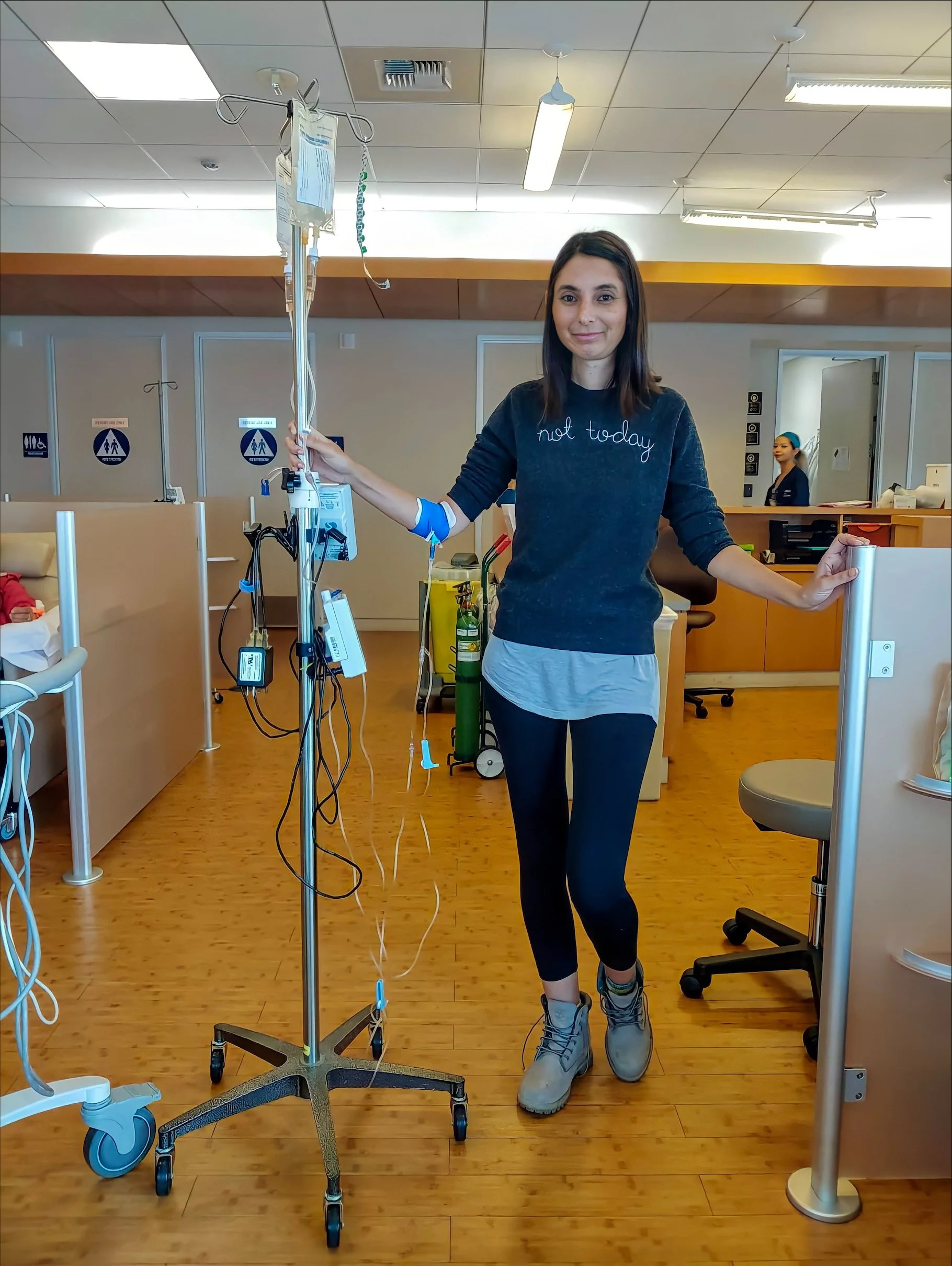
Elizabeth during her chemotherapy treatments.
Week one: I felt terrible physically.
Week two: I still felt pretty bad.
Week three: I'd slowly start to feel better — but the better I felt physically, the closer I knew I was getting to feeling terrible again. So the better I felt physically, the worse I felt mentally.
People would say, ‘You're so positive.’ And I would always say, ‘well, it's shitty enough on its own.' If I'm also miserable the whole time, what's the point?’ But I also think it's important to give yourself permission to have those black cloud days. If your whole day was getting out of bed and onto the couch and then back into bed — that's a win. If you didn't get out of bed at all — that's still a win. You made it through the day.
What's your approach now to diet and lifestyle after cancer?
I've been a vegetarian since I was about 16, and I don't really drink, so when people started pointing to red meat and alcohol as risk factors, I was like... well, I haven't had those. My oncologist says a Mediterranean diet is the healthiest they've seen, so I try to stick as close to that as I can. A handful of tree nuts every day — there are studies linking those and vitamin D to colon cancer outcomes.
But my motto was: ‘If I'm going down, I'm going down eating cheese.’ There is no study that shows sugar affects cancer in any meaningful way people think it does. Yes, cancer cells feed on glucose — but anything you eat gets turned into sugar in your body. That's just what your body does. So when people say sugar feeds cancer, I mean, yes, technically, but not in the way they mean it.
I think the Mayo Clinic said it well: ‘If you don't feel like eating anything and all you want is chocolate cake, eat the chocolate cake.’ I respected what my friends chose for themselves. But it's when people from the outside — people who've never had cancer — come in and say this is what you should do. You are welcome to do that when you get cancer. I'm going to eat gummy bears.
The things I lean on alongside my medical treatment:
Acupuncture and cupping (my doctor approved it, and it makes me feel good)
Fascia bodywork to keep my body from feeling compressed during treatment
Mediterranean eating as a general framework
Daily tree nuts and vitamin D
Anything you want to add alongside your medical care, talk to your oncologist first. Not because they're gatekeeping, but because some things genuinely interact with chemo — grapefruit, for instance, interferes with a lot of medications. They're trying to protect you.
What do you make of the growing online wellness culture around cancer "cures"?
It deeply concerns me. Turning oncologists and scientists into the bad guys is going to cause more damage than chemo ever could.
I remember when Elle McPherson came out promoting a book about how she healed herself from breast cancer with juices and clean eating. I looked it up — she had stage zero breast cancer and had a lumpectomy. If someone told me I had breast cancer and all they wanted to do was a lumpectomy, I would say yes immediately. Stage zero breast cancer is now being reclassified as not even truly cancer in many contexts. But the idea that she cured herself without medicine when she'd already had surgery and a stage zero diagnosis — that's a dangerous message.
I am only alive today because of chemo. It's not juices, it's not oils, it's not ivermectin. It's the scientists who found these treatments. Does chemo suck? Yes. Are you poisoning yourself? Yes. Every time I took my pills, I repeated: ‘kill the cancer, not me. Kill the cancer, not me.’ But it worked.
My oncologist — and I believe this completely — would give up his own life if it meant his patient would live. Doctors are not hiding magical cures and collecting kickbacks for putting people on chemo. They do not want their patients to die.
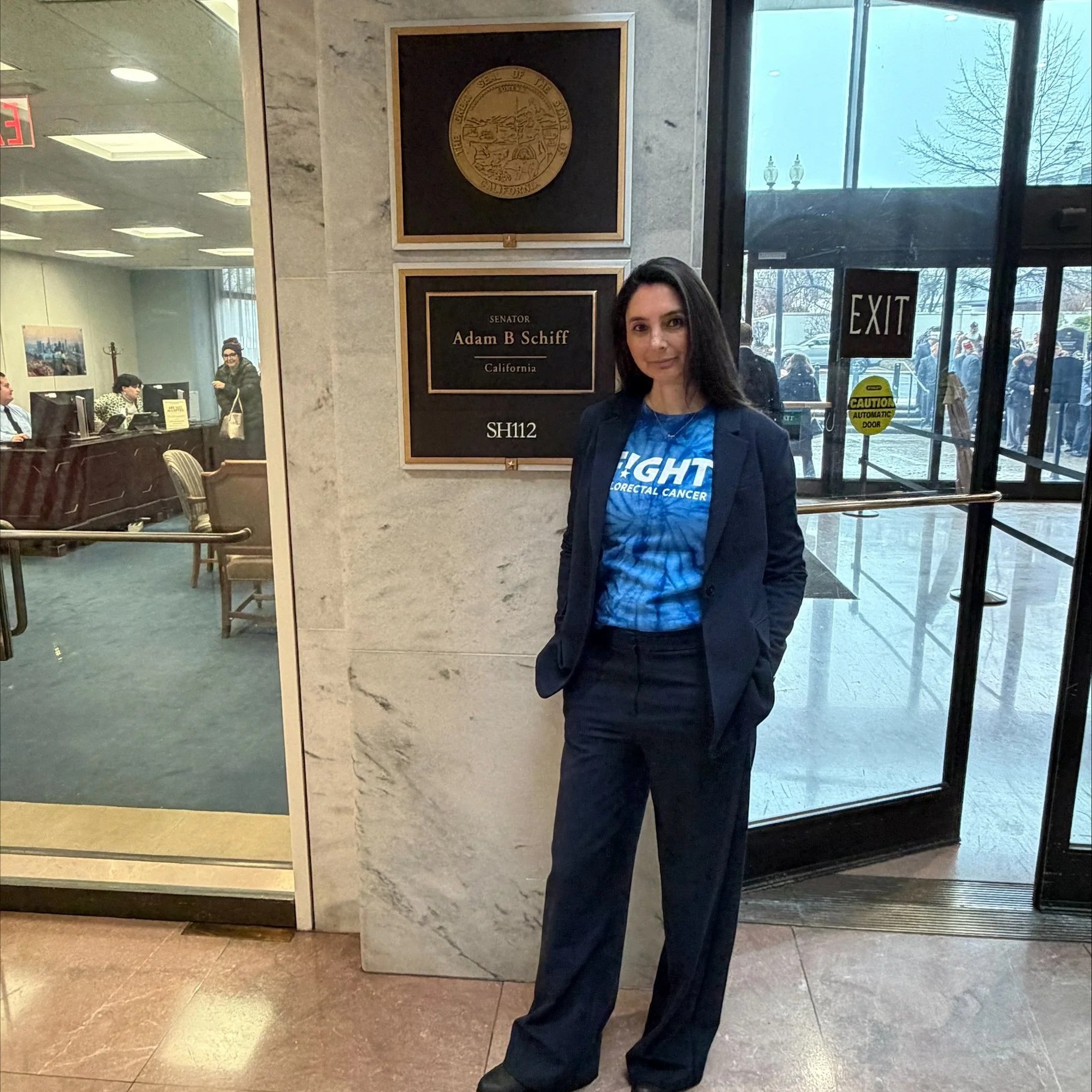
Elizabeth in Washington, DC., for meetings with U.S. representatives, congress members, and their staff to share her story, bring awareness, and advocate for increased colorectal cancer funding during Fight CRC’s Call-on Congress annual advocacy day.
What does ‘trust your gut’ mean to you now?
I take some ownership when I look back. I knew something was wrong, but I also didn't want to get a colonoscopy at 32 or 33. The idea of it wasn't appealing. So I think it's both: trusting your gut means acknowledging something feels off and actually following through on the steps to find out what it is — even the uncomfortable ones.
Now I have people who go above and beyond for me when I get any kind of screening. I joke that I've spent so much money with my insurance company that I have my own concierge — and everyone jokes about their Hermès appointments while I have my very exclusive healthcare shopper. But the access and the advocacy I have now are something everyone deserves.
What gives you hope?
Getting a message from someone saying you saved my life. One person not having to go through what I went through is a win.
Colon cancer was predicted to become the number one cause of cancer death for people under 50 in 2030. It happened four years earlier than expected. That's terrifying — but it also means people are paying attention, talking about it, and fighting for research funding. Fight CRC shows up every year knowing there's no money, knowing funding is being cut, and we show up and ask for it anyway. Because one day someone else will be in that White House, in that Congress, and they will give it.
I finished chemo in November 2019. At five years, my doctor told me it's overwhelmingly likely I'll die of something other than colon cancer. For stage IV, ten years is what they consider cured. I have about two and a half or three years left to get there. And I remember sitting on the floor of my bathroom, throwing up CT contrast, thinking I was dying. It's 2026, and I get to sit here and talk to people about survivorship.
That's what hope looks like.
How can people reach out and connect with you?
You can find me and DM me on TikTok @elizabethfightscoloncancer and on Instagram @elizabethwachsberg.
Want to hear more from Elizabeth? Check out the YMyHealth Podcast on our YouTube channel or on your favorite streaming platform!