
What it Takes to Be a Female Health Entrepreneur and How Dr. Erica Barnell Has Done It.
Written by Melissa Schenkman, MPH, MSJ
A conversation with Dr. Erica Barnell, Chief Medical and Science Officer and Co-Founder of Geneoscopy.
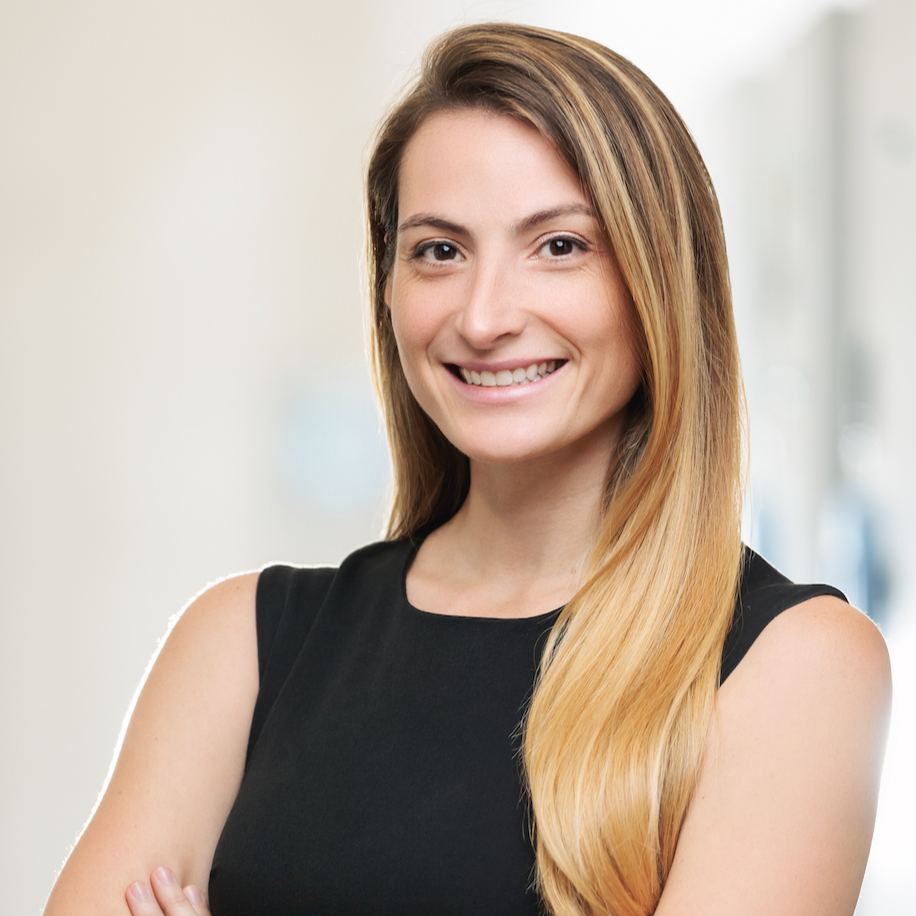
Dr. Erica Barnell didn’t set out to become an entrepreneur in the conventional sense. Yet, after growing up surrounded by family who successfully built businesses, she chose academic paths that combined her love for science with acquiring the financial and business acumen needed to bring the power of scientific discovery to the masses.
As the Co-Founder and Chief Medical and Science Officer of Geneoscopy, a healthcare diagnostics company developing stool-based tests for gastrointestinal diseases like colorectal cancer and inflammatory bowel disease, Dr. Barnell has spent the past decade turning a research idea into a company with 75 employees, raising more than $200 million, and producing the first FDA-approved RNA-based, noninvasive stool-based test for colorectal cancer, Colosense. We sat down with Dr. Barnell to talk about how she did it, what caught her off guard, and what she wants the next generation of women health entrepreneurs and founders to know.
You have an MD and a PhD in molecular genetics. At what point did you realize you wanted to become an entrepreneur?
Dr. Barnell: Honestly, I think I was exposed to it so early that it never felt like a radical choice. My grandfather started a binder manufacturing company in the 1970s and ultimately sold it. My dad started a precision medicine billing company 20 years ago and recently exited. Andrew and I were literally dragged to his office as kids, pulling shipping stickers off boxes for five cents each, then running to Schnucks to spend our earnings on scratchers and donuts. Those experiences compound. I never had the idea that entrepreneurship wasn’t possible because I had examples in front of me constantly.
That said, I fully recognize how overwhelming it must feel for people who don’t have that kind of background and exposure. Which is exactly why representation matters so much.
Healthcare and entrepreneurship are often described as two very different worlds. Why is that gap so hard to bridge?
They really do attract very different types of people. A lot of my classmates in medical school knew they wanted to be doctors since they were three years old — some could tell you exactly which subspecialty they’d pursue. The brains that gravitate toward medicine aren’t always the best business minds, and doctors are notoriously bad businesspeople. I say that with love.
What I had going for me was training in both worlds. I studied applied economics and management at Cornell, then went deep into biology and eventually medicine. Being able to hold both of those frameworks at once — to see what the problems are from the inside and actually know how to build something to address them — that’s where Genoscopy came from.
The good news is the walls between academia and industry are starting to come down. When I was at WashU, they were just beginning to integrate business training into the medical school curriculum. Today people have access to so much more — how to file a patent, how to raise money, how to build a pitch deck. It’s becoming more recognized as a legitimate and important skill set, which is exciting.
You founded Geneoscopy at 24. What were the biggest challenges early on?
Leading people who were older than me, more experienced than me, and more technically skilled — that was genuinely intimidating. I was trying to figure out how to balance being aggressive enough to prove myself while also leaning into the things that come more naturally to me, like compassion and empathy. That balance is really hard when you’re young, and even harder when you’re a female founder.
I also had a lot of imposter syndrome thoughts that were, honestly, pretty intrusive. What saved me were mentors who didn’t let me indulge those thoughts for too long. And over time — through experience, through becoming a mother, through just doing the work — I grew into the leadership role and got more comfortable with it.
Here’s the thing though: I think that discomfort built a really solid skill set that a lot of people don’t have. It took grit. It took letting those uncomfortable feelings wash over you so you could come out the other side more empowered than you thought possible.
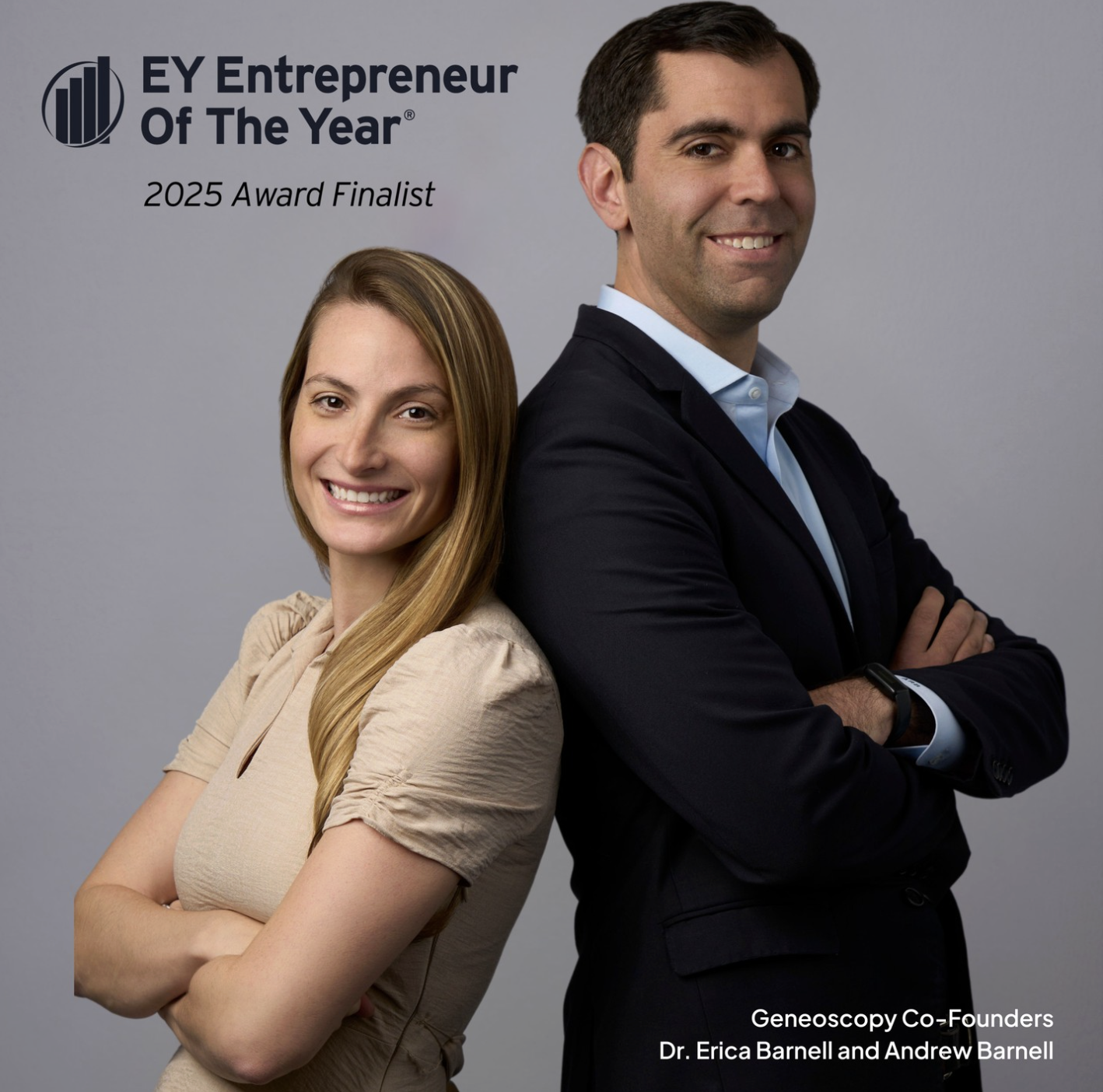
Courtesy of Geneoscopy and Ernst and Young
What has it been like co-founding with your brother Andrew?
Working with Andrew is one of the greatest privileges of my life. We’re opposites in a way that actually works beautifully. I’m the scientist. He’s the strategist. We’ve spent hours, days, months — poring over data frames and PowerPoint slides together, trying to figure out how to present our findings in a way that actually lands.
We faced a lot of ‘No’s’. A lot. But we faced them together, and we learned how to use our complementary skill sets to turn those ‘no’s’ into ‘maybes’, and then hopefully into ‘yes’s’. Some investors were skeptical of a family-run business, and honestly, I get it. But the investors who recognized that family bond for what it is — accountability, trust, authenticity — those are the ones who ultimately invested in Geneoscopy. And they’re realizing the value, because together we’re collectively better than we are as individuals.
Fundraising is notoriously brutal. What’s your honest take on navigating it as a first-time founder?
It’s never easy. We’ve done all of it — put in our own money, friends and family rounds, angel investment, VC, strategic investing, coast and St. Louis. Every single stage is hard. And it’s especially hard for first-time founders because you don’t have a track record.
The strategy that worked best for us was what I’d call credibility building over time. Every time you’re raising capital, you don’t just engage the investors who are suited for this round — you build relationships with people who might be a better fit for future rounds. Tell them what you’re doing. Show them your plan. Show them the value you’re going to create. And then, two years later, come back and say: look at what we did. We delivered. We executed. That’s how you build the same kind of track record that serial entrepreneurs build through past successes.
The other thing I’ll say: our generation takes "No's” really hard. We grew up being trained to succeed, to get everything into the box before it exploded — remember that game Perfection? We have to unlearn some of that. Getting used to rejection, absorbing it without collapsing, and then moving forward — that’s a skill you have to consciously develop as an entrepreneur.
How do you think about building and managing a team?
Your team is everything. I always say board members are like family — you don’t really get to pick them. But your team is like your chosen friends. Who you surround yourself with reflects who you are, the culture you’re creating, and the work ethic you want to see.
Hiring is tough. Nobody gets it right every time. But a few things have helped us minimize the mistakes:
• Use contract-to-hire arrangements for major roles. It gives both sides a chance to date before you get married. You can see how someone integrates into the company culture before making a long-term commitment, and they can assess whether it’s the right fit for them too.
• Compensate people fairly for any assessment work. Don’t waste their time.
• Recognize when there’s a bad fit — whether it’s performance, culture, or direction — and act on it. It’s never good for the company or the individual when a change is clearly needed.
That last one is hard. At a small startup, letting someone go feels like a breakup. You’ve been in the trenches together. But we’ve learned to rip the Band-Aid and move forward, and it’s been better for everybody.
You’ve been building Genoscopy for a decade. What milestones stand out most?
It’s easy to keep your head down and miss the bigger picture — like you’re climbing a mountain with your eyes on your feet, trying not to fall, and you don’t stop to look back at how far you’ve come. When I do look back, here’s some of what we’ve accomplished:
• Built a full CLIA laboratory to process samples
• Ran a 10,000-patient prospective clinical trial
• Engaged the FDA and received FDA approval for ColoSense®
• Grew the team from just Andrew and me to 75 people
• Raised over $200 million across multiple venture rounds
But honestly, what I’m most proud of is this past year, when I got a real test result back from a real patient. I watched people who tested positive go get colonoscopies and have lesions removed. That’s what I spent 10 years working toward — actually impacting lives, saving patients. That was my lifelong dream, and realizing it’s happening is still kind of surreal.
What’s been one of the most unexpected ‘small’ moments that shaped you?
There are big moments like FDA approval, which obviously everyone notices. But then there are smaller moments that nobody else marks, that quietly shape who you are.
For me, it was attending a summit for chief medical officers at a major cancer screening event. There were eight CMOs at the table. I was the only woman. I was the youngest by decades. And sitting there, knowing that the people at that table are shaping colorectal cancer screening guidelines — shaping the tests and the medicine that gets delivered to patients — I felt the weight of that.
Colorectal cancer affects a population that isn’t always represented in those rooms. I feel a real sense of honor and responsibility to be there and to speak for people who are passionate about this cause but maybe aren’t at the table yet. We are one of a handful of companies with FDA approval for colorectal cancer screening, and it’s the most preventable but least prevented cancer in the United States. Being part of the group trying to change that — that’s everything.

As a female founder, what personal challenges have you navigated that don’t always get talked about?
There’s a line I love from a book: “It doesn’t take much to be considered a difficult woman, which is why there are so many of us.” That sentiment resonates with me deeply.
Beyond the professional challenges, I’ve navigated infertility, pregnancy, postpartum recovery, and motherhood — all while trying to grow a company. There are moments when those personal experiences have to take center stage and the business has to move to the back burner. And that’s a reality that so many women manage very quietly, out of fear of retribution or not being taken seriously.
My advice: don’t do that. Embrace your needs. Be clear with your team, your investors, your directs about what those needs are. Own it without apology. Motherhood has genuinely made me a better leader — it’s given me perspective and patience that I couldn’t have developed any other way. I wouldn’t trade it, even knowing what it cost me at certain moments in the business.
What’s your final message to fellow millennials who are thinking about starting something?
Don’t wait. Just start. Experiment, build, dabble. Whether your goal is to build the next unicorn or just develop an entrepreneurial skill set and try something new, taking the first step is the best thing you can do. I’ve learned by doing — not by waiting for the perfect moment or for someone to give me permission.
And when self-doubt creeps in — because it will — remind yourself: somebody has to build our future. So why not you?
How can people connect with the Geneoscopy?
You can connect with us by visiting us at www.geneoscopy.com and on our LinkedIn page. You can also see updates of our work by following us on Instagram @geneoscopy.
Want to hear more from Dr. Erica Barnell? Check out the YMyHealth Podcast on our YouTube channel or on your favorite streaming platform!