
Written by Julie Woon, MSJ
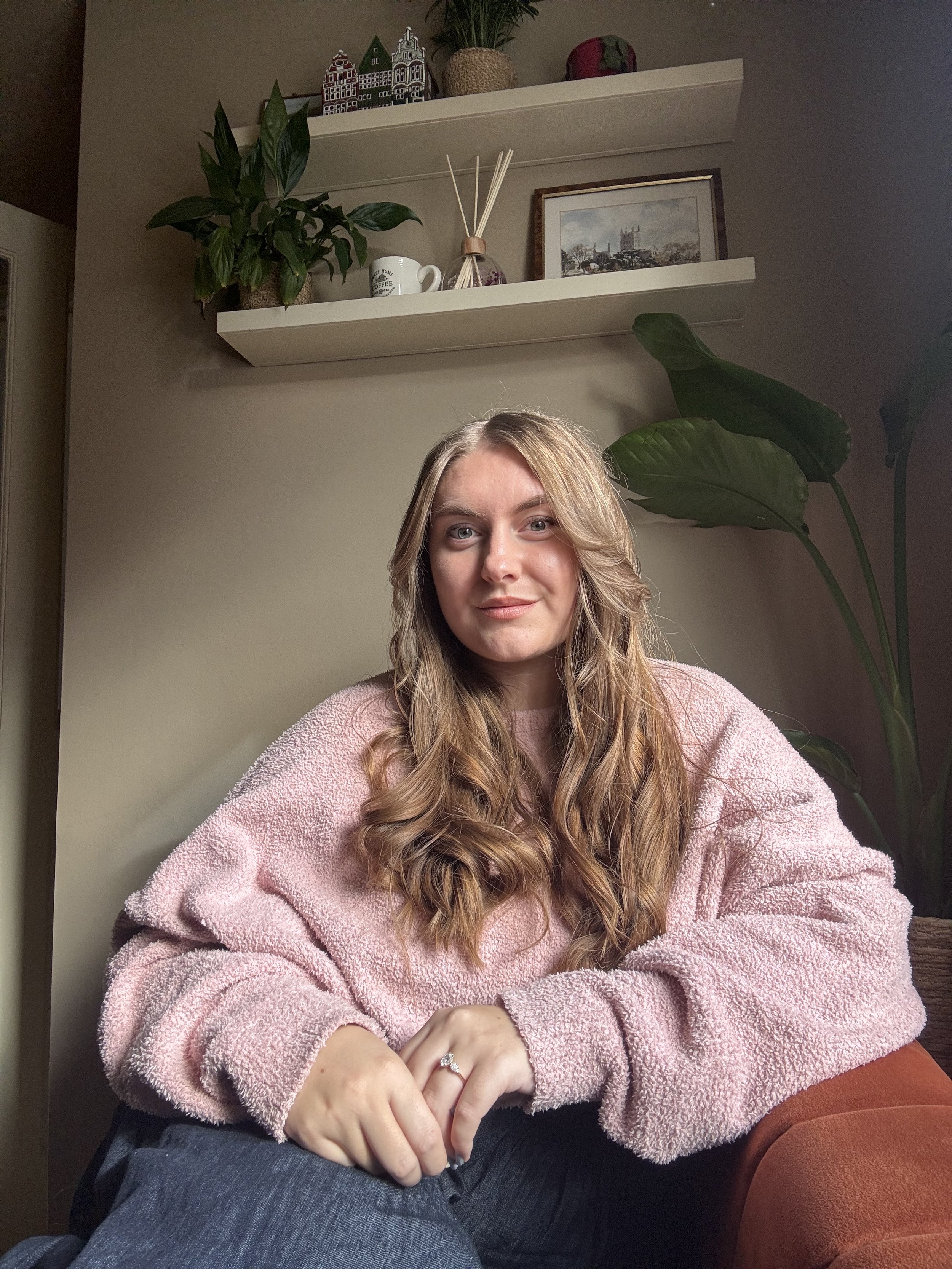
Katie is a teacher in the UK and a POTS content creator on Instagram, where she shares the parts of chronic illness that rarely make it into the conversation: guilt, body image, menstrual cycles, and grief. She developed Postural Orthostatic Tachycardia Syndrome (POTS) after COVID-19 and has spent the last year learning how to teach, live, and love herself through it. We spoke with her about the invisible toll of POTS and what she wishes more people understood.
Can you give us an overview of your POTS journey and where you're at today?
Katie: For me, POTS was a massive adjustment because I got it from COVID-19. I literally went into work one day and fainted in school, and got taken to hospital from school. That led to a very long line of General Practitioner (GP) appointments and hospital appointments, six months being signed off work, basically just trapped at home. I eventually got diagnosed, thankfully quite quickly, because of me semi-harassing the GP, I guess. I managed to get back into teaching, and I'm still a teacher now, but part time, to try and manage my POTS more effectively.
What was the diagnosis process like for you?
It feels like an uphill battle for sure. I think I heard every single thing in the book that gets said to a woman about her health, anxiety, weight, hormones, I heard all of it. By the end, I think I was so gaslighted into believing I was fine that when I finally got diagnosed, I broke down because I didn't even believe it myself anymore. I just thought I was mad. So to hear someone say, actually ‘No, you have this condition called POTS’....I just couldn't speak. My poor partner, bless him, had to speak for the rest of the appointment.
What made you decide to start talking about your POTS publicly?
At first, because I was stuck at home, I just did it as a way to stay in contact with my friends. Instead of sending a message saying, ‘life sucks,’ they'd just see my little video of the day and could check in about it. Eventually one of my friends said, ‘Why not just make it public? Maybe you'll find someone else who also has POTS and you can connect with them.’
It's genuinely one of the best things I've ever done, because I've made so many amazing friends here on Instagram. People I've never met or even heard their voice, message to check in when they see I've had a rough day, and I can do the same for them. There's just that communal understanding of what you're going through, and it makes you feel so much less alone.
What do you think people tend to overlook when they talk about POTS?
I think people very much overlook the emotional aspect. For me personally, in particular the guilt. You feel very much like a burden to the people around you, and that has a massive emotional toll. On suicide awareness day, I was looking into it, and it said you're two to three times more likely to attempt suicide if you have a chronic illness. That's because of that guilt and feeling like, what's the point if I'm being a burden to the people I love? Why am I here?
I'm not ashamed to say I've even got to that point, and it's really difficult because you look fine. People look at you and have no idea that battle's going on in your head, so they just overlook it.
How does POTS affect your day-to-day life as a teacher?
It affects it 100%! Even today, I was teaching a lesson and my heart was resting at 135. I sat down and just talking was exhausting, because I was trying to catch my breath between every sentence while keeping the kids engaged. It feels like a juggling act of needing to preserve myself so I don't faint, while also making sure the kids are getting the best out of their education. There are points where I think, am I actually the best person to be sitting here educating them? Would someone more physically capable be a better teacher for them?
I think one of the ways I've gotten around that is by realizing that the fact I'm thinking about them first and not my own desire to teach, actually makes me a good teacher for them, because I care about them more than myself in some ways.
You make a lot of educational graphics on Instagram. What led you to start doing that?
That's absolutely from being a teacher. I knew I was going back in September, and I was reflecting on my last few weeks at school. I'd started being more open with my students about my condition, and I thought, do you know what, I want a POTS poster, a ‘what to do if I faint.’ I took ages putting in all the information I wanted, with some help from my computer, made the poster, and instantly thought, I'm going to post this on my social media because it's gorgeous. If other people want it they can have it. I've sent it to lots of other teachers too.
If I'm honest, because of my brain fog, sitting and making a video is incredibly hard sometimes because I just can't think. So, instead of spending 20 minutes trying to record a video over and over, why not make a poster that someone can save and look at any time, instead of listening to me waffle for two minutes.
What have you changed about the way you teach since your diagnosis?
A lot. I was working full time as a teacher when this happened, and I had to go part time because I was basically having a day off every other week, and it got to the point where I thought, I'm at risk of losing my job. It's better for me to take the pay hit, take a day off, sleep all day Wednesday, and be able to get through the week.
On top of that, I don't teach standing up very often unless I'm feeling really well, because I know that even if I feel okay in the moment, the next day or the day after, I'll be in agony. It's not worth the strain later in the week if I actually want to make it through. For a long time I completely removed myself from the fun parts of teaching, like trips and clubs, and it's only this year that I've actually started getting back into the clubs I'm passionate about. A lot of my POTS journey has been taking teaching back to the basics and gradually rebuilding a job I'm passionate about.
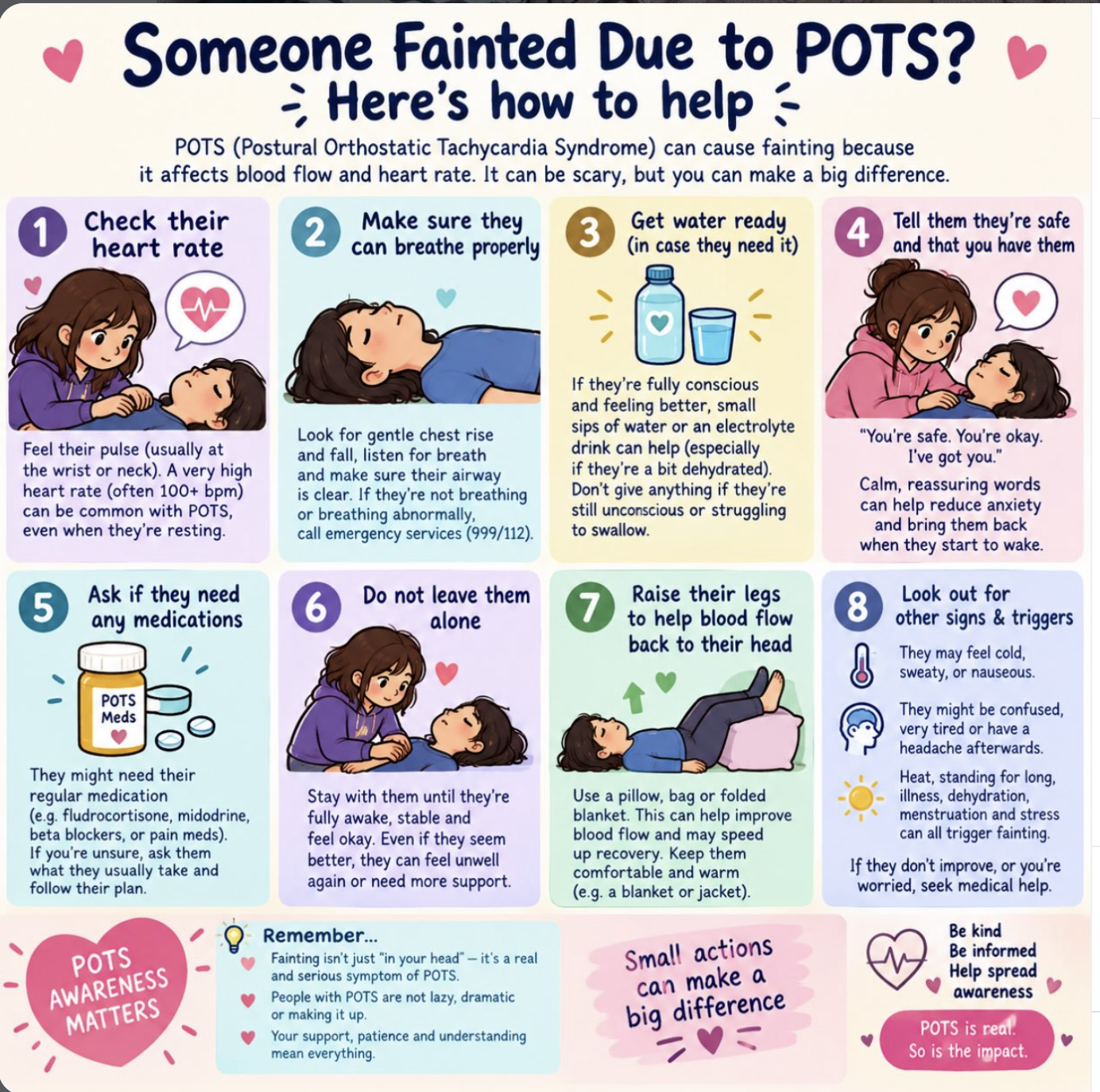
The original poster Katie created for her students. It is one of many that she has designed since and posted on her Instagram page that highlights practical information on a variety of topics related to POTS, including tips for a lower energy shower, the ways POTS is invisible disability and why standing with POTS can be so difficult.
How have your students reacted to your diagnosis and the poster?
It's been very mixed. On one hand, I had a student mock fainting, and the first time it happened I was so shocked, I wanted to cry because it was really upsetting to see. When I went and spoke to them, they said they just didn't know how to process it, so they decided to be silly, which, fair enough, makes sense for teenagers.
Then I've had other students come in and ask: ‘Do you want me to put the books out for you so you don't have to lift them?’ or ‘Miss, you need to sit down, you look a bit shaky.’ Last year, one student brought me salt packets because I'd mentioned off the cuff that salt is like a treatment for POTS, and they said, ‘Miss, I've stolen all these from the canteen.’ I had to go put them back, but it was a really thoughtful gift.
How has your body image changed since your diagnosis?
Before POTS, my body image issues were very much appearance based: ‘How do I look?’, comparing myself to other people, never being happy with the body I was in. The year just before POTS came into my life, I'd lost a load of weight and was exercising every day, and for the first time I felt super confident. Then POTS came crashing in.
Suddenly all the exercise I loved doing, I couldn't do, and the weight came back because I was more inactive. There's an element of not being happy with how I look, but it's more that I miss doing the things I loved, going for a run, going dancing, going for really long dog walks, which is actually how me and my partner met. It's heartbreaking, and it's hard not to get frustrated at your body in that way, because when it's just not liking how you look, you can try to eat healthier or exercise. When it's physical ability, you can't do much. You can try to build your tolerance, but as soon as you do too much, you're back to square one and in bed again. So, there's definitely more focus on physical ability over appearance now.
How do you monitor your symptoms day to day, and how has that changed your relationship with your body?
Because my POTS is very much indicated by heart rate, I'm always wearing an Apple Watch that tells me my heart rate, and I even downloaded an app that tells me how much it's increased by. I get called out a lot for looking at my watch when I feel unwell, because it becomes this game of, do I have the justification to feel as unwell as I do? Oh, my heart rate's really high, yes, I do.
It's turned into this game of numbers, do I have the right to feel this way, which obviously isn't great, and it's made me really anxious all the time. I've tried a couple of times not wearing the watch just to see what happens, and every time I have a really bad flare up, because without it, it leaves my mind due to my brain fog, and I do stuff I shouldn't do. I don't listen to my body enough and I pay for it. Whereas if the watch is telling me my heart rate's over 120, over 150, sit down, I actually listen to my body a lot better. I know plenty of people with POTS who don't track heart rate at all and just listen to their body, and I admire that a lot, but I'm not there yet. You do become hyper-sensitive to where you're at, constantly worrying about when the next flare up is and what's going to push you to it.
Has POTS changed small day-to-day decisions, like what you wear or how you plan your day?
A hundred percent. I never think about what would look nice anymore, I think about what's going to be comfortable. What can I layer, so if I'm really cold I can put a jumper on, and if I'm really hot because of a spike I can take it off. There needs to be versatility. I have to think about compression, so a lot of my work dresses I can't wear with compression, because the socks just look a bit funny underneath, or with tights, which always makes me self-conscious about my stomach. So, you end up with this horrible choice between compression or looking nice, and I have to pick compression.
My partner and I are going to a wedding soon, and we had to go wedding dress shopping, which was a nightmare. Walking around a shopping centre caused a massive flare up, I hated it, never doing it again until I felt more in control. I kept trying on dresses thinking, this doesn't work for this reason, that doesn't work for that reason, instead of asking how I feel in it. At one point, I did try on a dress and think, I actually feel pretty in this, but I don't know if it works with my POTS. I'm very lucky my partner said, ‘You deserve to feel pretty even though you have POTS. For one day you can do this and bought it.’ But you just don't think about looking nice anymore, not in the way you used to.
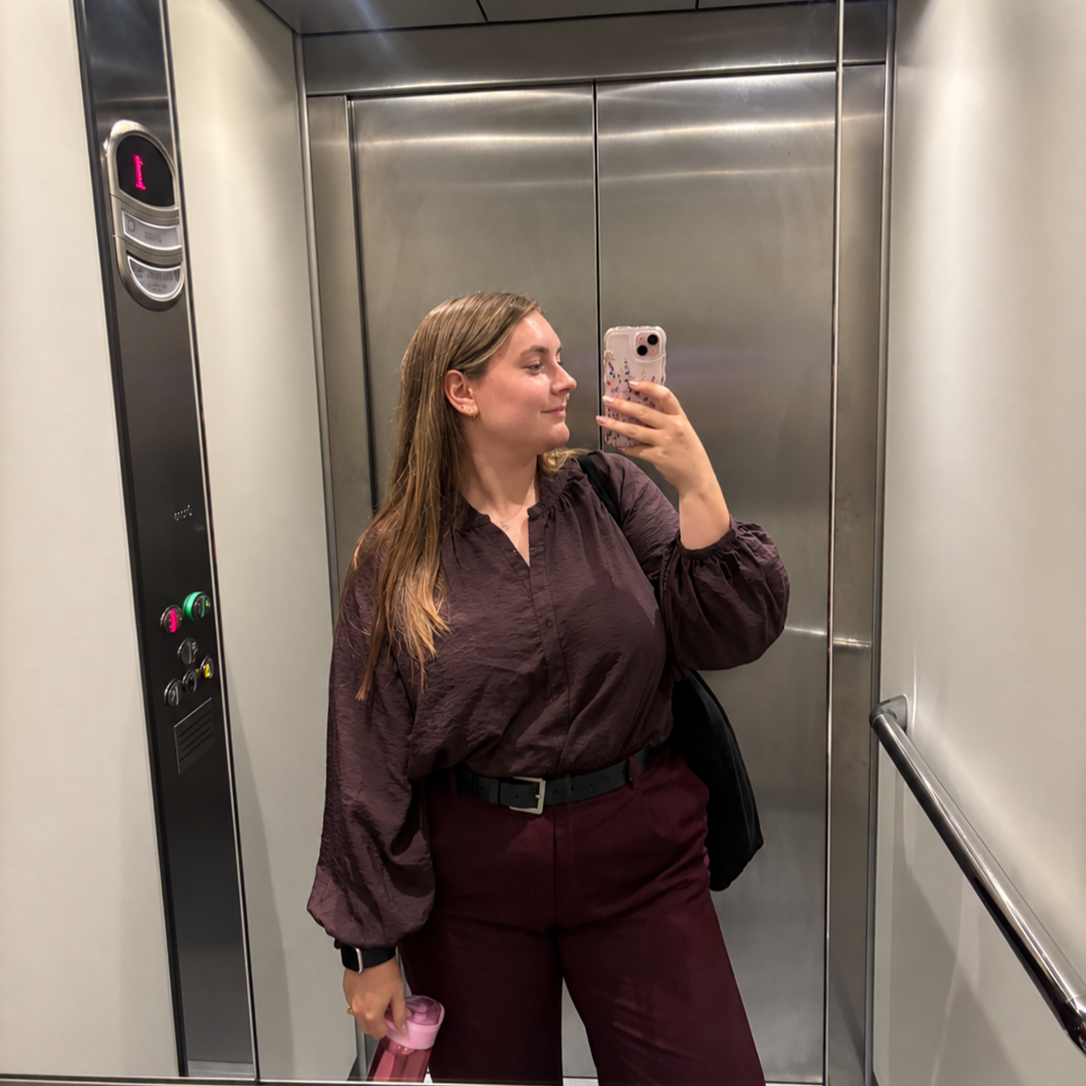
Katie on her way to teach along with her water bottle. Staying hydrated is key when living with POTS because it helps maintain blood volume needed to improve tolerance for standing and stabilize heart rate.
Does body acceptance look different when you're managing a chronic illness?
A 1000%. I wouldn't say I'm aiming to love my body anymore, or even to accept it. I'd say my aim is just making sure I don't fall into a spiral of hating it. It's more like living with it, because if I put the pressure on myself to love and accept it, I think I'd always be disappointed, because every time I flare up I'd be frustrated with it again, and that feels like an aim too far out of reach.
Whereas if I set the aim of not taking it out on myself, that's a much more achievable and fulfilling goal. Every time I remind myself, that's my POTS, not me, it really helps me not fall into that guilt spiral.
What have you noticed about the relationship between your menstrual cycle and your POTS symptoms?
For me personally, the week before and the week of my period, my fatigue is at an all-time high. I feel like a walking zombie, if I'm completely honest. I always get a mood drop just before my period that makes me question why I'm even pushing through with my POTS, and it's always that focus of, ‘I feel like a burden, my POTS is making me feel like this,’ and I spiral on it.
Then the week of my period, I have much more heightened symptoms. Before POTS, I didn't have super painful periods, but now, because my body's so tired and always in pain, it feels like an escalation. There are times I’ve sat on the sofa hunched over, feeling like if I move I'll be in agony, which I'd never thought was possible before experiencing it myself.
What kind of mental health toll does that take, knowing it happens every month?
A hundred percent, I think for me it's the anxiety of knowing it's coming and having to prepare for it. I notice a difference across about two weeks, so I know I'm going to be feeling awful for two whole weeks, when I already don't feel great normally. It becomes this logistical nightmare, even with social plans. I've had to cancel so many because of the state I'm in. It's kind of nice to know my period's due and that it's probably going to be a rough patch, but you can't help thinking, I don't know how bad it's going to be until I get there, and how am I going to fit this into my life long term.
Do you think there's enough conversation around the intersection of periods, hormones, and POTS?
I feel really frustrated that it's still such a taboo subject. We were talking about the Tudor period in class the other day and my students all groaned, and I said, guys, half of you are girls, so you're going to experience this for the rest of your life, and boys, if you get a girlfriend, you're going to deal with it too, so why can't we just talk about it instead of making it this horrible big bad thing, because that's making it worse. If you just treat it as a normal part of life, which it is, it becomes less uncomfortable, and that's a win-win.
Especially when it's women's health, it shouldn't be uncomfortable to say, my condition impacts my period, or my POTS impacts it. From a lot of the women I've spoken to on social media, about 80% say theirs gets worse around their period, with massive flare ups. The other 20 percent have something like endometriosis or PCOS, so even if they don't notice a POTS flare up, they have a condition that flares at that time. I've yet to meet someone with a chronic illness whose period doesn't impact their health in some way, which is why I post about it. I want to stop it from being this horrible thing we're not meant to talk about.
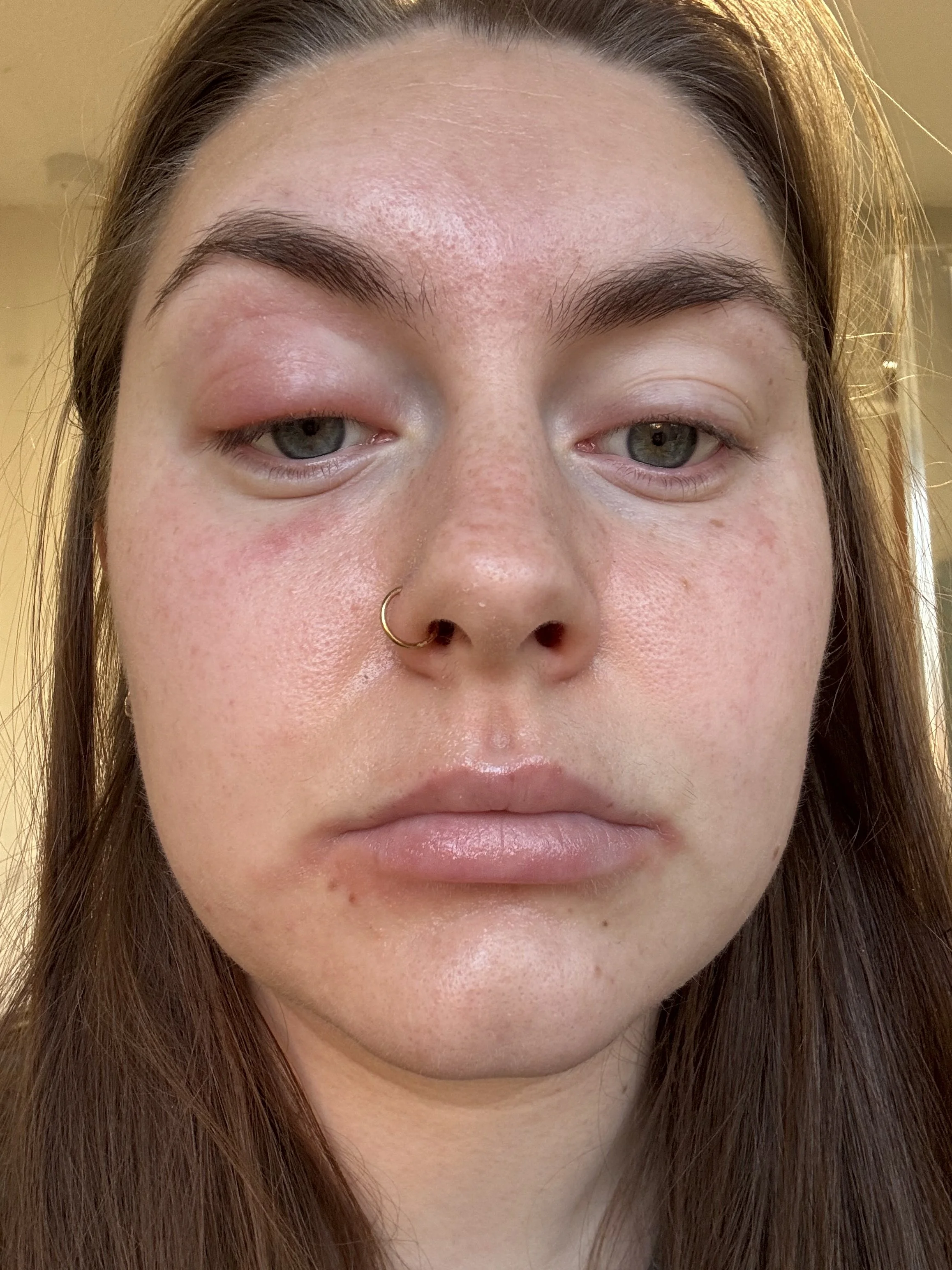
Katie has been one of the first to use her platform to highlight the impact of POTS on female hormones. Another symptom she has continually experienced since POTS is flares of eczema.
What do you wish doctors asked women with POTS about their menstrual cycles?
I wish they genuinely asked about energy levels, whether pain has increased, where they're feeling pain, and which symptoms in particular are showing up more around their period, and whether it's the week before or the week after, because everyone falls differently on that timeline. Most importantly, I wish they didn't blame it. I mentioned in one appointment that I'd noticed it coincided with my period, and straight away it became, ‘so you're just hormonal.’ I couldn't believe that had been said to me, because at that point I was being referred for POTS, and it felt like all the work I'd done advocating for myself was wiped away just by acknowledging my period was impacted. As medically trained professionals, surely, they should be aware that's a possibility. Just that awareness would be great.
How did you handle the guilt and grief that came with your diagnosis?
I very much had to dissociate myself from my POTS, if I'm honest, because if I looked at it as, we are one thing, the guilt would eat me alive. The prime example is a holiday we went on this summer. I got there exhausted from fainting on the flight, and then it was so hot I couldn't function, so instead of spending the quality time I'd imagined, I ended up sitting on the side watching the people I loved have fun. I was happy for them, but I felt so cut off from it and guilty that I couldn't participate.
Eventually I spoke to my partner Tim about it, and he said something that really clarified it for me. He said, if you came down to the beach and refused to talk to us or do anything fun, that would be on you. But you've still come down to sit with us for five minutes, to talk, to take photos so we have the memories. So, it's your POTS causing this problem, not you, and feeling guilty for something you can't control isn't fair, you're taking accountability for your POTS when you shouldn't. That piece of advice is a mantra I now say to myself: stop taking accountability for your POTS. It really helped lift that burden a little. I still feel that guilt a lot, don't get me wrong, but just hearing someone else say it's not your fault actually helped.
How has POTS changed your self-image and your relationships with other people?
It's been really hard, because I've always been a people pleaser. I've always put other people first, and having a condition that forces you to listen to your body and respect what you need has been one hell of an adjustment. A lot of people have realised how much I'd actually been juggling for a very long time, and they've seen the difference now that I don't have that energy and I'm not showing up in the same way.
I wish I could say all the responses to that have been positive, but there haven't been. There are relationships where you realize, that was kind of conditional love, now that I can't do that, I don't hear from them, I don't see them. But the people who are still showing up, I use them to solidify my worth. Instead of thinking, I'm less physically able therefore I'm worthless because I have fewer people in my life, I think, these people have chosen to stay with me even though I can't do anything fun with them, I serve no purpose to them currently other than my time and energy, and yet they're still showing up every single day. They tell me what I'm worth, because they're worth gold in my eyes, and the fact they've chosen me means I must be worth something, they wouldn't be here if I wasn't. A lot of managing my mental health with POTS has been that shift in perspective, adjusting how I identify my worth.
How have the people around you reacted to the fact that POTS is an ongoing, chronic condition rather than something with a clear end point?
It's been hard, because my doctors haven't known a lot about POTS, so there's been a lot of misleading timelines. The first time I went to a GP, they said, we're going to sign you off for a month, and I guarantee you'll be feeling better by the end of it and can go back to work. I thought, fine, a month, I can do that. A month came and went, no change. Then I was told six months, then a year. Even in my last appointment, they said some people have it for two years. It's like they keep setting these hurdles for you to wait for and stay hopeful about.
So when I talk to friends or family and say, my last appointment said this, it really damages their ability to see the longevity of it. I've lost count of how many times I've been asked, are you feeling better? No. It's an awkward conversation every time. People have only just started researching my condition in the last month, even though I've had it about a year, because I think a lot of them were waiting for that year mark to see if I'd be better by then. Now that I'm not, there's suddenly this feeling of, I should probably understand this a bit more, because clearly it's going to be around for a while.
What do you think ties body image, your menstrual cycle, and grief together for you?
I just think it's the female experience of life. I've started a women in history club at school, because having a female-predominant condition has really highlighted to me that the world isn't made for us, and there are hurdles to everything, even healthcare. By making my students aware of that, I'm hoping they can go on to challenge it even more, and then their kids will challenge it, until eventually you won't have to, you can just be understood as a woman and not discriminated against because you have a period. Talking about this more widely and making people more aware of it reduces the stigma of blaming hormones or a period. No, it's a byproduct of my condition.
How has POTS changed what being healthy means to you?
Being healthy to me is no longer appearance based. For a very long time it was what size clothing am I wearing, how do I look in the mirror. Now it's being able to get out of bed in the morning without fainting, or being able to go to work and not faint in front of my students. It's regaining whatever form of independence I can, because even today, a year on, there are still things I can't do. Tim cooks all our meals, I can't shower alone because I always faint in the shower. If I could regain those things, I'd consider myself healthy, even if I still had heart spikes and all the other symptoms. Just having independence back and a bit more control over my POTS would be healthy to me, and that's my aim.
What do you wish someone had told you about the emotional side of chronic illness when you were first diagnosed?
I wish someone had told me it was okay to voice it. I remember sitting and looking at my phone the first time I posted a video about my mental health, and it probably took me two hours to post it, because I kept opening Instagram, writing something, closing it, thinking I can't post that. As soon as I did, I was met with a flood of people messaging or commenting, saying they felt the exact same way, thanking me for saying it or putting it into words. If I'd just been told, look, you're going to go through these things and that's okay, I wouldn't have made it such a massive thing in my head, and I'd have felt much more comfortable talking to other people about those feelings without fearing judgment.
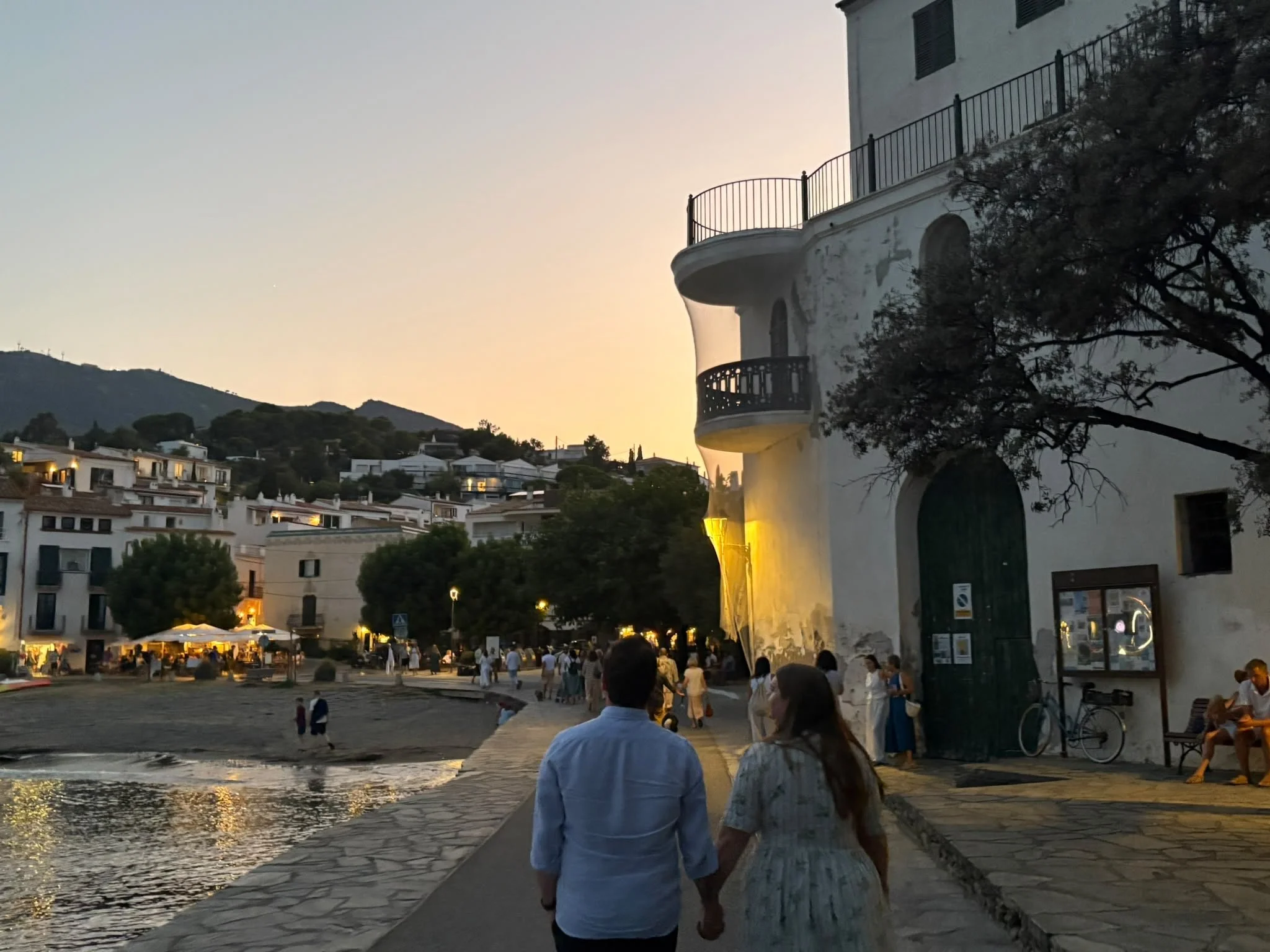
Katie on a date with her partner.
What would you say to someone with POTS who's struggling with body image and self-worth?
I would 100% say your physical ability does not dictate your worth. Look at the people around you who want to spend time with you and show you love, because they're the true measure of your value. If you limit your sense of worth to your physical ability, you're never going to find joy in life, and you still can, you can still experience happiness with a chronic illness. Even with this new outlook on periods and body image, you can still feel successful and fulfilled, as long as you deal with it in an open way, talk to people about it, and try to shift your perspective into something that fits your current circumstances.
What gives you hope right now?
I definitely think seeing how strong my relationship with my partner has become gives me hope. We look at the future and it looks very different to what we expected. We'd talked about moving to Australia, and now Tim's saying, why don't we go on cold cruises instead, because he doesn't mind the cold, and maybe my POTS will be a little less affected by it. Seeing that, and thinking, do you know what, I can still enjoy my life, I'm still excited to see what we get to do together, that's what gives me hope.
How can people connect with you, Katie?
You can find me @mypotsjourney here on Instagram and @my_potsjourney on TikTok, where I post most consistently about life, teaching, and managing POTS.
Want to hear more from Katie? Check out the YMyHealth Podcast on our YouTube channel or on your favorite streaming platform!