
From Dance Class to Diagnosis: Alaina Hall's Honest Take on Living with POTS and Using Mobility Aids
Written by Julie Woon, MSJ
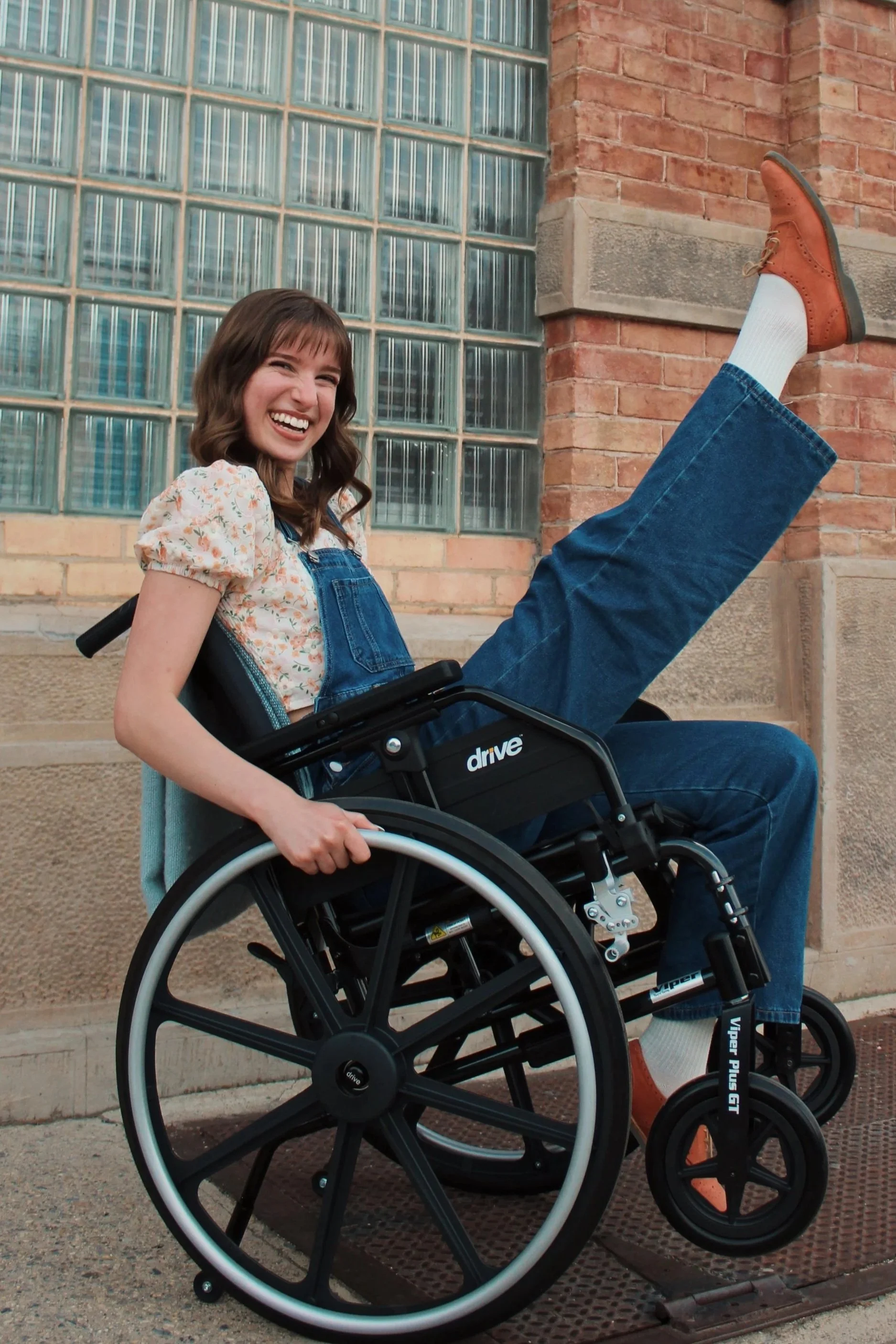
Postural Orthostatic Tachycardia Syndrome (POTS), is often reduced to heart rate spikes and dizzy spells. But for Alaina Hall, a disabled dancer, actor, and chronic illness content creator, who lives with disability, POTS touches nearly every part of daily life, from getting out of bed to walking across a stage. We spoke with Alaina about diagnosis, pacing, mobility aids, grief, and what she wishes more people understood about living with a dynamic disability.
What do people typically get wrong about how POTS affects someone's ability to move through the world?
Alaina Hall: POTS is a form of dysautonomia, which is dysfunction of your autonomic nervous system. Your autonomic nervous system controls everything that's supposed to be automatic. So, really everything in your body can be affected by POTS.
One of the most well known things about POTS is that when you have it your heart rate increases dramatically, and I do feel dizzy and experience fainting spells. But there's also a lot of muscle fatigue, brain fog, and other symptoms that are invisible and don't seem like they'd be related, but they absolutely are tied back to POTS.
How has POTS changed the way you go through a normal day?
There are a lot of hidden triggers that can set me off into an episode if I'm not careful. I was diagnosed five years ago, so I've gotten pretty good at knowing what will trigger me and minimizing those situations. But everyday activities, like literally just getting out of bed because I've been horizontal long enough that my body got well regulated, and then standing up is enough to set me off.
Showering can be a major trigger too, because you're standing up and experiencing heat, so your blood vessels expand, and then you raise your arms above your head, and that's a perfect storm. It can really be triggered by the most random things you don't anticipate being a problem at all until you're unable to go on and have to sit down. A lot of people struggle with grocery stores, waiting in line, or walking between classes. It's everywhere you're moving through the world, and you have to learn how to adapt to make sure it's safe.
Was there a specific moment that led you to seek a diagnosis?
My aha moment, where I realized not everyone was experiencing this, happened in a tumbling class. We were doing back bends, and I was trying really hard to commit to this new skill. My teacher got frustrated because she thought I wasn't applying myself, so I asked her: ‘What do you do about the splitting headache? And she went, ‘the what?’’ She got very concerned.
In a later class, I was being a flyer and the teacher asked me to spot the wall. I said, ‘How do I spot the wall if I can't see?’ She said, ‘What do you mean you can't see?’ I said, ‘I've lost vision.’ She said, ‘Get her down.’
For me it was just communicating that something needed to be adapted, and realizing this wasn't something everyone else was dealing with. That led me to a primary care doctor, then a cardiologist, then a dysautonomia specialist, and then finally, I was able to get the care I needed.
How much of managing POTS is physical ability versus managing your energy?
Pacing with POTS is the universal thing. Everybody has a limited amount of energy and has to learn how to pace themselves. For me, I experienced fainting spells daily when it was at its worst. I was able to get into a primary care doctor and then a cardiologist. Then, I sort of coasted for about three years before I got into a dysautonomia specialist and got the medication I needed. During that time I was fainting between six and twelve times every single day.
So at that point, it was a matter of managing energy and saving it for the things I cared about, but it was also about safety. I needed to make sure I wasn't going to hit my head and that I had the physical support to get where I needed to go safely. Only about one in three POTS patients ever fully lose consciousness, and I just happened to be part of that lucky third.
Everyone's experience with POTS is valid and unique, but for me, it was fainting regularly that led me to a wheelchair and to tracking my symptoms. Honestly, the biggest help was having the physical support I needed and a way to communicate it to people around me, so it wasn't an emergency they were panicking to solve. It was something we had planned for.
How do you decide whether something is worth the physical cost on a given day?
The safest thing for me has been to assume the highest amount of support I possibly can. So, instead of assuming I'll be able to push through, I assume I'm going to need my wheelchair, and I just have it with me. If I need it, great, and if I don't, I stand up and push the chair.
That question does require a lot of foresight: guessing how much energy something will cost and how much energy I'll have, and that's really tricky. I know a lot of people swear by tracking apps, but I haven't found one I especially love that doesn't feel like an extra item on my to-do list. I find it helpful to journal consistently and track my symptoms manually, then figure out what triggered what. You really can't plan for everything.
It takes a while to come to terms with the fact that things you used to do without spending any noticeable energy might not be possible anymore, and that doesn't mean you're failing. It just means your baseline has changed, and that's okay. It's less about anticipating ‘what I'm capable of’ and more about having grace for myself when I find out what I'm capable of on any given day.
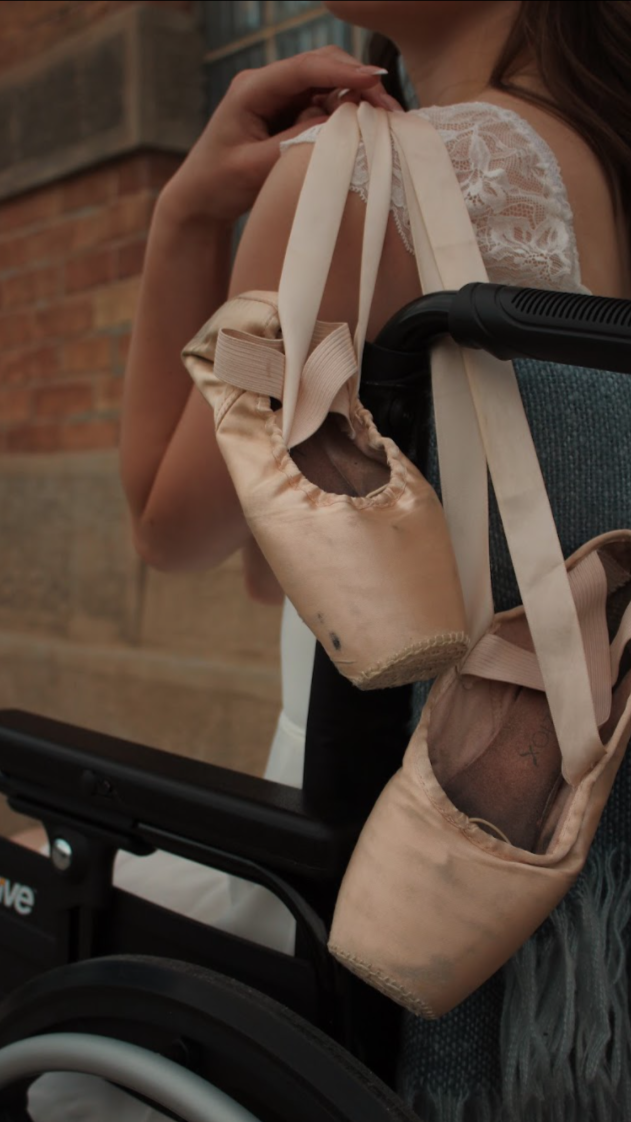
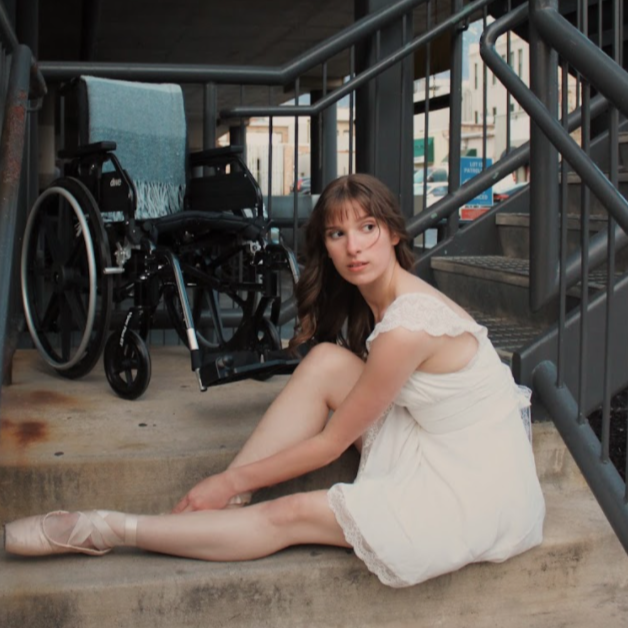
After growing up a dancer, Alaina, has learned to use mobility aids, such as a wheelchair to create adaptive choreography and continue being a dancer, which she loves.
Was it hard coming to terms with choosing between wanting to be mobile and the energy it costs?
Absolutely. I grew up a dancer, so losing dance, when it got to the point where I couldn't dance anymore because I was losing vision and that was unsafe for my teammates, was really, really hard. There were a couple of months where I felt very defeated because the thing I'd used to process my emotions, I could no longer do.
It's a balancing act, and it's really frustrating and confusing, especially with an invisible condition. You worry that maybe you're being dramatic or making it up, or that you could have pushed through. That experience is very valid. I was lucky that I was able to transition into another art form. I started doing theater when I had to stop dancing, and since I was trained in dance, I could be a dance captain, teach, and choreograph. But for some people, you simply can't do the thing you used to do, and at that point you have to hold still and let your body rest, which can be really upsetting. It's a lot to navigate feeling unwell while also losing the tools you used to cope with feeling unwell.
What does pacing actually look like in your day-to-day life?
Pacing is a matter of planning ahead while understanding that the plan might need to go out the window, and that's okay too. My pillars of health are getting enough sleep, food, and hydration and electrolytes, and taking my medication. Compression helps me a ton too.
Knowing those things are beneficial, I set them up ahead of time so I have the support I need. Then, if I start feeling unwell during the day, I've learned not to question it or try to push through, because I can push through a medical episode, but I'm not actually pushing through, I'm pushing it off. It comes back and I feel significantly worse than if I'd just managed the symptom in the moment. Having my water bottle, wheelchair, emergency medication, and compression with me wherever I go lets me plan my energy and also have an emergency backup plan for what to do if I'm not feeling well enough to keep going.
You've said you're 'not pushing through, you're pushing off.' Can you say more about that?
I think that's so applicable in so many situations, not just POTS. There's this mentality of: ‘If I can just push through, it'll be fine.’ But taking the time to recognize what's actually happening and how it's going to affect you later is harder to do than we initially think. When I push through a symptom instead of managing it, it doesn't go away. It just comes back worse later.
How do you explain to someone that you can or can't do something based on your mobility or energy that day?
That can be a confusing concept for people looking at someone who's chronically ill or has an invisible, especially a dynamic disability. I look like I should be fine, and maybe yesterday I was able to dance and today I simply can't. I think the first step is understanding that, at least in my experience, I haven't been actively attacked. There are absolutely people who are ableist or scared and lashing out, but mostly people are asking questions because they're confused and concerned for me. Understanding that has helped me have grace for them, even though it's frustrating to explain yourself over and over.
I've found it helps to have a quick explanation ready– one scaled to how much information the person actually needs – because my medical information is my business. In a classroom, I might just say, I have a heart condition, so I'm using the wheelchair to help avoid a fainting spell. That's succinct and doesn't invite a lot of follow-up questions. If I'm talking to someone else who's chronically ill, I'll say I have POTS. If I want to give a full explanation, I'll explain Postural Orthostatic Tachycardia Syndrome. Having those explanations with different levels of detail ready helps me feel less overwhelmed by the idea of constantly needing to teach people. As a disabled person, you're not actually required to be constantly educating everyone, but you are living in the body you're in, and you're going to get questions, so a quick explanation helps.
What mobility aids do you use and has that changed over time?
I have a dynamic disability, which means my needs change depending on the day, so I rotate between three mobility aids. I have a wheelchair that has actually let me keep dancing. I've learned to adapt choreography, so I can dance sitting down, which minimizes my symptoms and lets me dance longer, safely. That's what I use to get to and from class and in the dance studio, since the caster wheels are small and not great off-road unless I want to do a wheelie.
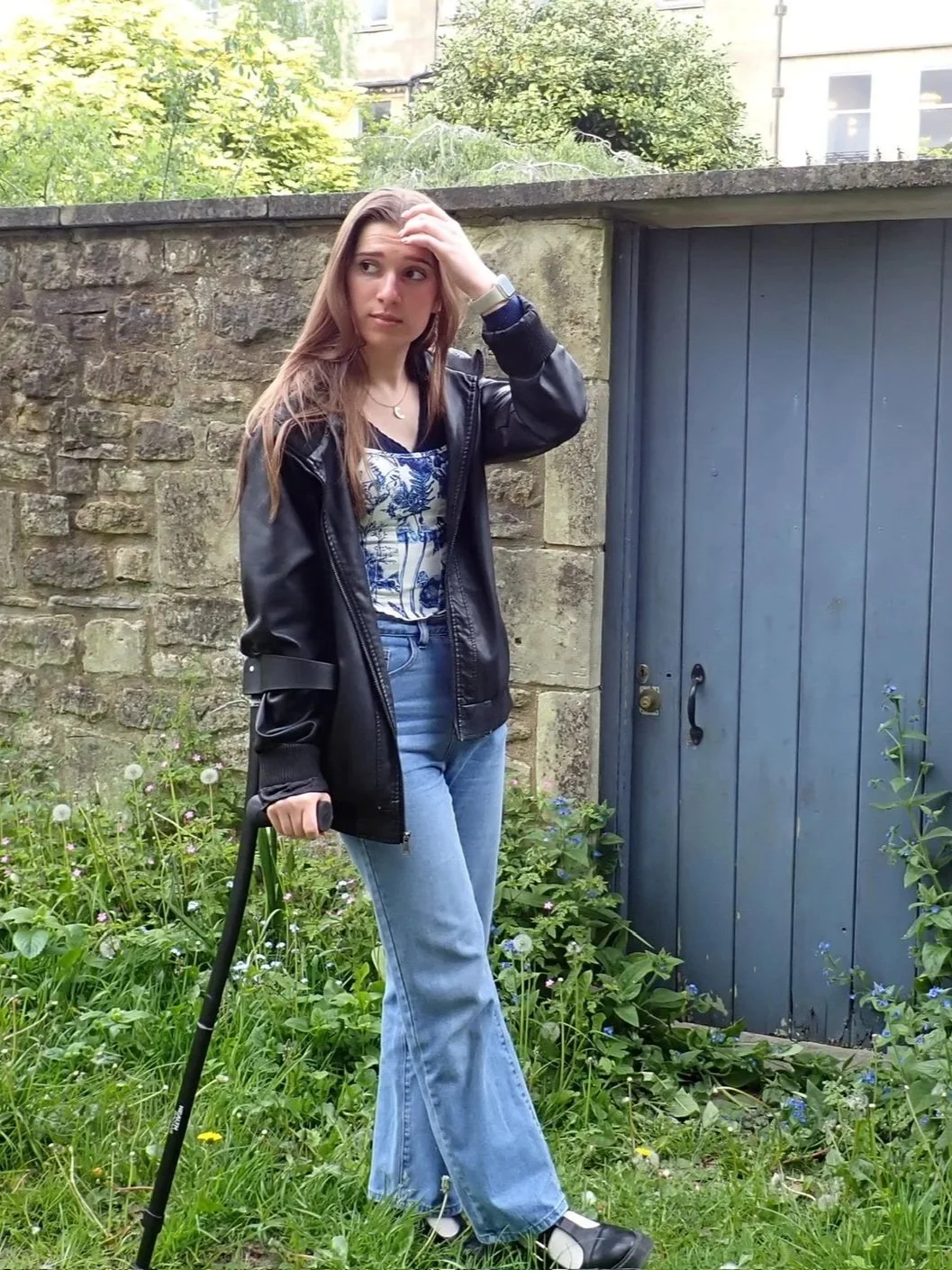
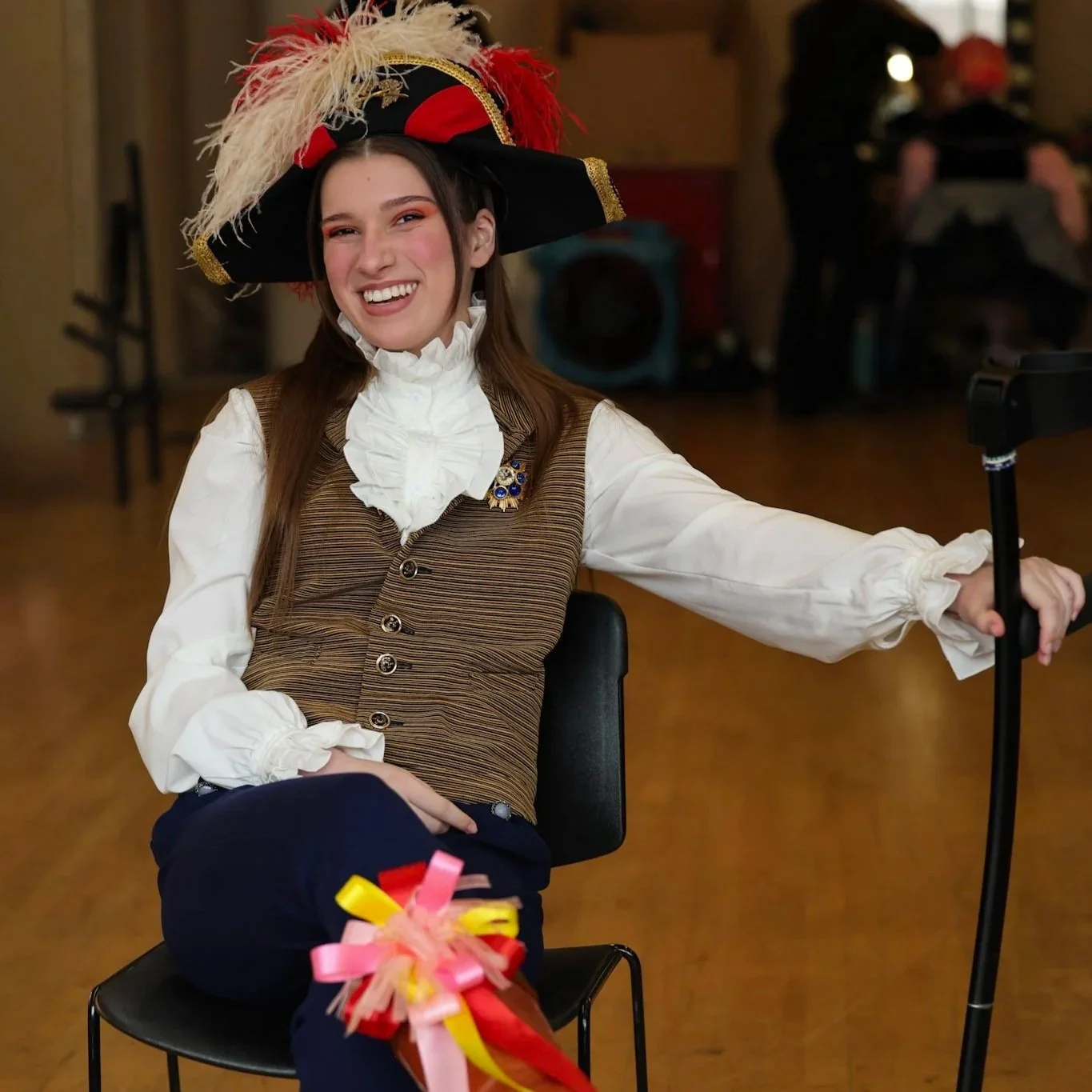
Then I have a rollator, or walker, that I can push and also sit down on. It has much larger wheels built for off-roading, so I use it for the park, the beach, or anywhere with gravel, when I want support but my wheelchair would be more work than just walking. And I have forearm crutches, which I can use as a cane in one arm or both at once for extra support. Those are most helpful when I know a space is inaccessible or there will be a lot of stairs. I did a study abroad trip to London with a lot of cobblestone and stairs, so I brought my wheelchair and a crutch. On hiking or spiral-staircase days I used the crutch, and on museum days I used the wheelchair because it gave me significantly more stamina.
Is there an emotional component to using a mobility aid, or accepting that you need one?
Absolutely. The most consistent word I hear people use is ‘embarrassed’. A lot of that comes from the fact that looking into the chronic illness community is a scary thought, because most of us didn't do anything to earn or cause our disabilities. But that scares people, because it implies it could happen to them too, so they feel the need to separate themselves by making it our fault.
Understanding that the embarrassment I felt was coming from other people's fear helped me have more empathy for them, even though it's hard to empathize with people being unkind. It also helped to realize that using a mobility aid isn't harming anybody. I'm using a tool designed to improve my quality of life. People wouldn't tell someone wearing glasses that they're exaggerating because they're not technically blind. It's the same with a mobility aid. The best advice I ever got was that as soon as you're thinking you might need a mobility aid, that thought itself is the sign you already need one, because able-bodied people aren't sitting around wishing they had one. Assuming the highest level of support helped me stop feeling so much shame. After the fourth or fifth time I brought my wheelchair into class, people stopped asking questions, because it just became normal.
Can a mobility aid actually give someone more independence rather than take it away?
It usually does, absolutely. I was struggling just to get out of bed, never mind getting to class, studying, dancing, and performing. Now, with the mobility aids I need, I'm able to get out of bed and dance every morning because I'm using my chair, and it's safe to do so. Choosing to use a mobility aid is not the same as choosing to give up. It's actually choosing to do significantly more, and to do it safely.
How has POTS changed your relationship with your body as a performer?
It's intimidating sometimes because you walk into a room wanting to be the one who's picked, and you're trying to prove yourself. A professor recently explained that when you walk into an audition, you have something to share, not something to prove, and that helped me a ton, because I'm very concerned about rolling into a room feeling like I have the job of not just auditioning, but advocating for disability representation too.
It's changed my relationship with my body in class as well. We were recently doing a turns class, and what I was practicing looked drastically different from everyone else. I was practicing holding a wheelie while everyone else practiced staying on relevé. It's a matter of adapting and translating what your training has been into what you need to be working on now.
What does it look like to modify a performance or choreography?
I recently had an intimacy coordination conversation with a director, where the cast gets together and explains physical boundaries using a red, yellow, green method. Green means you're welcome to touch without asking, red means do not touch, and yellow means check with me first.
When it got to me, what needed to be adapted was the fact that I use a wheelchair, which is an extension of my body. I explained my physical boundaries and then explained that this wheelchair cost me $3,000. I want disability representation in the show, and I don't want to shy away from using the wheelchair, but it's also expensive medical equipment, so my mobility aids are always yellow in that kind of exercise. It just means check with me first, and then we work on it together, instead of just pushing me.
Is there a difference between performing that you're physically okay and actually being okay?
That's something I'm working on right now, honestly, learning how to perform without needing to perform that I am well, on top of performing a character. That's too many things to keep track of at once. I'm learning how to release the performance and let the mask go, and allow myself to experience whatever I'm experiencing, even if it's uncomfortable.
People are often uncomfortable with the idea of pain, especially chronic pain or a condition you can't fix. I picked up on that pretty quickly after I was diagnosed, that people were uncomfortable, so I needed to hide it to make them comfortable. That's actually unhelpful and inauthentic. So, I'm learning how to perform when I want to, and stop performing when I don't.
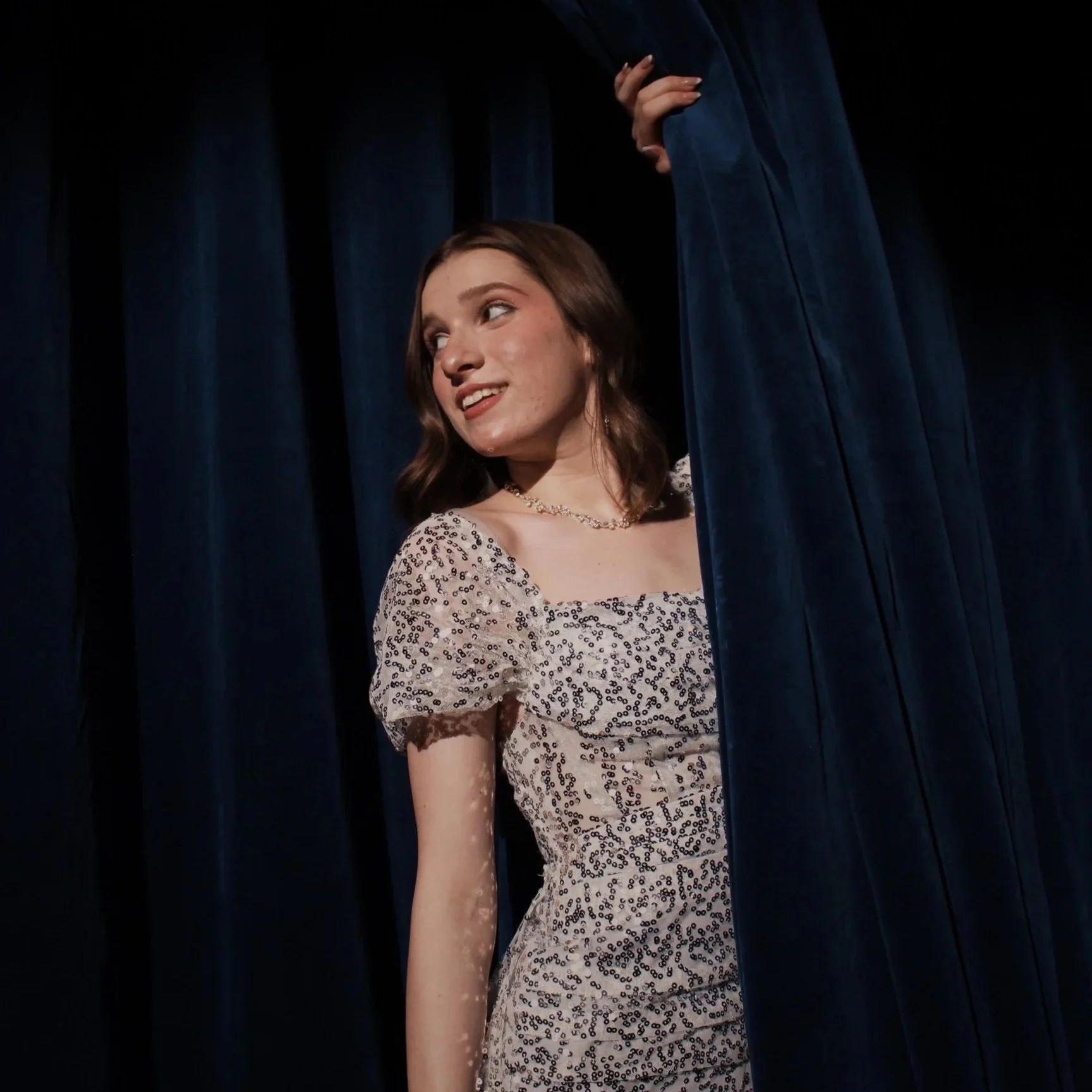
Has being a performer made you more aware of or frustrated by physical limitations?
Absolutely, I get frustrated with my body frequently, and that frustration is valid. What's helped me most is something my therapist explained: ‘My body isn't trying to hurt me. It's just scared and unsure of what I want done’. She said, ‘My body has about the same level of intelligence as a small child.’ I'm not going to yell at a toddler for trying its best and spilling something. I'm going to pick it up, explain what's going on, and help it through.
So when I'm frustrated in a dance class because I can't do what I want and it feels like my body's fault, I try to take a step back and remember I actually have more information than my body does, and my body is working so hard to keep me alive right now, not trying to kill me. I'll literally speak out loud to myself, calling myself ‘my love,’ and explain that things are going to be okay and that I've got it. That takes out a lot of the adrenaline and panic of feeling like I'm in a life-or-death situation and don't know what to do.
Is there something you wish casting directors or producers understood about performers living with POTS?
I wish I could megaphone this to everyone: ‘Disabled people make up a large fraction of the population, and there are so many people watching and consuming art who aren't being represented on stage. If the goal of theater is to let people feel seen and known, you're missing a whole chunk of humanity by not representing disability respectfully and truthfully.’
There are disabled performers who are talented, prepared, and willing to do the work. We just need to be given a chance. I've gotten good as a student at taking a character and informing it with my personal experience and disability, and I know there are performers just as good, if not better, at doing that. There's a major opportunity in theater that isn't being tapped into because it would take a little more thought, and disabled performers auditioning are too often written off immediately in favor of able-bodied performers. That's a missed opportunity.
How do you grieve the physical abilities you used to have without letting that grief define you?
I absolutely had to grieve the life I thought I was going to live, and that is grief. Scientifically, your brain makes a connection, a neural pathway, with something it expects to be there, and once that thing is removed, your brain keeps trying to make the connection and it can't anymore. It actually causes inflammation in your brain. You're experiencing real loss. So, the first thing I'd say is let yourself experience the grief, because telling yourself it's not real or valid doesn't help at all.
For me personally, I had to let myself be angry, and I cried a lot, and I wrote about what was upsetting me. I wrote a lot of not-great poetry in high school, because that was the only outlet I had once I couldn't dance it out anymore. I think it's about acknowledging that it's grief, letting yourself feel it, and then using it as a kind of motivation, which is a slippery slope, because that's different from pick-yourself-up-by-your-bootstraps, get-over-it thinking. As an artist, I've been able to take that grief and use it as a vehicle to understand people better. It's become an instrument of empathy for me.
Is there something you worried you'd never be able to do again that you've found a new way to do?
Dance was that for me. It was so much of my life and my identity that I didn't know what to do with myself when I had to let it go for several years. It's changed and morphed into something new. It's an opportunity for me to teach, to adapt choreography, to film, and to perform differently.
It was also a real loss for me, and I don't think it's always helpful to frame it as, you're still doing the thing you love, it just looks different now. I think acknowledging that this isn't what you planned and isn't what a younger version of you wanted, is really healing. I'm allowed to hold two things as true at once. I feel a real sense of loss, and I am still a dancer. I'm just doing it sitting down.
What do you wish healthy people understood about the energy cost of mobility?
Oh my gosh, yes. My dysautonomia specialist explained that I'm actually getting nowhere near enough blood to my brain, functioning at about 60% capacity, which means my heart rate spikes to try to compensate. With that level of tachycardia and adrenaline, it takes me two to three times the amount of energy to do simple daily tasks that it would take an able-bodied person.
Having an actual doctor tell me I wasn't being dramatic, and that it genuinely takes me more energy, was so healing. You're always comparing yourself to the people around you because they're doing the same things you're trying to do, and they're fine. But they're not doing the same thing you're trying to do. They're existing in an able body, and you're existing in a body with a disability, and that's completely valid, and you are allowed to need rest. You're going to need rest. I wish people understood that dynamically or invisibly disabled people aren't being dramatic. If anything, we're performing wellness rather than performing disability.
If you could go back and talk to yourself when you first started struggling, what would you say?
That's such a sweet question. I was thirteen when I first started experiencing symptoms, pushing so hard to be at dance five hours a day, feeling unwell, losing weight, and unable to stand up quickly or feel in control of my body. If I could go back and talk to her, I'd want her to know she's not being dramatic, and it's not in her head. I think those were the most damaging things I believed about myself.
I'd want her to know she's still performing and helping people, and honestly, I believe I can help significantly more people now as a disabled dancer than I might have as a non-disabled dancer. I'd want her to know she has the support she needs, and that it does get better. When I was first diagnosed, doctors told us to drink more water, add more salt, wear compression socks, and that I might grow out of it in 10 or 15 years. At 13, that felt terrifying. But I'd want her to know it's something that can be managed, improved, and used as a tool for a lot of good.
What has POTS taught you about your body that you don't think you'd have learned otherwise?
I'm sure I would have figured this out eventually, but POTS forced me to learn quickly that my body has its own intelligence. It communicates with me constantly, letting me know when I need to sleep, eat, use the bathroom, or drink water. What I learned from ignoring those signals for so long is that my body needs to be heard, and if it isn't, it's going to keep screaming at me until I can't ignore it anymore. For me, that meant it would scream until I was unconscious on the floor.
I've gotten a lot better at listening and communicating back, but it's a strange thing to wrap your mind around, the idea that your body is trying to talk to you, and if you don't listen, nobody is listening to it, so it's going to get creative about getting your attention. POTS taught me that my body has intelligence and that it deserves to be listened to.
What's making you excited about the future right now?
Honestly, right now it's mostly my classes and what I'm working on in school. I just started classes back up, so that's top of mind. I'm doing all of my classes in my wheelchair right now, because I've decided to lean into what I've been calling disability visibility, assuming the most support I can for myself and letting myself be seen using the tools I need.
That makes me really excited, especially because people have told me, in comment sections and in person, that seeing me use mobility aids so visibly helped them feel comfortable getting the accommodations or tools they needed. I have friends who bought the same forearm crutches after borrowing mine, and friends who started looking into wheelchairs because they saw me and realized it was okay. I'm also excited to be performing in my wheelchair. I'm playing Hermia in A Midsummer Night's Dream right now, which has a lot of lines about her being short, so I'm playing a short character sitting down. I'm excited to keep building my skills to the point where I'm the one adapting characters.
What resources have helped you manage POTS or dysautonomia symptoms?
The heaviest hitters have been medication and mobility aids, but those usually require an official diagnosis and a doctor's recommendation. There's also a lot you can do for your quality of life that doesn't require a doctor's permission, and that's what I try to raise awareness for in my content.
For me, that's getting enough water and electrolytes, and salt capsules, which don't need a prescription and help increase blood pressure to get more blood to your brain. Compression has helped too, though not just compression socks. I use compression leggings and tank tops, basically compression anywhere I can get it, because socks alone weren't enough for me. And nervous system regulation is another one you don't need a doctor's recommendation for. POTS leads to so much adrenaline in your body, so regulating your nervous system through breath work, meditation, or the kinds of tools used for anxiety disorders has helped me minimize my symptoms.
Is there anything else you think is important for people to know?
Honestly, I think the biggest thing is just understanding that you're not being dramatic, and that it's worth getting a diagnosis if you want that kind of support. I hear from people in comment sections who say they don't want a diagnosis, or feel they can't get one, because doctors have told them there's nothing that can be done. That's not true. There is hope, and there are things you can do to manage your symptoms. A formal diagnosis is worth pursuing.
How can people connect with you, Alaina?
You can find me on Instagram and TikTok @alaina_potsie where I post most consistently about life, dance, and performing with POTS.
Want to hear more from Alaina? Check out the YMyHealth Podcast on our YouTube channel or on your favorite streaming platform!